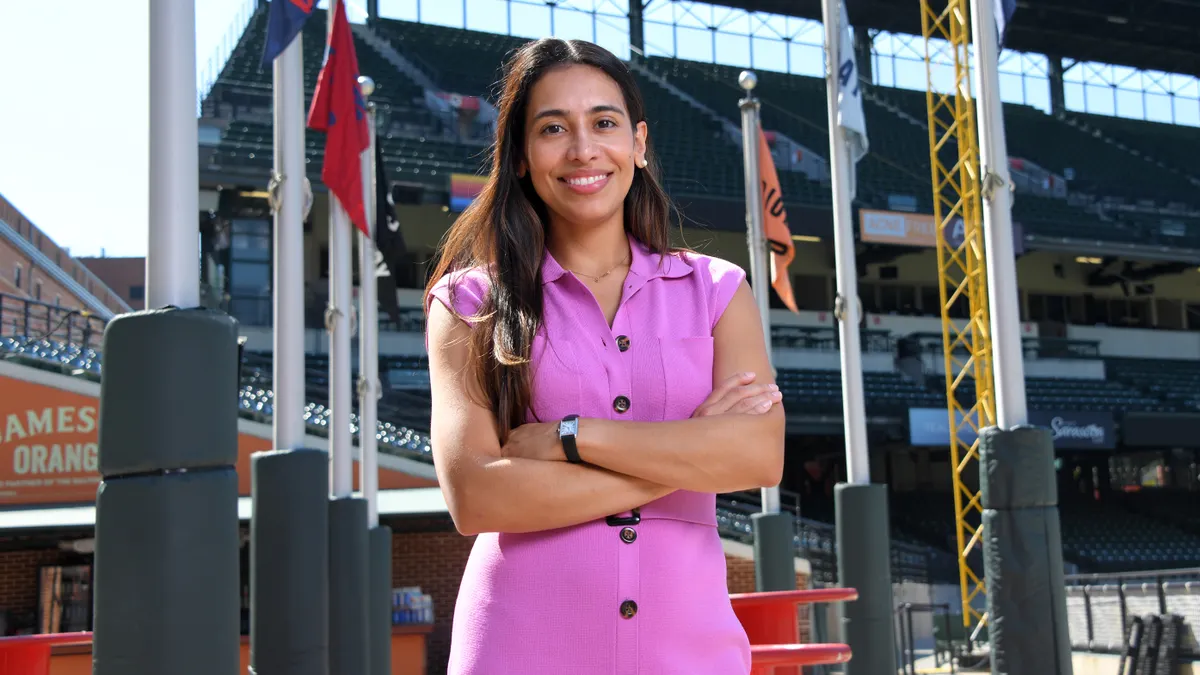
Darline Llamas Llopis jokes that she's a "chaos CFO."
Throughout her career, she's gravitated toward opportunities that involve lots of change. These include working with the National Football League’s Los Angeles Rams after their relocation from St. Louis, helping launch the Formula 1 Miami Grand Prix, creating the in-house retail business of the Miami Dolphins and her role now as CFO of Major League Baseball’s Baltimore Orioles that she took shortly after the team’s ownership change.
In this interview, Llamas Llopis discusses how she made the shift from accounting to strategy, why aspiring CFOs should own a P&L, what she's learned leading finance across three professional sports leagues and why curiosity is one of the most important traits for finance leaders.
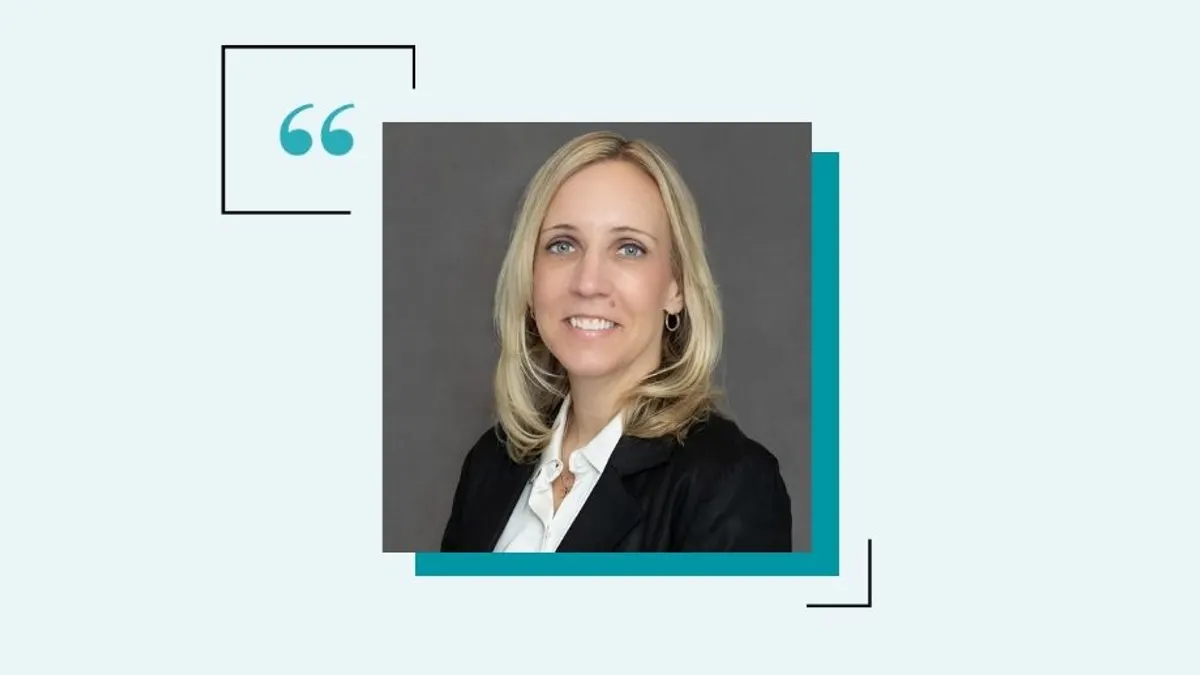
Darline Llamas Llopis
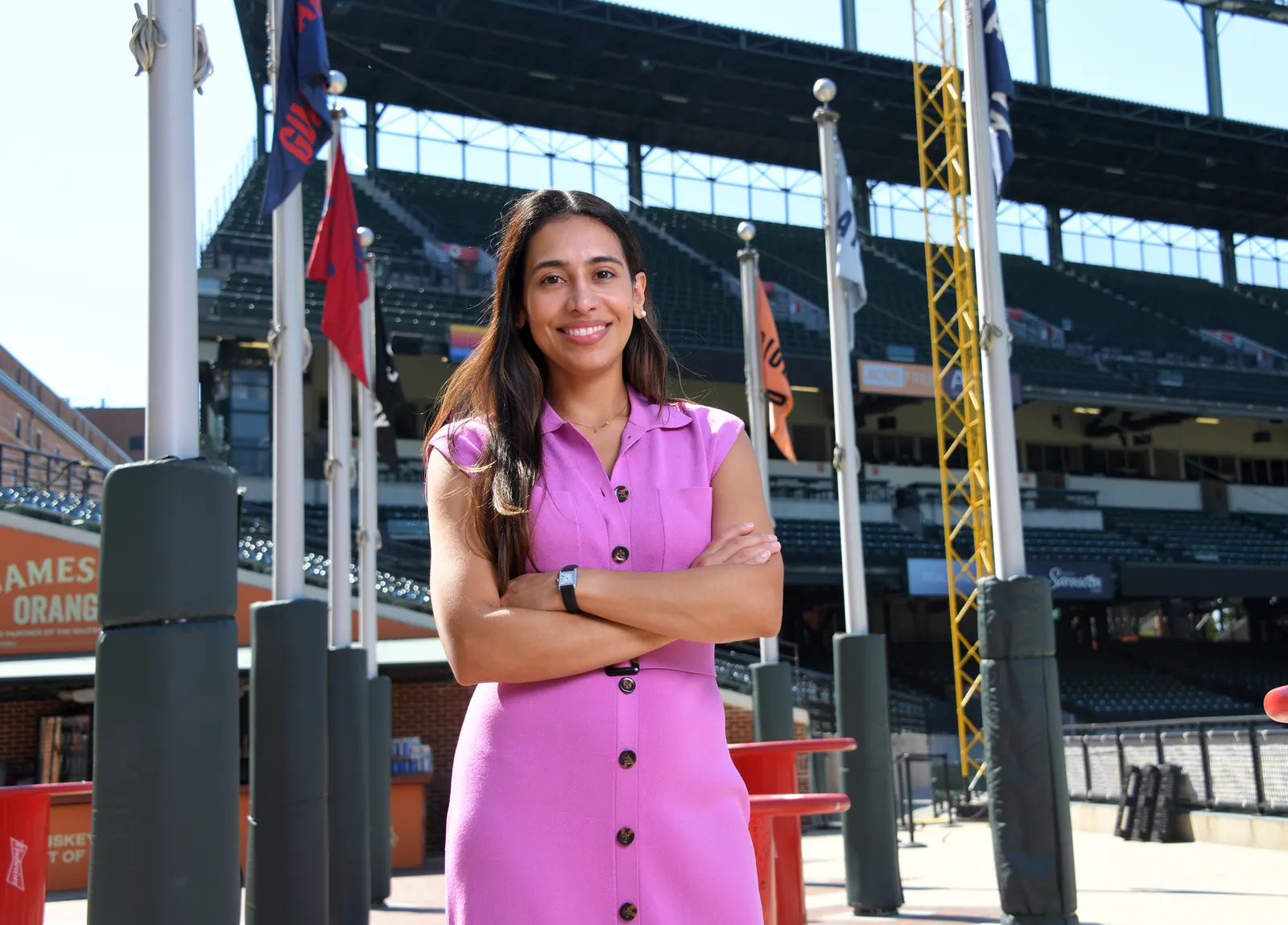
CFO, Baltimore Orioles
First CFO Position: 2025
Notable previous employers:
- Miami Dolphins and Hard Rock Stadium
- F1 Miami Grand Prix
- Los Angeles Rams
- EY
This interview has been edited for brevity and clarity.
ADAM ZAKI: You spent more than five years in public accounting before moving into professional sports. What made you decide not to pursue the partner track then, and what lessons from those early years still shape the way you lead today?
DARLINE LLAMAS LLOPIS: Public accounting was amazing in a lot of ways. Coming out of college after the 2008 recession, I actually never wanted to be an accountant. I was a finance major, but a lot of firms weren't hiring, so I knew that wasn't going to work out for me. I've always been really good at pivoting, so I double-majored in accounting, got an internship with PwC and started my career there.
I think I knew early on that I didn't want to be an accountant forever, but I stayed in public accounting for five or six years because I was good at it and I didn't know what I wanted to do next. Recruiters reached out all the time about different opportunities, but none of them really sounded that appealing to me. I wasn't interested in leaving just to leave.
The opportunity with the Rams actually came through one of my clients. She knew I was from Los Angeles — I was living in Dallas at the time — and asked if I knew anyone who might be interested. I thought, "I'll throw my hat in the ring. It can't hurt. If I'm going to leave, this seems like a cool thing to leave for." I never thought I'd get the job, but I did, and I got to move back home.
At the time, the Rams had just relocated to Los Angeles, so it was chaos in a lot of ways. It was all hands on deck, and most people didn't even have titles yet. It was a really cool place to be because we were creating structure as the organization grew. Looking back, I think that's something I've realized about myself. I like new challenges, and I enjoy being part of organizations that are building something.
At what point in your career did your work shift from looking backward at the numbers to helping shape business strategy?
I feel like a big change happened at the Rams. I was thankful to work for an amazing boss, Jeff Brewer, who had also come up through public accounting. He had made that transition himself, believed in me and believed that I could make that shift too.
I had spent years doing audits and looking backward at the numbers, and then all of a sudden I was spending my time thinking about what was coming next. Most of my day now is spent looking forward. The audits have to get done, and the accounting has to be right. I think every CFO knows that. But what management cares about most is what's happening next, not what happened six months ago.
"I like building structure. I like helping organizations through periods of change. Maybe I’m a masochist, but that’s what I enjoy."

-Darline Llamas Llopis
CFO, Baltimore Orioles
As I moved to the Dolphins and the Formula One Miami Grand Prix, it became even more forward-looking. I joined the Dolphins just as the F1 race had been announced, so it felt like another startup, which I love. It was a lot of asking, "What could this become? What does this mean for us? What do the margins on these products look like?"
It's a very luxury-based product, so you're constantly thinking about what your fans want. A lot of times, it's trying to give people something they don't even know they want until they see it. That's a very different way of thinking than auditing historical financial statements. You're helping shape the business and where it's going, not just reporting on where it's been.
When I ask CFOs what advice they have for finance professionals who want to become CFO someday, one answer comes up all the time: Go run a P&L at a large company. You had that opportunity when your roles in Miami expanded beyond finance into retail. How did that experience prepare you for a CFO role?
I ran retail for the Dolphins, Formula One and the Miami Open. Thankfully, I've had help from amazing mentors, believers and supporters throughout my career.
One of my first projects when I joined the Dolphins was looking at whether we should bring retail in-house from our concessionaire. Tom Garfinkel, our president, asked me to figure out if it made sense. I put together the analysis, built the financials and presented my recommendation. I told him that I thought we should do it, and he looked at me and said, "Great, go do it." I remember thinking, "Wait, me? I'm the finance person."
But he empowered me to build it and told me to hire people. I was fortunate to bring in someone I'd worked with at the Rams who had retail experience to help run the operation. That belief in me made a huge difference. Tom is great at empowering people to do amazing things, and I think when smart people are given that opportunity, they rise to the challenge.
Running that business taught me so much about the revenue side of the organization. It's easy for finance people to say, "Let's increase revenue. Let's keep making more money." But when you actually own a P&L, you realize there will be years that are up and years that are down. Some of that is in your control, and some of it isn't.
It helped me see the sports business from a completely different perspective, and I'm really thankful for that experience. Today, when I'm talking with our chief revenue officer, I can ask much better questions because I've been responsible for running my own P&L.
Each league has a different operating rhythm. The NFL revolves around a handful of home games, Formula One centers on one marquee event and the Orioles play 81 home games. How has working in those different business models changed the way you think about FP&A?
It does change the way I think about it in each role. Baseball has a lot of different games, and you notice that even when you're financially forecasting.
With football and Formula One, you know pretty early on whether you're going to be sold out. Going into most Dolphins seasons, we were substantially sold out before the first game, so that pressure on ticket sales kind of goes away. Formula One is very similar.
What was unique about Hard Rock Stadium is that I wasn't just working on Formula One or the Dolphins. I also worked on the Miami Open and concerts. When people say there are 81 home games in baseball, I always think, "Yeah, that's a lot." But at Hard Rock, we were working on all of those events at the same time.
Outside of setup and teardown days, there was constantly something happening. We had Dolphins games, Formula One, the Miami Open, concerts and three Taylor Swift shows. The finance team worked across all of those events, so it was a very dynamic venue, and it definitely kept us busy.
As far as event days, that part hasn't changed as much as people might think. The bigger adjustment has been the buyer base. One thing I do find about Baltimore, and about being in a smaller market, is how much our fans love the Orioles and how much they identify themselves with the team. That's been really special about living here.
I am sure you were contacted by recruiters before you took this role. What attracted you to the Orioles opportunity, and what made you decide this was the right time to become a CFO?
You're right, headhunters had reached out before, and at first I wasn't sure about this opportunity. But the more I learned about the organization, the more interested I became.
The first thing that stood out was the ownership group. The Orioles had recently been sold, so you had David Rubenstein from Carlyle and Michael Arougheti from Ares coming in. You had these very financially savvy owners who really wanted to see change in the finance department and in how things had traditionally been done. That was super interesting to me.
The other piece was Catie Griggs, our president. She's amazing. She's been in the industry for a long time and has done some incredible things throughout her career. The more I've been in my own career, the more I've realized how important it is to work with good people. The closer I can get to people I want to be like, people I want to learn from and people I enjoy working with, the more it impacts my own growth.
[Griggs] has totally changed this place. You can see it physically with our offices being remodeled, but you also see it in the way we're approaching processes and how we're operating as an organization. It's been exciting to be part of that.
When people tell me chaos is afoot and I can come help put order to it, that's kind of my calling card. That's what took me to Miami. That's what took me to the Rams. In a lot of ways, that's what I did in public accounting, too. I was often put on clients that had a lot of turnover or where relationships had to be rebuilt. They'd ask me to come in and help smooth things over.
That's where I find joy in the working world. I like building structure. I like helping organizations through periods of change. Maybe I'm a masochist, but that's what I enjoy.
How do you decide which technology investments are worth making in your own finance function, and what does your evaluation process look like?
Thankfully, we already had a decent cloud-based ERP, so we've kept that. But we've brought in several other technologies. We've implemented Ramp for invoicing, we're in the middle of a UKG payroll implementation because payroll reports through finance alongside HR, we've added Ironclad for contract management and we're implementing Planful for FP&A.
The buying process really depends on the system. For some, we went through a formal RFP because we knew exactly what we needed. We could tell vendors, "These are the capabilities we're looking for. Show us how you meet those requirements."
For others, we wanted to understand what was already being used across MLB. We get information from MLB on what other clubs are using, and that's valuable because there are areas, like payroll, where baseball has its own complexities. You don't necessarily want to be the guinea pig when it comes to making sure people get paid correctly.
At the same time, we're willing to try something new when it makes sense. No other MLB team was using Ramp when we selected it, but we believed in the platform, and they've been a great partner for us so far.
Sports CFOs tend to stay in their roles much longer than CFOs in many other industries. In fact, the average tenure for an MLB CFO was more than 10 years at one point. Why do you think so many finance leaders who get into sports choose to stay?
The easy answer is it's cool.
When you go out into the market and tell people what you do, they might not understand exactly what a CFO does day to day, but they understand what a sports team means in their lives. You tell someone you work for the Orioles or another professional sports team, and they'll tell you they've been to games, or that they love that team. It creates an immediate connection.
On a personal level, you can also see the output of your work. We had a day game yesterday, and I can walk outside, grab lunch and see the difference the organization makes in people's lives. I think that tangibleness makes the work much more fulfilling. You get to see people creating memories with their families and enjoying something meaningful to them.
I would imagine that's one of the reasons you see so much longevity among sports CFOs. You're part of something that's bigger than the finance function, and you can see the impact the organization has on the community every day.
Your career has taken you across the country. Every move means a new city, a new organization and just about everything else, from finding new restaurants to building relationships with new coworkers and new neighbors alike. Yet you've been able to do it successfully time and again. How have you been able to replicate that?
I've learned that once you do it once, you can do it again.
Every move teaches you something. You take a little bit from every place you've been and every leader you've worked with. There are things I've learned in Los Angeles that I brought to Miami, things I learned in Miami that I've brought to Baltimore and things I'm learning here that I'll carry with me going forward.
I've also learned the importance of listening before making changes. Every organization has its own culture, its own history and its own way of doing things. You have to spend time understanding that before you can figure out where you can add value.
Personally, I love experiencing new places. Every city has something different to offer, and every organization has a different culture. I've been fortunate that my husband has been incredibly supportive through all of those moves. We really enjoy getting to know new communities, meeting new people and making each place feel like home.