

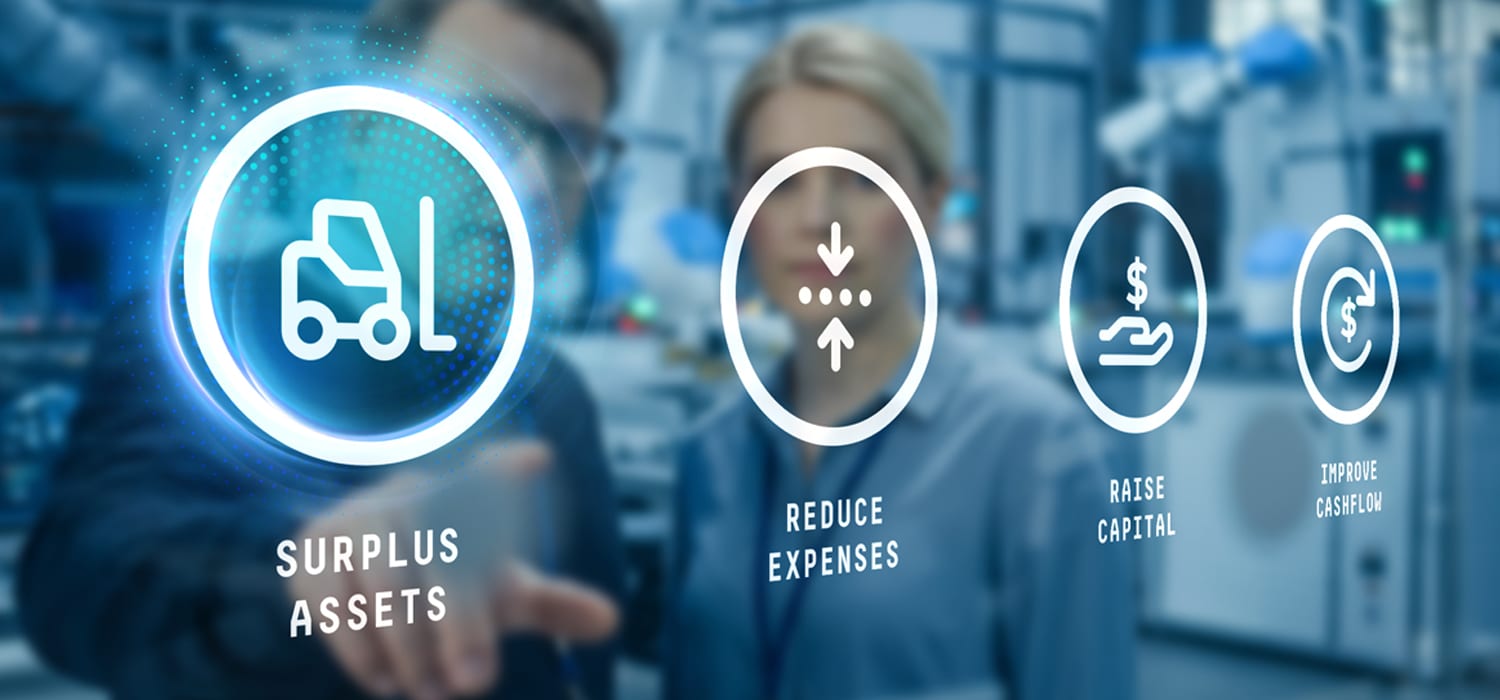
When a company faces liquidity challenges, the conversation typically centers around three areas: reducing expenses, raising capital, and improving cash flow. All three are important, and in many situations, they are essential to stabilizing the business.
What is often overlooked, however, is a fourth source of liquidity that may already exist within the organization: surplus assets.
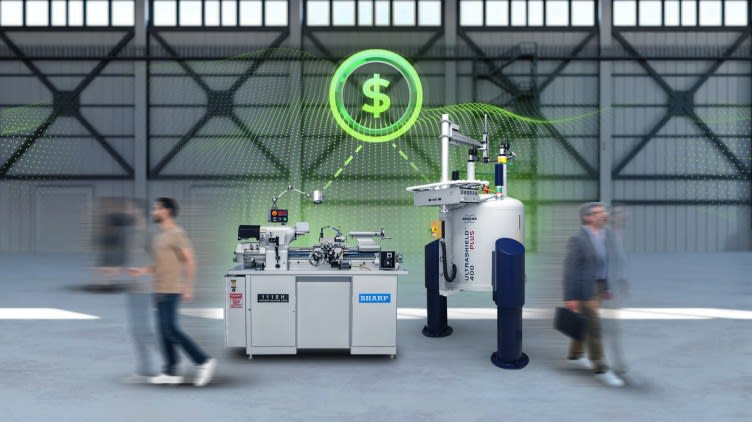
As companies restructure, consolidate facilities, reduce headcount, exit business lines, or right-size operations, they frequently create large inventories of underutilized equipment, R&D instruments, vehicles, manufacturing assets, inventory, furniture, and facility infrastructure. These assets often remain on-site long after they are no longer needed, occupying valuable space, consuming resources, and continuing to depreciate.
The irony is that while leadership teams work tirelessly to preserve liquidity, valuable assets are frequently sitting idle. In many cases, those assets represent one of the fastest opportunities to generate non-dilutive capital and improve the organization's financial position.
The Hidden Balance Sheet
Most organizations maintain detailed records of what they paid for their assets. Far fewer actively manage what those assets are worth today.
As a result, surplus assets are often viewed as an operational issue rather than a financial opportunity. Yet every idle asset represents potential recovery value. The question is not whether the assets have value; the question is whether the organization has a process to identify, manage, market, and monetize them effectively.
For restructuring professionals, lenders, and stakeholders, this distinction can be significant. Recovering value from surplus assets not only generates cash but can also reduce carrying costs, simplify operations, and improve overall recovery outcomes.
Recovery Requires More Than an Auction
One of the most common misconceptions about asset recovery is that it begins when an auction is scheduled. In reality, successful recoveries begin much earlier.
Before an asset can be sold, it must first be identified, documented, evaluated, and categorized. Some assets may be sold into the secondary market. Others may be redeployed internally, donated, recycled, or disposed of altogether. Each decision carries financial, operational, environmental, and compliance implications that must be carefully considered and documented.
This is where many organizations struggle. The challenge is rarely the sale itself. The challenge is managing the entire lifecycle of the disposition process while maintaining visibility, accountability, and proper documentation throughout.
Most Asset Systems Track Cost
Most enterprise asset management systems are designed to answer a straightforward question:
"What did we pay for it?"
That information is important, but during a restructuring a different question often becomes more relevant:
"What can we recover from it?"
Those are two very different objectives.
Tracking acquisition cost and depreciation helps organizations understand historical value. Tracking recovery helps organizations understand future opportunity. Both matter, but the latter is often overlooked until liquidity becomes a priority.
This is one of the reasons we developed SAM (Surplus Asset Management). Rather than focusing solely on ownership and depreciation, SAM was designed to help organizations manage the entire lifecycle of surplus assets, from identification and valuation through sale, redeployment, donation, recycling, and final disposition, while maintaining a complete record of every recovery outcome.
Most asset systems track cost.
SAM tracks recovery.
The Future of Asset Recovery
The most effective organizations are beginning to view surplus assets not as a disposal problem, but as a recovery opportunity.
Rather than treating disposition as a one-time event, they are creating structured processes to manage every possible asset outcome, whether that outcome is a sale, redeployment, donation, recycling effort, or disposal. More importantly, they are preserving the documentation, transparency, and audit trail necessary to support those decisions long after the transaction is complete.
This shift in thinking is transforming the way organizations approach surplus assets. Instead of viewing them as leftover equipment, they are increasingly being recognized as a source of liquidity, recovery, and operational improvement.
Organizations that successfully manage this process often discover that the greatest challenge is not selling assets, it is managing everything that happens before and after the transaction. Visibility, documentation, accountability, and market exposure all play critical roles in maximizing recovery.
The future of asset recovery belongs to organizations that treat surplus assets as a strategic financial resource rather than an operational burden.
In today's environment, liquidity is not always found in financing.
Sometimes it is already sitting on the balance sheet.
And often, it is hiding in plain sight.
John Carroll is the Founder and President of Silicon Valley Disposition (SVD), a firm specializing in asset recovery, surplus asset management, and industrial disposition services. Through SAM (Surplus Asset Management), SVD helps companies, lenders, and restructuring professionals identify, manage, market, and monetize surplus assets while maintaining complete transparency throughout the disposition process.
To learn more, visit svdisposition.com, connect with John M. Carroll on LinkedIn, or contact him directly at [email protected].