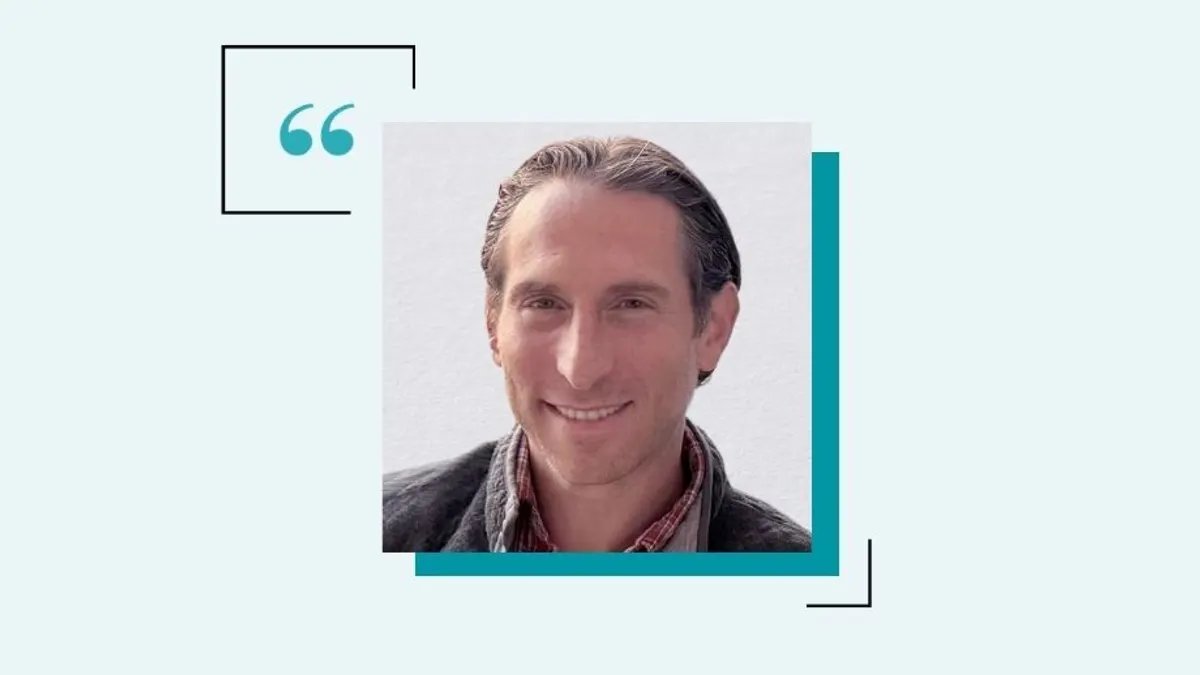
Bruno Annicq believes some finance leaders are thinking too small about artificial intelligence.
While much of the conversation on the topic among CFO circles has focused on automation, Annicq argues AI's biggest impact will come from helping companies make better decisions.
Annicq is CFO at Wellhub, a venture-backed corporate wellness platform that provides employers with employee access to gyms and digital wellness services through a subscription-based service. Formerly known as Gympass, the company serves more than 50,000 global customers.
Prior to joining in February of 2020, Annicq advised companies at McKinsey, led technology initiatives at AOL and served as both COO and CFO at Kaseya, a global IT management and cybersecurity software company.
All of that experience has shaped Annicq's philosophy on AI and leadership in finance. At Wellhub, he has built an AI-first finance organization and redesigned forecasting around probabilistic models. In a recent interview, he explains how AI is reshaping finance and where he believes the CFO role is headed.
Bruno Annicq

CFO, Wellhub
First CFO Position: 2015
Notable previous employers:
- Kaseya
- AOL
- Mckinsey & Company
- Royal Belgian Sailing Club
This interview has been edited for brevity and clarity.
ADAM ZAKI: We're hearing more finance leaders talk about AI agents and automation. Where have you seen that shift from simple task automation to autonomous agents start becoming real?
BRUNO ANNICQ: The automation conversation is the small prize. Taking something that took three days and doing it in three minutes is useful, but it doesn't fundamentally change decisions. The real shift happens when AI changes what you can know.
Take forecasting. For most finance teams, the forecast is one number, refreshed monthly, and everyone knows the real range is wider than the number admits. We rebuilt ours to run a dozen independent models at once and read the spread, and went from 9 to 10% variance on our top-line forecast down to around 2%. More important than the accuracy gain was the change in behavior: finance stopped delivering a point estimate and started providing a clear view of uncertainty and confidence.
"The modern CFO is more operational. The good ones are operational in service of the business, not in competition with it."

Bruno Annciq
CFO, Wellhub
The other shift I'd watch is AI moving from adviser to partner. A chatbot answers questions. A tool like Claude Code sits in your files and takes on the work. Once analysts cross that line, execution stops being the bottleneck. The constraint becomes asking the right questions and that's where decisions start to change.
You made the transition from consulting into operational and finance leadership. What do consultants often misunderstand about running a business versus advising one, and how did that change the way you think?
I'm a bit of an accidental CFO. I trained as a computer-science engineer in Belgium and went to McKinsey. The most important thing McKinsey taught me is that strategy is necessary but not sufficient. So, I left to go operate.
I spent years at AOL in a range of roles, including running a Salesforce implementation for 18 months, which made me dramatically better at technology because I finally saw how hard it actually is. Then my first CFO seat was at a PE-backed software business.
What consultants underestimate is that being right is maybe 20% of the job. The other 80% is getting an organization to move and then living with the consequences. An adviser optimizes the recommendation and hands it over. An operator optimizes the outcome and owns it eighteen months later.
Once you've owned a few outcomes, you stop falling in love with the elegant answer and start asking whether you can actually execute it.
Do you think the modern CFO role is evolving into something closer to a "COFO" model, where finance leaders operate in a dual role?
I don't love the acronym, but the shift it's pointing at is real. I've actually held both roles at Kaseya as COO and CFO. The CFO whose entire job is closing the books and guarding the budget is becoming a smaller job. Finance is the one function that sees across every other function: revenue, cost, cash, talent. So it's natural that it operates and not just reports.
But I'd push on what operate means. It doesn't mean finance colonizes the rest of the company. One of my principles is that finance is an enabler, a co-pilot to the business, not a gatekeeper. The operational CFO earns the seat by making other people's decisions better and faster, not by taking those decisions away from them.
So yes, the modern CFO is more operational. The good ones are operational in service of the business, not in competition with it.
What do you think separates meaningful AI infrastructure investment from companies chasing a trend?
Automation only matters if you can point to the workflow it changed and the impact of the capacity it freed up or the incremental work you can take on.
We treat AI as a growth and margin-expansion engine, not a cost center, and the question we ask is always: where does AI let us scale impact without scaling cost? Meaningful investment takes a specific workflow and redesigns it end to end, and you can measure how the output changed. Trend-chasing buys a pile of licenses and hopes culture catches up.
A couple of months ago I ran a live training for my team. I had three real workflows running in three separate Claude Code agents at once. One automated a monthly report that used to take several people days. It finished during the same hour, and we generated the next month's report in thirty seconds, live, in the meeting. That's the moment people crossed the chasm, not the slide about what AI could theoretically do.
The other tell is whether leadership actually touches it. I build with these tools myself. If the CFO won't open the thing, the organization knows it's theater.
Many CFOs still talk to me about forecasting in deterministic terms even as markets become more volatile. Do finance teams need to get more comfortable operating probabilistically?
Yes, and the resistance is mostly cultural, not technical. CFOs talk about "the forecast" as a single number because that's what boards have always asked for. But a single number is false precision dressed up as confidence.
The model I use comes from outside finance. I do a lot of water sports, and there's an app I rely on called Windy that shows you a dozen weather models on one screen at once instead of a single forecast. When tomorrow's wind reads 15 knots from the east and all the models cluster together, I can trust it.
Where they converge, that's confidence. Where they diverge, that's the signal; it tells you some variable nobody has pinned down is moving the answer. We rebuilt our forecast exactly that way, and variance went from 9 to 10% down to around 2%.
Here's the part finance peers feel immediately: a noisy forecast isn't just a credibility problem, it's a growth problem. When your number is uncertain, you plan around the worst case and under-invest. Tighten the band, and you can invest around the most likely case instead. Same dollars, more of them deployed productively. Operating probabilistically isn't about being less certain. It's about being honest about what you know, and that honesty pays for itself.
Health care costs continue rising at a concerning pace. Are CFOs underestimating healthcare as a long-term financial and operational risk?
Badly, and it's the most mispriced risk on most P&Ls. Healthcare is the second-largest employer expense. Roughly 75% of those costs are preventable, and only 4% of U.S. healthcare spend goes toward prevention. 96% goes to treatment.
CFOs treat healthcare as a fixed, externally driven cost: premiums and drug prices they can't control. They're half right. You can't control the price. But you can bend utilization, and that's the lever most of them don't know they have.
The reason finance stayed out of it is that the return was never measurable. That has changed.
Our Return on Wellbeing report found that 60% now formally measure the ROI, and of those, 95% see a positive return. And the one that should get every CFO's attention: 96% say finance has significant influence over these decisions, and 89% say employee wellbeing is critical to financial success. The decision is already a finance decision. The only question is whether finance is at the table when it gets made.
Looking ahead five years, what capabilities do you think will define the next generation of high-performing CFOs that maybe weren't considered essential a decade ago?
First, real fluency with probabilistic thinking and the AI tooling underneath it, and I mean doing it, not delegating it. The CFO who personally understands how the forecast is built, and whose own AI agents can pressure test the assumptions, makes better calls than the one who waits for the deck.
Second, range. The CFO who only knows finance is going to lose to the one who understands the operating model, the talent equation, and yes, workforce health, because that's where the next decade of hidden cost and hidden value sits.
Third, and this is the one people underestimate as more work gets automated: the judgment to know what not to automate. The scarce skill becomes recognizing which decisions are irreversible and deserve a human in the room.
A decade ago you hired a CFO for control and reporting. The next generation gets hired for capital allocation under uncertainty and for being the clearest thinker in the building. If I had to compress it to one line, it's the thing I wish I'd understood earlier: being right matters less than being useful.