Mid-market CFOs entered 2026 focused heavily on artificial intelligence implementation and long-term transformation planning. By the second quarter, finance leaders were increasingly focused on execution pressure and whether their organizations could realistically keep pace with continuous operational change.
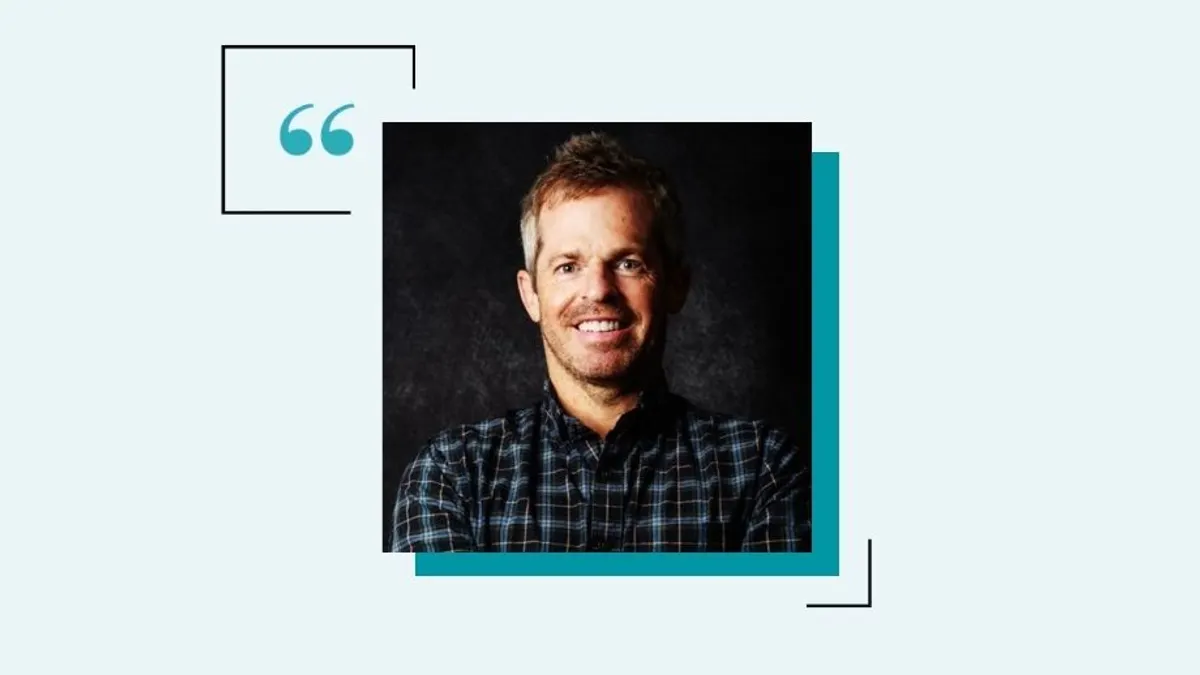
That shift emerged repeatedly throughout first-half discussions hosted by Nick Araco Jr., founder and CEO of the CFO Alliance, who said the tone among mid-market finance leaders changed materially between January and June as healthcare inflation, supply chain volatility, geopolitical instability and internal organizational strain intensified all at once.
“What surprised me most throughout our CFO Alliance roundtables, online groups and one-on-one conversations during the first half of 2026 is not that CFO priorities changed,” Araco said, "it's how much more operationally intense and immediate those priorities became in just six months.”
Araco said many companies began the year focused on AI enablement and modernization initiatives. Those discussions still continue, he said, although finance leaders are now approaching them through a far more operational lens centered on consistency and organizational adaptability.
Araco noted that during a recent gathering of finance executives in Dallas, one manufacturing CFO summarized the mood this way: “I’m spending less time asking where we want to be in three years and more time asking whether we trust next quarter’s numbers.”
That sentiment, according to Araco, surfaced repeatedly during executive discussions throughout the first half of the year as finance leaders dealt with elongated sales cycles, workforce strain, tariff uncertainty, rising healthcare costs and volatile shipping conditions tied to instability in the Middle East.
Managing the COFO creep
One of the larger themes emerging from finance leadership discussions in 2026 is how significantly the CFO role itself continues evolving beyond traditional accounting and FP&A duties.
Araco described the modern CFO role as increasingly becoming an operational one, deeply involved in workforce planning, operational prioritization, pricing strategy, technology implementation and organizational decision-making.
“The CFO role today is increasingly what I call the ‘COFO’ role,” Araco said. “In many mid-market companies, the finance leader is now deeply involved in operational prioritization, pricing strategy, workforce productivity, technology implementation, supply chain decisions, capital allocation, AI adoption, organizational communication and leadership alignment.”
“The leadership gap is not primarily a technical gap. It’s an operational leadership gap.”

-Nick Araco Jr.
CEO and Founder, CFO Alliance
The expanding scope reflects pressure inside organizations attempting to modernize rapidly while still maintaining operational consistency. Araco said many companies upgraded technology stacks over the last several years without modernizing how decisions actually move through the organization.
At a recent executive finance discussion in New York City, for example, one CFO said: “We invested in modern finance infrastructure, but the organization still escalates every important decision through five people.”
That operational friction surfaced repeatedly during leadership conversations this spring, particularly as companies layered ERP implementations, automation projects, AI pilots and operating model redesigns onto already strained management structures.
“What CFOs are struggling with now is whether their organizations can actually absorb and operationalize all of this change while the broader business environment remains unstable and unpredictable,” Araco said.
Several finance leaders described organizations becoming overloaded after years of simultaneous transformation initiatives. During a Washington, D.C., CFO roundtable, one private equity-backed CFO described their teams as “strategically aligned but operationally underwater.”
Araco said finance leaders are taking challenges like this head-on, increasingly viewing themselves as organizational stabilizers responsible for helping leadership teams maintain visibility into the new operational reality being created by AI.
At a recent executive dinner in Austin, Texas, one finance leader told Araco: “Half my job now is helping the organization distinguish between what’s actually happening versus what people hope is happening.”

That broader operational role is familiar to Allegra Novotny, a former CFO and current CFO Alliance member who transitioned into broader executive leadership after overseeing acquisitions and operational growth initiatives. Novotny said organizations often underestimate how difficult the transition from strategic planning to measurable operational execution becomes once initiatives move beyond leadership conversations.
“Strategy is the easy part,” Novotny said. “Execution is where accountability, visibility and ownership have to live.”
She said companies frequently spend years modernizing systems, automating workflows and standardizing reporting processes before realizing that operational visibility alone does not improve decision-making or organizational alignment.
“It matters, but efficiency isn't the destination,” Novotny added. “It's the foundation for the real work.”
Resilience spending continues to reshape capital allocation
The operational pressure facing mid-market finance leaders is also influencing how companies approach liquidity, supply chain strategy, capital allocation and broader business continuity planning in 2026.
Araco said many CFOs are prioritizing resilience and operational continuity as geopolitical disruptions continue affecting procurement, shipping and treasury operations globally.
At a recent Houston CFO roundtable, one energy-sector executive told the group: “We’ve stopped waiting for stability to come back. We’re now managing the business assuming something else will break every quarter.”
Several finance leaders told CFO Alliance they increased cash cushions and carried larger inventory positions despite the additional carrying costs. Others described reassessing supplier concentration risk after ongoing instability tied to the Strait of Hormuz, Red Sea shipping disruptions and freight unpredictability.
One sponsor-backed CFO participating in a Texas executive discussion summarized the mentality this way: “Lean inventory sounds great until your product is sitting on a ship nobody wants to insure.”
That operational mindset is also shaping treasury conversations around blockchain infrastructure and stablecoins.
According to Araco, finance leaders increasingly discuss stablecoins through the lens of treasury operations and settlement efficiency rather than speculative crypto narratives. Treasury teams are evaluating whether blockchain-based settlement systems could reduce friction around cross-border supplier payments, trapped liquidity and multi-day banking delays.
At a New York executive gathering earlier this quarter, one CFO from a global distribution company said, “I don’t care about crypto narratives. I care about not having cash disappear into the banking system for three days.”

Araco said the experimentation remains narrow and highly operational, particularly among manufacturing companies and globally exposed businesses frustrated by the speed limitations of traditional banking infrastructure. “Mid-market CFOs are not suddenly trying to become crypto [experts and] companies,” he said.
At the same time, reshoring discussions continue evolving as finance leaders reassess whether years of supplier diversification and domestic manufacturing investments are producing the returns companies originally expected.
“What I’m hearing from CFO Alliance members throughout the first half of 2026 is that most companies now believe the strategic rationale behind reshoring and supplier diversification was probably right, but the economic payoff has been much slower, much more uneven and much more expensive than many originally modeled,” Araco said.
One CFO participating in a virtual executive discussion summarized the issue directly: “We reduced dependency risk. We did not lower our cost structure.”
According to Araco, many finance leaders increasingly evaluate reshoring through a business continuity framework as companies continue balancing geopolitical exposure against elevated operating costs.
Leadership pipeline concerns grow more urgent
The operational complexity facing finance organizations is also intensifying concerns around leadership development, succession planning and the long-term finance talent pipeline.
Araco said many companies flattened organizations, automated lower-level operational roles and outsourced transactional functions over the last decade, reducing many of the developmental experiences that historically helped build future finance executives.
“The leadership gap is not primarily a technical gap,” Araco said. “It’s an operational leadership gap.”
Several CFOs participating in forums expressed concern that organizations continue producing technically strong accounting and finance professionals while developing fewer leaders capable of managing operational ambiguity, Araco noted.
At a recent San Francisco executive gathering, one private equity-backed CFO told him, “We have a lot of people who can report on the business. We don’t have enough people who can help run the business.”
That concern is becoming increasingly urgent as organizations navigate AI adoption, compensation pressure, healthcare inflation and workforce fatigue.
According to Araco, compensation discussions also shifted materially during the first half of the year. Finance leaders remain willing to pay premiums for operators capable of improving forecasting reliability and organizational execution, although many CFOs are becoming more selective around generalized AI positioning without measurable business impact.
At a Bay Area roundtable in recent weeks, one CFO said, “Everybody suddenly became an AI strategist. Very few can explain how they actually improved the business.”
Araco said finance leaders increasingly prioritize adaptability and operational judgment as AI continues automating portions of traditional finance workflows.
Healthcare inflation also continues to create pressure across compensation planning and retention strategies. Several CFOs described healthcare costs as a direct operating margin issue influencing workforce planning decisions throughout the mid-market.
“Employees don’t separate healthcare costs from compensation anymore,” one CFO said during a recent online executive discussion. “They view it all as personal financial stability.”
Underlying many of the first-half discussions, Araco said, was a growing recognition that businesses require significantly more operational effort to maintain relatively stable topline performance.
At a recent gathering of finance executives in New York, one finance leader summarized the environment this way: “The numbers still look okay. The amount of effort required to produce them is what has changed.”