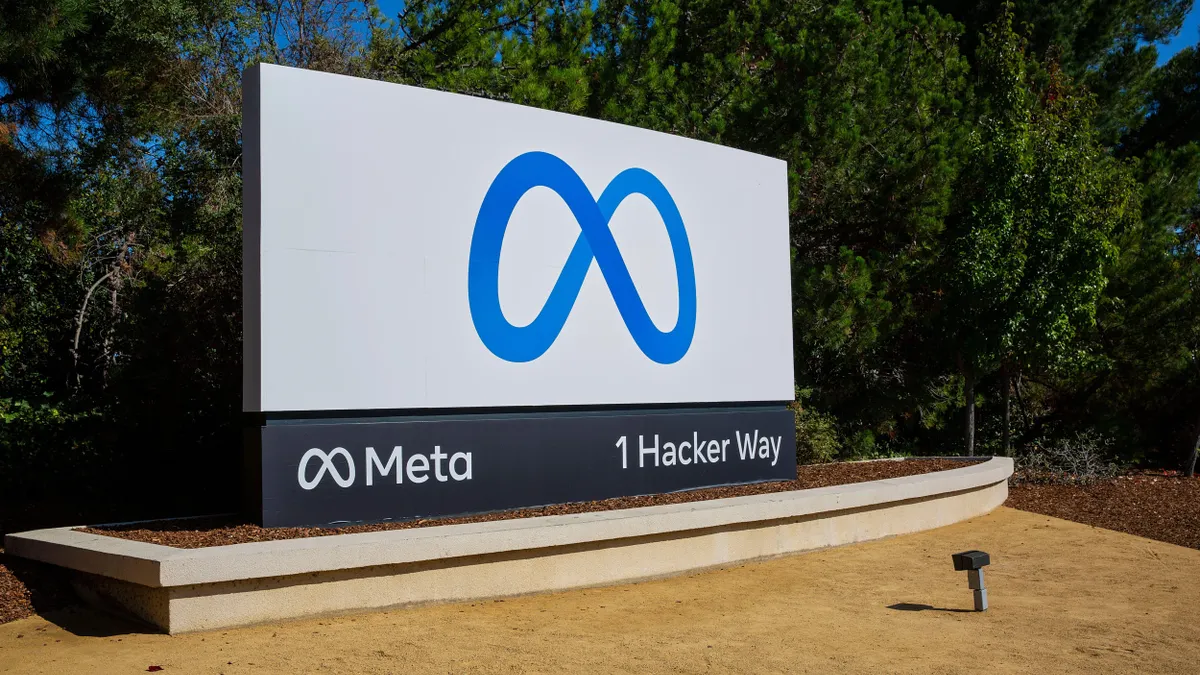
Meta, along with the company’s finance team, is dealing with a lot of moving pieces right now.
Last week, the company agreed to a $16.7 billion settlement with California and a bipartisan group of 51 attorneys general in a federal social media addiction case.
Meta said participating states are expected to receive about $12.7 billion over 10 years, while another $5.3 billion could come from other social media companies if they agree to similar restrictions. Meta also continues to face related litigation, including cases involving school districts and personal injury claims.
At the same time, CEO Mark Zuckerberg has been trying to reshape the company around artificial intelligence. Reuters reported on Aug. 26 that Meta reportedly considered cutting some teams by as much as 60% as part of that push before ultimately laying off 10% of its workforce in May and abandoning a planned second round of cuts.
The scale of Meta’s AI ambitions is also outpacing some of its current applications. CFO Susan Li said earlier this year that large language models were still “not a big part of the work” in Meta’s core ranking and recommendation systems, describing broader adoption there as a longer-term research effort.
Li also acknowledged the enormous infrastructure requirements behind that push and said she worries Meta could still underestimate how much computing capacity it will eventually need.
Inside accounting, however, Meta already has a measurable result. The company has used AI-powered flux analysis to move its financial close from seven days to six and is piloting agentic capabilities elsewhere in its accounting organization.
During a recent webinar with cloud ERP provider Campfire’s founder, CEO and CFO John Glasgow, Aaron Anderson, Meta’s chief accounting officer, explained how the company is approaching a question more CFOs will face as AI moves from employee productivity tools into actual financial processes: How do you put agentic AI inside a SOX-controlled environment without sacrificing the reliability of financial reporting?
Start with the controls finance already knows
Anderson explained how Meta initially approached AI as if the technology might require an entirely new controls playbook. Still, he said the company eventually found that finance already had much of the framework it needed.
He said that means understanding the technology, performing a risk assessment, identifying where it could go wrong and understanding the data funnel behind it. The challenge for him was applying those fundamentals to technology whose outputs aren't always as predictable as traditional systems.
“Don’t underestimate the core skills that you have,” Anderson said, particularly for finance professionals with internal controls experience.
Anderson also shared how the company did not develop its approach alone. About a year ago, Anderson invited people from Google, Walmart and ServiceNow to join Meta employees for two days at Meta’s headquarters in Menlo Park, California. He said there were roughly 15 to 18 people who worked together on the beginnings of a framework for deploying AI responsibly in finance.
Then, the group took a draft individually to each of the Big Four firms’ national offices. Anderson said the firms initially disagreed with significant portions of it and sometimes took different positions on the same control. After several months of discussions, he said there was considerably more alignment.
Meta later brought the framework to Securities and Exchange Commission staff, where Anderson said the discussions ultimately reinforced the idea that existing SEC guidance could be applied to AI without requiring an entirely new regulatory guidance protocol.
How AI can earn more autonomy
Despite the extensive collaboration and research around AI’s role in reporting and compliance, Meta isn't giving AI free rein over financial processes right off the bat. Anderson said the company has been expanding its use as the technology proves it can handle the work.
"Every attempt to try to do something in AI or something around AI within finance hits a limitation on data."

-Aaron Anderson
CAO, Meta
Flux analysis, he explained, was one of the first places it did. Meta's AI pulls from general ledger and transactional data to explain changes in account balances, work that previously required several accountants to move between different datasets.
Meta has now used the tool for four quarters, measuring its accuracy and tracking where people still needed to step in. As it improved, the company expanded its use, and Anderson said the work helped cut Meta's close from seven days to six.
The company is moving more carefully in areas with more variable outcomes. Meta is piloting agents in areas like revenue operations that can answer customer questions about invoices and transactions. One pilot had already been running for about four months as the team continued finding things it wanted to fix.
“The phrase I use [with] my team is, ‘we earn the right,’” Anderson said, referring to giving AI more autonomy only after it has demonstrated it can perform the work reliably.
That also means AI projects aren't moving into production nearly as quickly as the hype might suggest. Anderson said user acceptance testing has taken longer than he expected, and agents require more monitoring and maintenance once they're running.
“It takes way more time than you think,” he said.
The puppetmasters above the agents
Meta learned pretty quickly that better AI wasn't going to make up for incomplete finance data, another challenge to the idea that a single source of truth is all finance needs to get its data AI-ready.
Anderson explained how the company began reworking its data approach in 2024. He said more advanced AI applications can require nonfinancial and contextual data, along with separate datasets used to test whether the technology is actually working as intended.
Much like Zuckerberg’s broader effort to see how far AI can reshape work across Meta, Anderson even tried applying that question to his own job. The company experimented with what he called an “AI CAO,” but the effort quickly ran into a familiar problem: the data wasn't ready for it.
Without complete information to work from, the AI was left trying to fill in the gaps itself. “Every attempt to try to do something in AI or something around AI within finance hits a limitation on data,” Anderson said.
Meta is also trying to avoid causing issues around what others have called the psychological safety of employees, making sure its accountants can keep up with the technology. Anderson's organization includes roughly 550 employees, all of whom are expected to complete an AI fluency program covering the tools, how to work with them, controls and risk and data, followed by three days of in-person training.
Anderson also said he started focusing on training after seeing talented finance employees worry they were falling behind colleagues with deeper technical backgrounds. One employee later told him they had been close to quitting before the training helped give them confidence they could learn the technology.
The longer-term goal here is to make the traditional close less of an event, as Anderson wants Meta moving toward continuous close and continuous control monitoring, where finance can catch issues as they happen.
That could eventually change how those systems are audited, too. Anderson said the profession may have to become more comfortable validating whether AI produces the right financial outcome instead of trying to follow every step the technology takes to get there.
“We may have to go back to the future a little bit,” he said. “We may need to go back to how we, as a profession, get comfortable with not auditing the ones and zeros and the audit trail per se, but we audit the outcomes of the technology.”