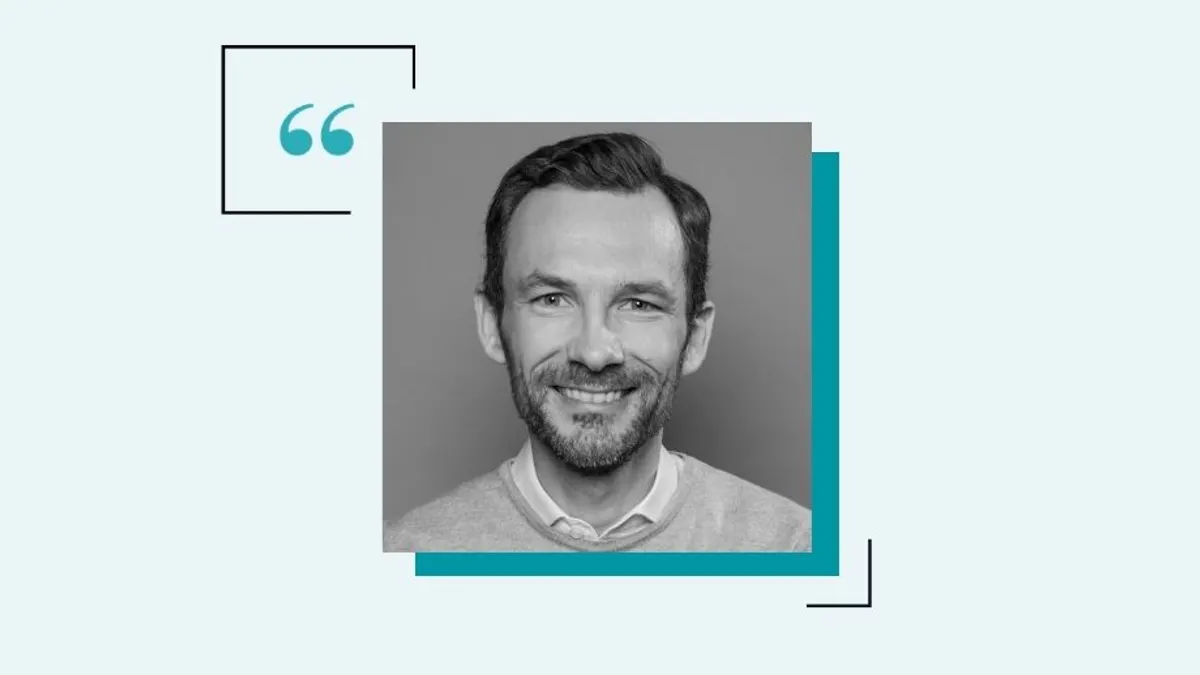


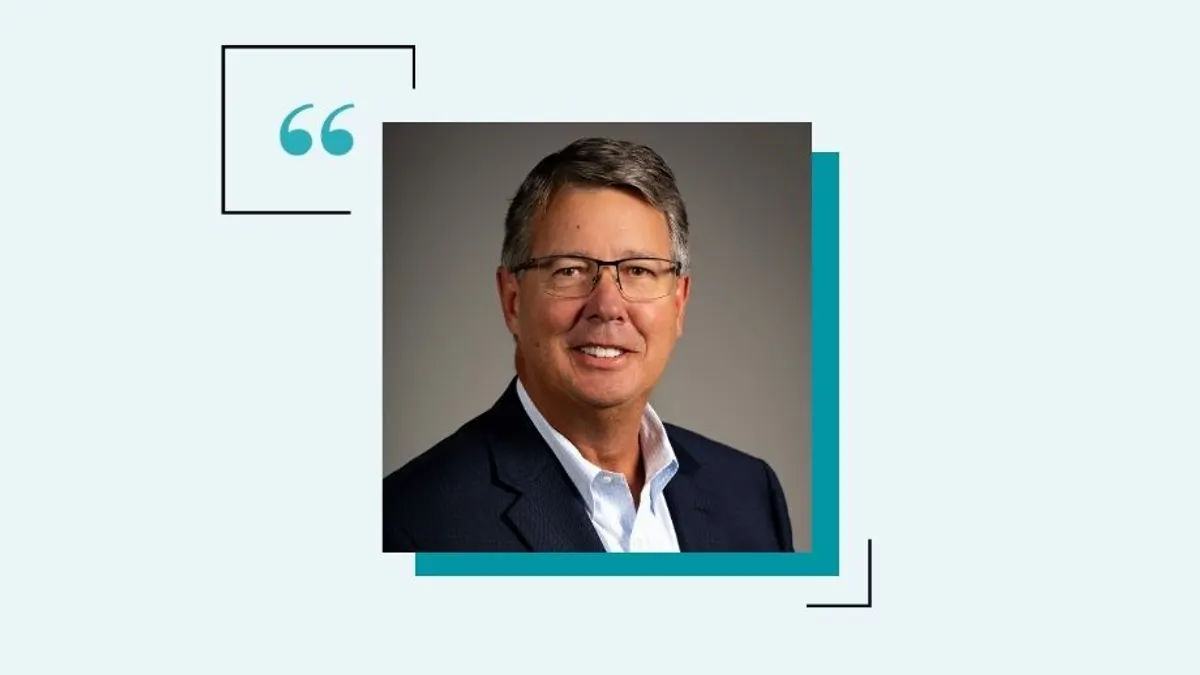
As the former finance chief of the largest for-profit health system in the U.S. for a decade, Bill Rutherford approaches the health industry from a distinct vantage point.
Rutherford, who retired as CFO of Nashville-based HCA Healthcare in 2024, has worked in healthcare finance for his entire 34-year career. He first joined the company as a staff auditor in 1986 and remained there until his retirement, save for a three-year stint in the aughts running his own business. HCA today says it has a network of 190 hospitals and about 2,500 ambulatory care sites.
Now, even in retirement, he aims to keep making his mark in the health space, serving on the board of several healthcare and health tech companies. That includes Ensemble Health Partners, a healthcare revenue cycle managed services firm, whose board Rutherford joined in early 2025.
In an interview with CFO.com, Rutherford reflects on his career in healthcare and looks ahead to the industry’s most pressing challenges today.

Bill Rutherford
Former CFO, HCA Healthcare
First divisional CFO position: 1996
Board service: Ensemble Health Partners (2025-present)
Editor’s note: This interview has been edited for brevity and clarity.
DAN NIEPOW: What are some of the biggest career lessons you learned from your time at HCA Healthcare?
BILL RUTHERFORD: We're all searching for a way to make a contribution in some manner, whether to our profession or to our communities. If you can find those, it makes the job easier. You can find a purpose to stay true to.
What I've found and what I help advise other people on is to find your passion. Find something you believe in that you can wake up every day enjoying. Find a way to play to your strengths and make a contribution to your organization in whatever way you can, and then ultimately find a way to give back.
You were CFO of HCA during the height of the COVID-19 pandemic. Talk a bit about how you managed financials and led through such a disruptive time for healthcare.
I was very proud of the way the organization led through that. Our CEO and management team stepped up and did an incredible job. Our mission is what led us through that period of time. Our focus was to protect our people as they were going through uncertainty, to be there for our patients and to be a valuable asset to our communities.
We made commitments to our employees that no one would lose their job during COVID. We also made a commitment that we would be there for our patients in their time of need and to be a valuable asset to our communities.
Ultimately, we also had to protect our company over the long run, and we’re proud we did that, too.
Much has been written on the so-called “clinical-financial gap” between care delivered in clinical settings and what insurers and health systems are willing to pay for. What’s your take on bridging this gap, and what role might finance play in it?
I’d start by backing up a bit and noting that the healthcare industry is a heavily regulated industry. Its revenue cycle is also very complex. And when you think about most providers, many of their patients are either on government-sponsored plans through Medicare or Medicaid, or they’re insured through other private payers.
As a health system CFO, you're dealing with really limited growth in your top line alongside rising costs. So, you've got to find ways to bring scale. You’ve got to find ways to bring technology and efficiency to play. Oftentimes, as a standalone system, you don't have those resources available to you, or you have a lot of competing demands. As a result, we see in the industry today more and more health systems becoming more open to external partnerships with organizations like Ensemble.
We’ve reported on the rising cost of healthcare facing CFOs of all kinds these days. Do you see that trend reversing anytime soon?
Our health systems are working on it, around the clock. They’re trying to not only scale but to bring efficiencies to help lower costs. I think probably the No. 1 initiative underway right now is reducing variation throughout systems.
The reality is you’ve got labor, which is necessary for providing care. You've got clinical technology, which is necessary to provide care. You've got pharmaceutical advancements and clinical advancements. So, the concept of healthcare costs being higher than the consumer price index has been in place for some time. I think organizations are finding ways to navigate that.
Many systems are asking: How do we bring scale? How do we bring technology into play? How do we bring standardized practices? How do we bring cost efficiency into play?
We also know that the U.S. federal government remains the largest healthcare payer here. What might that mean for the future of healthcare organizations?
It’s true that when you combine Medicare and Medicaid, they would be the health system's largest payer. Most volume of patients are going through it, though of course there are obviously regional variances that occur with that.
And you're not getting reimbursement increases from those areas. If you're lucky, you're getting maybe 1% or 2% a year. I think what health systems have to do is focus on the efficient delivery of care in order to navigate those kinds of top-line limits that occur because of governmental payers. In my mind, that's where scale comes into play. That's where technology comes into play. That's where evidence-based and standard-based operating protocols come into play. That's where the challenges of healthcare finance are right now.
What advice might you give to a young person considering a career in finance or accounting today?
First off, I continue to believe it's a great career to go into. When I look at the leaders in organizations today, a lot of them came through the finance and accounting ranks. It gives you such a great foundation for any business enterprise.
The advice I give to young people is to find your passion. And in your own organization, understand the objectives of the business. Understand the resources available to employees. Learn the business at its foundation level, and then work to build that foundation very well. Understand all the costs of the inputs and the value of the output, and that will serve you well as you navigate through your career and as you take increasingly more responsibilities through the organization.