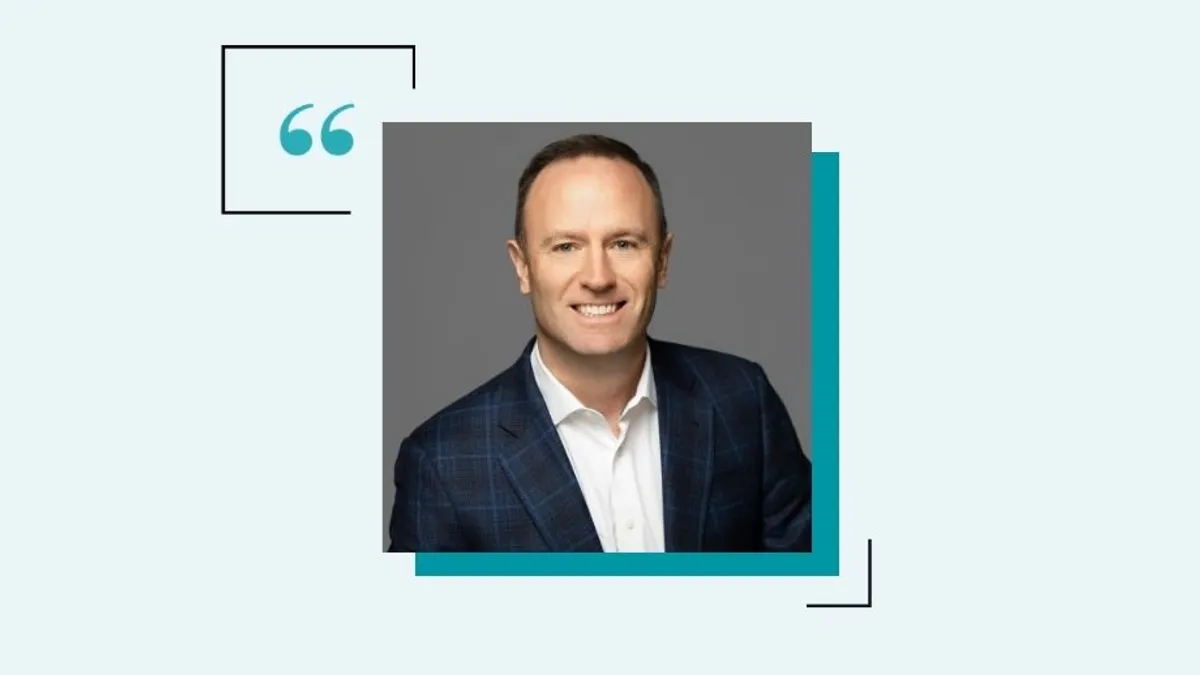
The following is a guest post from Moira Conlon, founder and CEO at Financial Profiles. Opinions are the author’s own.
At the height of the public markets, there were roughly 8,000 publicly listed companies in the U.S. Today, there are fewer than 4,000, as private equity and private credit have made it easier for companies to stay private longer by accessing capital outside the public markets. Fewer public companies should, in theory, make it easier for small- and mid-cap companies to attract capital, coverage and investor interest. Instead, many are underfollowed, underowned and struggling to get credit for their performance.
The valuation gap is real: T. Rowe Price has noted that small- and mid-cap stocks have traded at some of their steepest discounts in decades, while other market data show the Russell 2000 trading at a meaningful forward PE discount to the S&P 500.
The competitive landscape for capital has changed
The investment landscape has changed dramatically. Capital is increasingly concentrated in mega-cap technology, AI leaders and other headline-grabbing growth stories, while private equity, private credit and alternatives continue to attract significant investor capital. ETFs now outnumber U.S. listed stocks, creating even more competition for attention.
At the same time, the great wealth transfer is reshaping who controls capital and how investment decisions are made. New and next-generation investors are encountering an onslaught of public and private investment products packaged in new wrappers and backed by sophisticated marketing from ETF issuers, private-market platforms and large asset managers. SMID companies are no longer competing for capital and attention versus other public companies. They are competing against a larger, louder and better-marketed universe of investment options.
Visibility has become harder to earn
According to Federated Hermes, nearly half of Russell 2500 companies are covered by five or fewer analysts. By comparison, S&P 500 companies average roughly 26 analyst ratings per company. And, according to Bank of America Global Research, the least-covered small caps have underperformed the most-covered small caps. In a market where investors are inundated with opportunities, limited sell-side coverage can make it harder for high-quality SMID companies to break through the noise.
That visibility challenge has also changed the way companies need to communicate. The old assumption that strong performance will eventually be discovered is increasingly risky. In a market dominated by mega-cap narratives and marketed investment products, SMID companies must actively compete for attention by telling a clear, differentiated equity story, reinforcing it consistently and reaching investors where they actually consume information.
That requires a more modern communications playbook. Earnings calls, investor presentations, conferences, non-deal roadshows, analyst and investor events, media, thought leadership, digital content, video and social media must work together to reinforce the same story. The goal is not to make more noise. It is the disciplined visibility, credibility and repetition needed to break through.
Whatever the cause, a persistent valuation gap limits growth plans, makes acquisitions harder to finance, reduces the effectiveness of equity compensation, and narrows the value-creation options available to management and the board. It also puts companies at risk of an activist campaign or hostile takeover. Activism is no longer just a large-cap game. According to Barclays, companies with market capitalizations below $5 billion accounted for 68% of activist targets in the first half of 2025, a five-year high.
Understand the gap before trying to close it
Against this backdrop, SMID companies need to do more than ask why their stock is undervalued. They need to understand what is actually driving the gap. For some companies, the issue may be performance, growth outlook, capital allocation, sector dynamics, management credibility, or governance. For others, it may be Wall Street sponsorship, trading dynamics, peer positioning, investor perception, or investor communication. Often, it is a combination.
Once the drivers are clear, it becomes easier to build an actionable roadmap with clear priorities, ownership, and measures of progress. Depending on the diagnosis, that may mean addressing key performance issues, sharpening the investment thesis, improving disclosure or evolving investor communications and engagement practices.
Investor relations can make a measurable difference when it is tied to the right diagnosis. According to IHS Markit, highly effective IR can support a 15% valuation premium and lower volatility by 5%, as measured by beta, while ineffective IR can lead to a valuation discount of 10% or more. At the same time, IR best practices continue to evolve. Investors expect clear disclosure, consistent messaging, more digital engagement, more targeted engagement and a more sophisticated approach to Wall Street marketing. For SMID companies with leaner teams and fewer resources than larger issuers, keeping pace is harder, but it is also more important.
There is no quick fix for a persistent valuation gap, but there is a disciplined way to address it: understand the drivers, create a blueprint to address them, take measurable action and communicate with the consistency, creativity and credibility the market now requires.
For SMID companies competing in a more crowded capital market, that work is no longer optional. The days of “build it, and they will come” are over. Companies that want the market to recognize their value have to be more strategic, more creative and more disciplined in how they communicate their value creation story.