Welcome to The 6 a.m. CFO, where finance chiefs share how they jump-start their days and engage with the tasks that are in front of them.
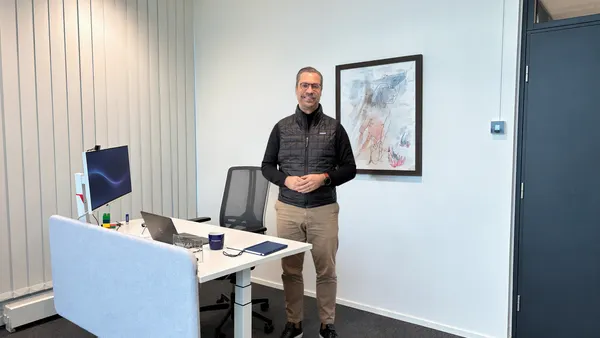
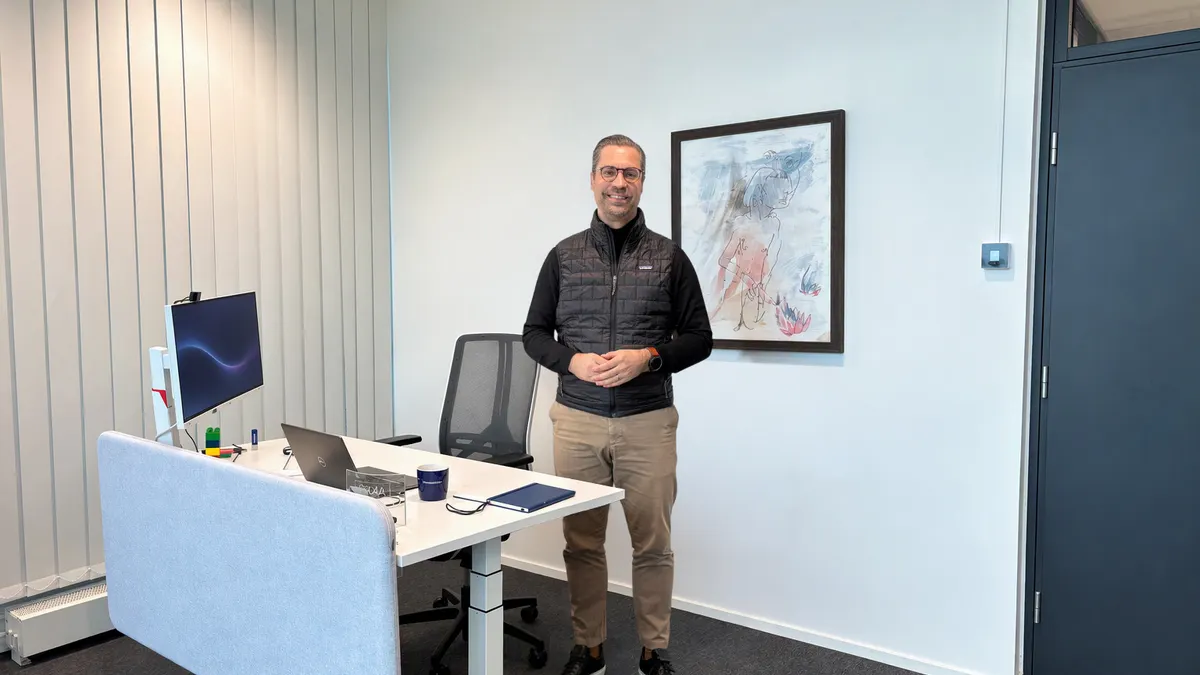
Today, Basware’s CFO, Martti Nurminen, shares his morning routine.
Be sure to check out the entire 6 a.m. CFO series, and if you’d like to be featured in a future post, please email us here.
Basware
- Global software company that provides Invoice Lifecycle Management.
- Year founded: 1985
- Number of employees: 1,350+ employees across 16 countries
- Growth: The platform has processed more than 2.5 billion invoices representing over $10 trillion in cumulative spend, and currently processes more than $1 trillion in invoice value annually, equivalent to roughly 1% of global GDP.
MORNING ROUTINE
Walk us through your normal workday morning routine: Wake up, short morning exercise, shower and get dressed.
6 a.m. — Breakfast. At breakfast, sit down with my notebook, a morning reflection moment, me time, both private and work-related reflections.
6.30 a.m. — Morning working session at home. Take on whatever is the most challenging thing of the day.
7.30 a.m. — Wake up our 2.5-year-old if he has not woken up earlier himself, short moment with him and get him ready to go to day care.
8 a.m. — Kiss wife and our 8-week-old son, and leave home to take our older son to day care and drive to work.
8.30 a.m. — At the office.
Morning beverage choice: Coffee!
Can you share a recent morning where things didn’t go according to plan? There have been some mornings lately where I have just felt that I need to sleep for 1.5 hours more and only wake up at 7 a.m. I am making a conscious effort to listen to what my body is telling me, but paradoxically, if I sleep longer, I know that missing my morning routine will just as quickly impact my mental well-being and level of performance. So, it’s a balance I work to get right.
How do you structure your first few hours after you log on at work? I am making a conscious effort to tackle the most challenging matters of the day during the morning. Sometimes it’s personal working time on a matter; sometimes it’s a review or a workshop.
Time you send out your first email: Usually, a few emails at the beginning or at the end of the 6:30 a.m. to 7:30 a.m. slot, but not many, as that is not my preferred time to focus on email.
Mid-morning snack of choice: Just water and some more coffee.
Advice for writing an effective email: I would first think through, “does it need to be an email at all?” If yes, I like emails that start with a conclusion, then an action and give context second. I can then select if I want to also read the context.
LEADERSHIP AND INSPIRATION
Favorite mantra: My mantra that I keep reminding myself of is: It’s all about rhythm.
Favorite leadership lesson: In leadership, empathy needs to grow at the same rate and pace as demands and ambition levels grow. If we only increase what we demand from each other and always increase our ambition levels, without growing empathy, we run the risk of running people to the ground. This is not easy, and not saying I always get it right, but I am making a conscious effort to focus on this aspect.
Something important to know about you that you wouldn’t know from your business bio: I am a very proud father of two young boys, and my wife is just amazing!
What was the last job you did at your company that fell outside your traditional scope of work? I often load up the dishwasher with dirty dishes at our HQ.
How have you learned to manage work-induced stress? My morning routine and my daily rhythm keep me balanced. Especially the morning routine; when I don’t sometimes get to it, or for a few days don’t get to it, I can very quickly feel the impact.
What are the most noteworthy items in your workspace? A drawing from our 2.5-year-old.
Favorite phone app that is unrelated to work: Probably Garmin Connect. It helps me look at the relevant well-being trends about myself. Not every day, but at regular intervals.
Make and model of your first car: Volkswagen Golf
The most important book you’ve recently read: I keep coming back to Daniel Kahneman’s “Thinking, Fast and Slow”. For me, it provides such an important framework for how we think, make decisions and what biases we need to be aware of. I use it as a refresher at regular intervals.