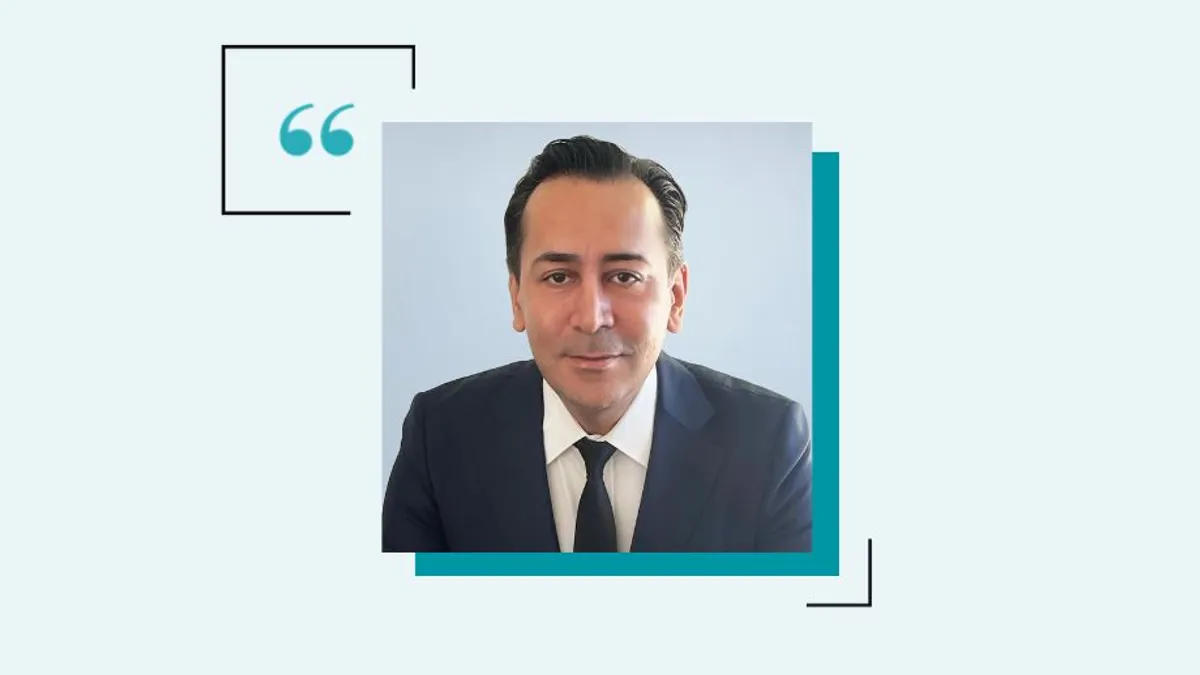
Anurag Kakar knew while completing his second biochemistry degree at Oxford University that working in a lab or as a professor wouldn’t bring him what he craved — adventure and money. He turned to finance instead, a decision that took him from London to Japan and New York.
Kakar started his nearly 30-year finance career at Merrill Lynch, where he priced risk and raised capital for sovereign governments and corporations. After seven years, he joined consulting firm Oliver Wyman as a management consultant and eventually became a partner. There, Kakar advised the CFOs and chief risk officers of the world's largest banks, insurers and sovereign wealth funds in more than 15 countries.
After 20 years at the consulting firm, Kakar left in 2024 to co-found Azurium with two colleagues. The financial advisory firm employs about 30 staff who support the founders as fractional CFOs for organizations with annual revenues between $1 million and $25 million. Kakar is also the organization’s CFO.
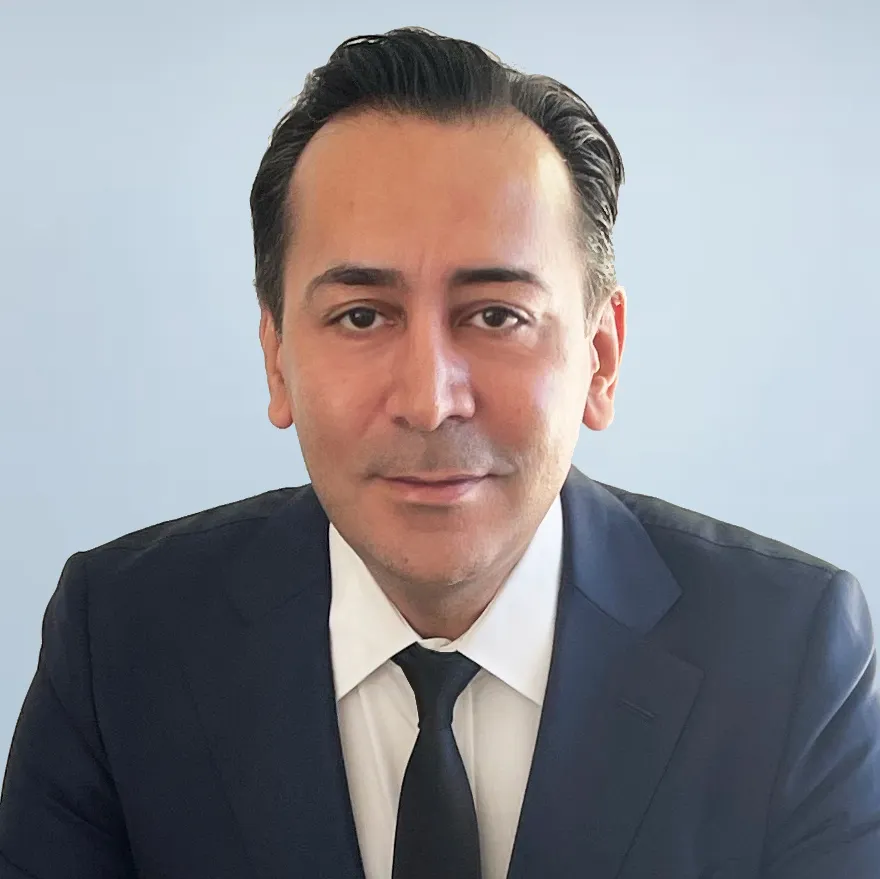
Anurag Kakar
CFO and co-founder, Azurium
First CFO position: 2024
Notable previous employers:
- Oliver Wyman
- Merrill Lynch
This interview has been edited for brevity and clarity.
SANDRA BECKWITH: You have two biochemistry degrees. Why did you pursue a finance career instead?
ANURAG KAKAR: I was very much a child of immigrants in the U.K. I was brought up in a working-class environment where education was the top priority, almost to the exclusion of everything else.
My parents impressed upon me that I was going to prepare for a professional career by educating myself to do something very rigorous, scientific and demanding. That led me to study biochemistry.
But despite being a child of immigrants, or maybe because of it, I was wildly ambitious. By the end of my studies, I wasn’t interested in getting a Ph.D., becoming a professor and eventually running my own university lab. I wanted to get out of my environment, travel the world and be financially rewarded.
Oxford introduced me to professional service options for those not pursuing their chosen field of study — banking, consulting and accounting. Banking was my top choice because it paid well, had prestige and offered the opportunity to travel. I joined Merrill Lynch’s emerging market team after graduation.
How did you leverage your science background to become a finance professional, and how are you using it now?
It’s the foundation on which I do everything today. In the laboratory as a student, I became comfortable with generating hypotheses, testing them, understanding the data and being held to account by the data. The data is the truth.
I still apply that methodology and approach today. Ultimately, business runs on data just as science does. As a CFO, my job is to collect the data, draw out insights and present that information to the people who run the business.
Was there a pivotal moment or an “aha” that brought you to where you are now?
There wasn’t a specific moment — it was a more gradual realization that was helped along by the opportunity to set up my prior employer’s business in Japan. Because there was just one other person besides me, I had a lot of agency to make decisions without much oversight.
At the same time, I knew something was missing from my career. It was financially gratifying, but not spiritually rewarding. When I saw how much I enjoyed that freedom to chart my own destiny and make decisions in Tokyo, I knew what I needed to make my career more satisfying. I took the plunge and built something in my own name.
What’s the biggest challenge as a fractional CFO?
It’s ensuring that clients don't see us as just glorified accountants.
As CFOs, we're partners with CEOs, helping them navigate the business. A great CFO will help you put together a great budget for next year, build a strategic plan for the next three years and create a set of scenarios together with corresponding contingencies. They're helping you look forward and navigate the future.
An accountant, on the other hand, looks backward to tell you what happened last month, last quarter or last year.
What’s something you wish you’d known earlier in your career?
It’s that if agency is what you really desire — if your inner calling is to chart your own destiny — it’s only going to happen outside the corporate world. The question is: When’s the right time to pursue it?
What advice would you give to others in finance hoping to become CFOs?
Try to move into the FP&A side of things, especially if you’re currently in the accounting area.
FP&A is where you are putting together the plans and scenarios. You're thinking through all the what-ifs. What if this happens next year? What should the business do? What kinds of decisions should the business make? You're learning that while you have to be very comfortable with the numbers, you also have to be comfortable with the business itself.