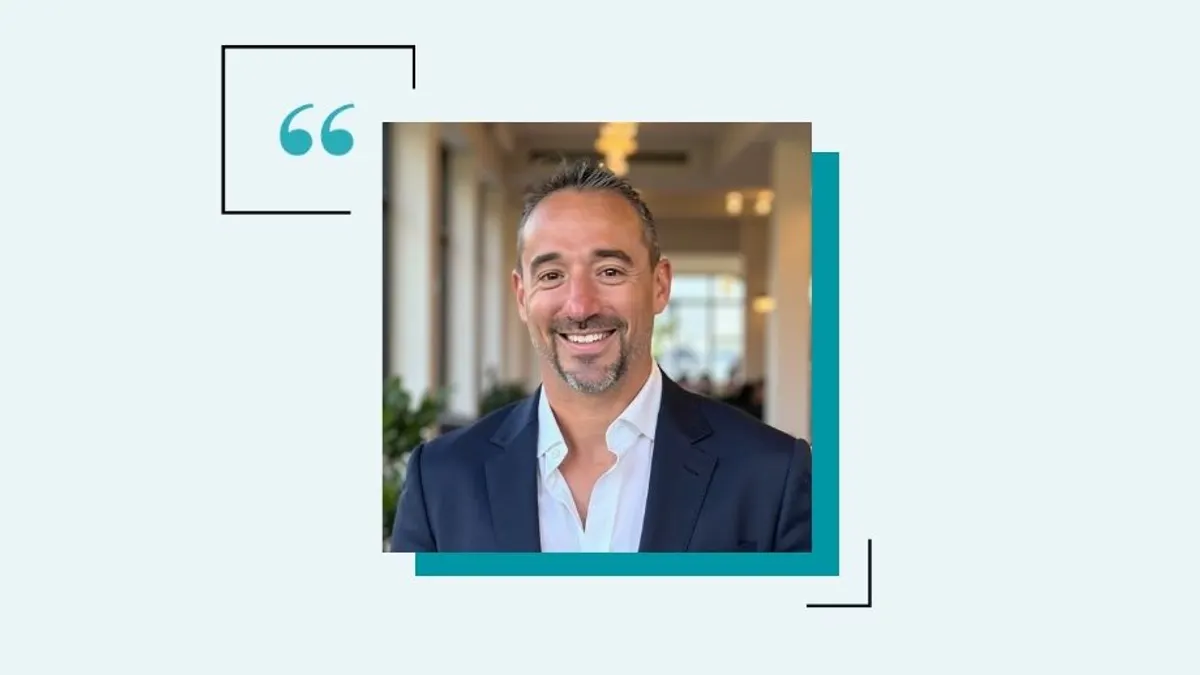
"Quite literally, what these AI tools are doing today is what I did for the first 10 years of my career."
That's how Teikametrics CFO Brian Beaupre describes the rapid evolution of the use of artificial intelligence in finance. Before becoming CFO of Teikametrics — whose software helps e-commerce sellers manage advertising, inventory and profitability across major online marketplaces — Beaupre built his career in FP&A and finance leadership in different roles at companies including NetSuite, Ipswitch, CloudLock and Digital.ai.
Speaking with CFO.com at the CFO Leadership Council's Boston conference, Beaupre shared why he believes tomorrow's finance leaders will need a deeper understanding of data and AI, how the CFO role has evolved into one of the most operationally influential positions in the C-suite and why authenticity, not imitation, is one of the most important leadership lessons he's learned in his career.
Brian Beaupre
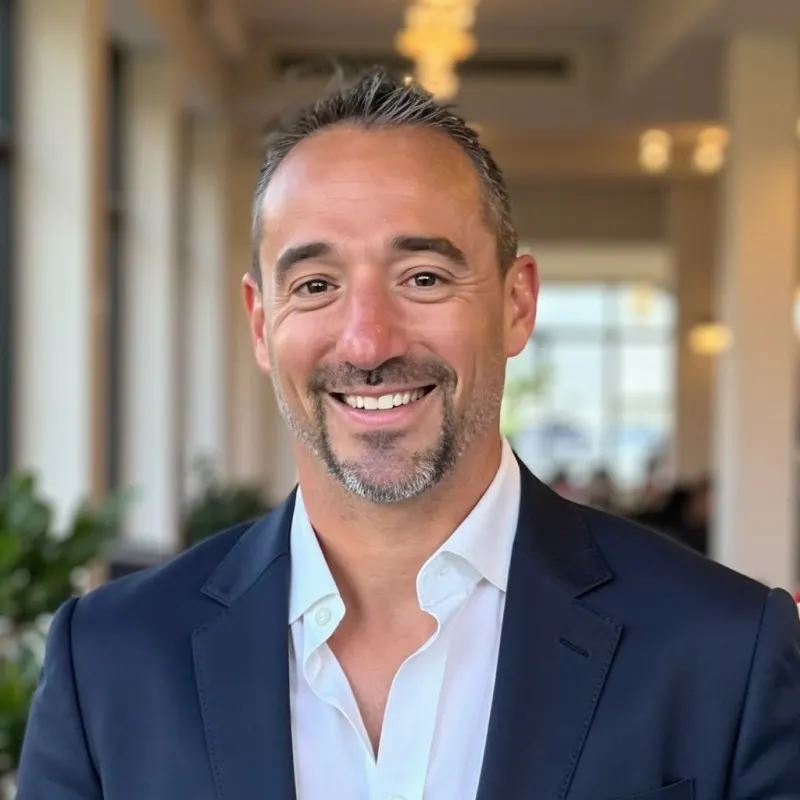
CFO, Teikametrics
First CFO Position: 2022
Notable previous employers:
- Digital.ai
- CloudLock
- NetSuite
This interview has been edited for brevity and clarity.
ADAM ZAKI: You've been involved with the CFO Leadership Council for nearly two decades while also moving through several finance leadership roles. How has that experience shaped your career and leadership development?
BRIAN BEAUPRE: I'm a bit of a unique story.
I've been on the advisory board for the flagship Boston chapter for 18 years, and I joined much earlier in my career than most people do. Typically, it's directors, VPs and CFOs who become involved.
At the time, I was with NetSuite, one of the first sponsors of the CFO Leadership Council's Boston chapter. NetSuite acquired a professional services automation company called OpenAir in 2008, and I became the only finance resource supporting that business unit after the acquisition. That also made me the de facto liaison between NetSuite and the council, attending networking events and helping represent the company.
When I left NetSuite after nearly five years, I stayed involved with the council. As my career progressed, I remained active on the board alongside many of the organization's founding members. Watching it grow from a single chapter in Boston into what it is today has been incredibly rewarding.
I owe a tremendous amount of my professional growth to this organization. I won't put a percentage on it, but I wouldn't be where I am today without the people I've met through this network.
I never missed a session. Before COVID, I made it a point to attend every event, take notes and learn. More importantly, it helped me become a known part of the Boston finance community and introduced me to mentors who had a lasting impact on my career.
I'm a huge advocate for networking, especially when you don't need anything. That's when you should be building relationships, learning from others and finding ways to pay it forward. Then, if you ever do need advice or support, you've already built a network you can lean on.
I can't recommend it enough, particularly to younger finance professionals. The value isn't just in advancing your career. It's in continually learning, growing and eventually helping others do the same.
Looking back on your career path, would it still be possible to follow the same trajectory today? And if you were starting in finance at 30 years old, what skills would you prioritize?
Quite literally, no.
The way I built my chops in finance was by building models in Excel, rolling up my sleeves, understanding what was happening in the business and creating scenarios that helped people plan with high-fidelity data and forward-looking analysis.
Quite literally, what these AI tools are doing today is what I did for the first 10 years of my career.
“If you’re trying to build a career in finance today, I’d focus on getting as comfortable with AI tools as possible.”

Brian Beaupre
CFO, Teikametrics
If I were 30 and trying to navigate that same track today, I'd recognize that the finance function has evolved tremendously over the last decade. First, technology helped automate work that people were doing manually to save time. Then finance became responsible for democratizing data and enabling better decision-making across the business through shared metrics. Now it's becoming AI-driven.
If you're trying to build a career in finance today, I'd focus on getting as comfortable with AI tools as possible. I've told interns in my organization the same thing. If you have a baseline understanding of coding, databases or tools like Databricks, SQL and similar technologies, and you combine that with financial acumen, that's what the modern CFO is going to look like in 10 to 15 years.
I'm not saying you need to write code yourself. But you do need to understand the underlying data warehouse and the business logic behind the numbers. Just as my generation needed to understand everything sitting behind the spreadsheet, the next generation needs to understand what's sitting behind the data that feeds today's analytical tools.
I think that's where people navigating their careers are going to have to reinvent themselves.
More CFOs are taking on additional executive responsibilities, whether that's serving as COO, CAO or another leadership role. What's your perspective on finance leaders wearing multiple hats?
Over the last 10 to 15 years, I've watched the CFO role increasingly absorb responsibilities that traditionally belonged to the COO.
My CEO says this to me all the time. He's a founder, and he'll tell me the CFO is the most powerful person in the company because nobody else combines analytical rigor with big-picture strategic thinking the way a CFO does. Finance leaders have the ability to connect those two worlds, create a narrative around the business and help drive it forward in a way few other executives can.
When the role is deployed properly, I think today's CFO can serve many of the same functions as a traditional COO. You're leveraging analytics and an intimate understanding of the company's financial envelope to inform operational decisions across the business. Historically, that's exactly what great COOs have done.
Technology has accelerated that shift. As businesses become more data-driven, the finance function sits at the center of many of the decisions that shape operations. CFOs aren't just reporting on performance anymore. They're helping determine where the business goes next.
Coming through the FP&A track, I also believe finance leaders need operational experience. You have to understand how to leverage your access to financial data, connect it to the company's objectives and translate that into action across the organization. That's the spirit of the COO role in the first place.
Can you share an example of a technology investment that's had a meaningful impact on your finance team?
The first one that comes to mind is our FP&A platform DriveTrain. We invested a lot of time implementing it, and it integrates with Salesforce, NetSuite and Databricks, where we manage much of our recurring revenue analytics.
Going back to my earlier point about AI, it serves as a consolidated validation layer for the business. We use it for financial forecasting, ARR reporting, upper-funnel analytics and dashboarding. We no longer spend our time running budget-versus-actual meetings by pulling data from spreadsheets.
More importantly, it's helped us shift finance away from being a fulfillment function. Instead of people asking finance to produce another spreadsheet, we've focused on codifying our business rules, aligning the organization around the KPIs that matter most and making that information available to the people making decisions.
That's where finance should be spending its time. It shouldn't be manually producing reports. It should be creating alignment around the metrics that drive the business and democratizing that information so leaders across the organization can make better decisions.
“I’ve been fortunate to have incredible mentors throughout my career. At every stop, there has been someone who has had a tremendous influence on me, both technically and as a leader. What I’ve tried to do is create a mosaic from those experiences.”
Brian Beaupre
CFO, Teikametrics
On the tactical side, we've also seen a lot of value in automating accounts payable through Tipalti. It's eliminated a significant amount of manual work around vendor payments while creating a stronger approval workflow. Budget owners now review invoices to ensure they align with the agreements we've signed and the work that was performed.
Those are two investments that have really moved the needle for us. And, of course, implementing an ERP like NetSuite instead of relying on QuickBooks is table stakes today. That's a story from 15 or 20 years ago. The next generation of value comes from the tools you build around the ERP.
There are plenty of resources on how to become a successful CFO, but not as many on what can make someone an ineffective one. Over your career, are there any habits or leadership traits you've seen that new CFOs should avoid?
I'm still learning, so I don't pretend to have all the answers, but I will say that the biggest lesson I've learned is not to try to be something you're not.
When you become CFO, it's easy to assume the role comes with a certain posture. You think you have to be feared, rule with an iron fist or lead in a way that's more directive than collaborative. I don't think that's true.
I've been fortunate to have incredible mentors throughout my career. At every stop, there has been someone who has had a tremendous influence on me, both technically and as a leader. What I've tried to do is create a mosaic from those experiences.
Nobody is great at everything. If there are 20 leadership competencies, you're going to be strong in some, average in others and weaker in a few. I've tried to take the qualities each mentor excelled at and incorporate those into my own leadership style rather than trying to copy any one person.
Early in my time as a CFO, I probably spent too much energy trying to fit what I thought the profile of a CFO should be instead of simply being myself. The reality is, you earned the role because of who you are, not because you're trying to imitate someone else.
So don't force yourself into some prescribed mold of what you think a CFO should look like. Everyone romanticizes leaders they've worked for, but your perspective is often incomplete.
Trust what got you to the role in the first place. There isn't one formula for being an effective CFO. If you're naturally collaborative, don't stop being collaborative because you have the title. Yes, you'll have to make difficult decisions, but you can still lead in a way that's authentic to who you are.
For me, that means taking the best qualities from the people who've shaped my career, blending them with my own style and building a leadership approach that's genuine.