The following is a guest post from Jason Hershman, founder and fractional CFO of Point. Opinions are the author’s own.
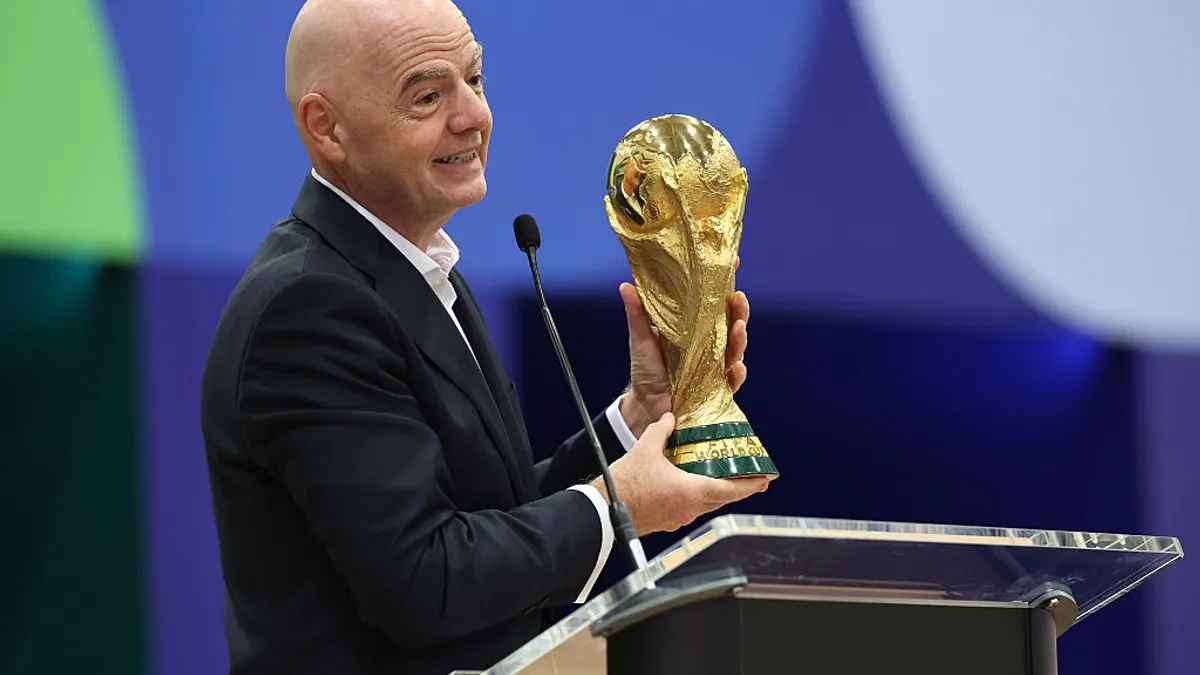
FIFA president Gianni Infantino was untouchable two weeks ago. He'd just thrown the most lucrative World Cup ever staged. He'd spent the year collecting world leaders like Panini stickers, inventing a FIFA Peace Prize for Donald Trump weeks after the Nobel committee passed Trump over and hand-delivering a World Cup trophy to the Oval Office.
So maybe he figured nobody would flinch on July 28, when FIFA announced it was selling a fifth of the golden goose: World Cup media rights, ticketing, sponsorship and licensing, packed into a new subsidiary called FIFA Forward Enterprise, valued at $20 billion, with Josh Kushner's Thrive Eternal leading investors in for 20% at $4.2 billion.
JPMorgan ran the process. The 211-member federations got a slide deck and a deadline. Four days later, the whole thing was dead, Infantino himself announcing the proposal "will not proceed" while his own advisers headed for the exits.
The obituaries are blaming politics: the Kushner name, the Trump orbit, the Union of European Football Associations protecting its turf. All juicy, none decisive. Any halfway-decent CFO could've called time of death from the term sheet alone, names redacted, before their coffee cooled. The killer was a multiplication problem.
Grab a pen and pad.
Start with the napkin math
Passage required 106 of FIFA's 211 members to vote yes, and every yes came with a one-off $20 million payment and a September 19 deadline attached.
Now multiply. 211 federations times $20 million is $4.22 billion. The amount investors were putting in: $4.2 billion. Per CNN's reporting, those one-off payments were underwritten by the incoming private money.
The raise and the vote-getting budget are the same number. FIFA wasn't raising capital to build anything. It was collecting $4.2 billion from investors to hand $4.2 billion to its own electorate. I've never seen a sources-and-uses table where the use of proceeds was "pay the voters."
When the backlash hit, Infantino raised the offer to $40 million per federation within a day. The fallback for voting no: roughly $10 million spread over four years. You can call that arrangement a lot of things. FIFA called it development funding.
FIFA didn't need a dime, which is the tell
It gets weirder when you look at the seller. FIFA just banked about $12 billion from the 2026 World Cup, its richest tournament ever, nine days before floating this plan. The current four-year cycle is budgeted at a record $13 billion, and reserves plus cash sat near $4.8 billion at the end of 2024.
That's up from $7.57 billion the previous cycle. This is a debt-free monopoly compounding on its own. No acquisition to fund, no hole to plug.
And I'll concede something: a permanent capital vehicle for FIFA's commercial rights isn't a crazy idea. Run in daylight, with a real auction and real governance, I might take that meeting. But this wasn't that. This was a sprint with one hand-picked buyer and a countdown clock.
Follow the job, not the money
If FIFA didn't need the cash, what was actually being financed? Try the president's future.
Infantino's term ends in 2031, and the failed venture looked to CBS News like a way to create a commissioner-style role for him beyond that, likely paying more than his current salary and $6 million-plus bonus package.
It's also not his first swing at pulling something like this off. In 2018, he pushed a secretive $25 billion version over 12 years with SoftBank money behind it, and UEFA killed it. He waited eight years and changed the logo.
When a deal has one pre-selected buyer, a rushed vote and a plausible soft landing for the man doing the selling, the financing is the cover story. By the AP's count, this was at least the third time Infantino's rocked the sport with a plan insiders considered reckless.
I also kind of call it the cartoonish behavior of a Disney villain.
The product said no
Then there's the flaw no banker could paper over: FIFA's cash flows are borrowed. The product is national teams, players and fans, and none of them were on the cap table. Nobody asked them. So they answered anyway.
Within 48 hours, UEFA's 55 member associations voted unanimously to boycott FIFA competitions, the 2027 Women's World Cup and 2030 World Cup included, until the plan was abandoned outright. The Confederation of North, Central America and Caribbean Association Football's 41 members rejected it. The Asian Football Confederation sided with both. In deal terms, the suppliers just walked off the line mid-diligence.
Inside the building, it went just as badly. Infantino's senior adviser Carlos Cordeiro, a former Goldman banker who sat on the White House's World Cup task force, resigned in protest. FIFA's own COO also called it "a project of one person."
What I'd take from the wreckage
If you sit in a finance seat, keep three things from this fiasco.
First and foremost, is the use of proceeds, always. A raise that exists to pay for its own yes votes has already told you everything you need. Close the model and go home.
Second, permanent equity is for permanent problems. FIFA had a temporary one, an ambitious president running out of term, and it nearly cost the sport 20% of forever.
Third, stakeholder consent turned out to be worth more than the whole $20 billion sticker. UEFA followed the collapse by blasting "secret schemes on fast-track timescales, cooked up by faceless individuals" and declaring no confidence in Infantino.
As for what happens to the man himself, Gianni Infantino, your guess is as good as mine. Resignation calls are piling up, challengers are getting floated for a March 2027 election that looked like a coronation two weeks ago and he's given no indication he plans on going anywhere.
My guess anyway is that FIFA outlasts him, the capital waits for the noise to quiet down and a cleaner version of this deal lands on some future president's desk with better lawyers and the same numbers. Read the sources and uses before anything else. That's where this one confessed.