The consulting industry is entering one of the most significant periods of change in its history.
Consulting firms are navigating two significant shifts that are driving this change. Artificial intelligence is changing how advisory work is performed, while executives and boards are asking consultants to deliver greater value on increasingly complex transformation initiatives.
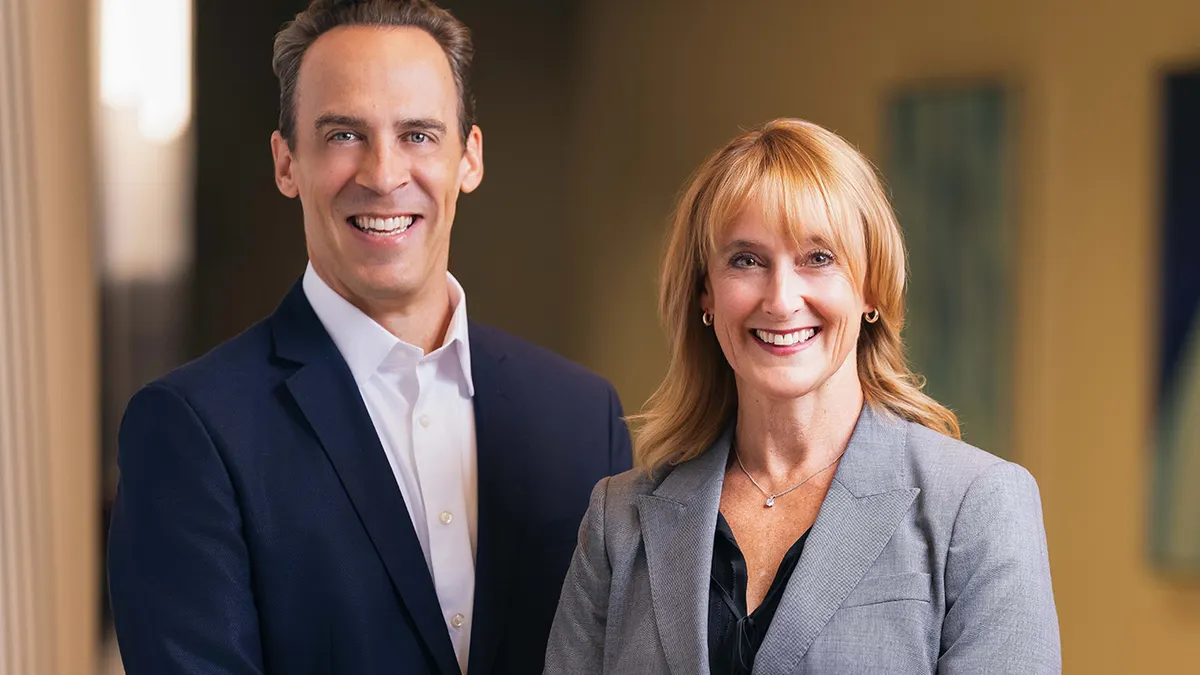
CrossCountry Consulting is working through many similar questions around those shifts. The mid-market-centric advisory firm recently promoted Amy Bjarnason and Neil Smith to co-CEO roles in June after each spent more than 14 years with the company.
Bjarnason most recently served as chief operating officer, overseeing the firm's operations, recruiting and talent strategy. Smith comes from a year-and-a-half-long stint in a lead role within CrossCountry's consulting practice after spending more than 13 years in a partner position.
In separate interviews with CFO.com, the co-CEOs described a consulting industry that is beginning to rethink how it develops talent, charges clients, creates value for finance organizations and structures its own organization to continue growth.
Bjarnason and Smith also said they expect consulting firms to rely less on traditional billing models and continue placing greater emphasis on measurable business outcomes.
The changing business model of consulting
AI is also prompting consulting firms to reconsider one of the industry's longest-standing business practices: billing clients by the hour.
For decades, the billable hour has been the standard commercial model across much of the consulting profession. The more time consultants spent with clients, the more revenue firms generated. AI is beginning to challenge that equation as consultants use generative AI to complete research, draft presentations, analyze data and automate routine tasks more quickly. And, as public accounting has already seen, both consulting firms and their clients are now asking whether charging for time remains the best way to measure value.
Bjarnason believes the answer is increasingly no.
"The billable hour is waning," she said. "I think there will always be a need for billable hours in terms of understanding how our people spend their time and what it actually costs to deliver services. But billing on the billable hour and compensating people on the billable hour, I think those two notions are deeply in discussion right now. We need to get more to fixed fee, and we need to get to success payments. If we do a transformational project or we're doing cost takeout, what is that success fee? We have some skin in the game. That's the way I think the world is working."
Smith, whose role mostly encompasses client-facing chief executive duties, said those conversations are already influencing how CrossCountry structures engagements with clients. While he expects time-and-materials pricing to remain appropriate for certain projects, he believes consulting firms will increasingly move toward fixed-fee and outcome-based arrangements that align compensation with measurable business results.
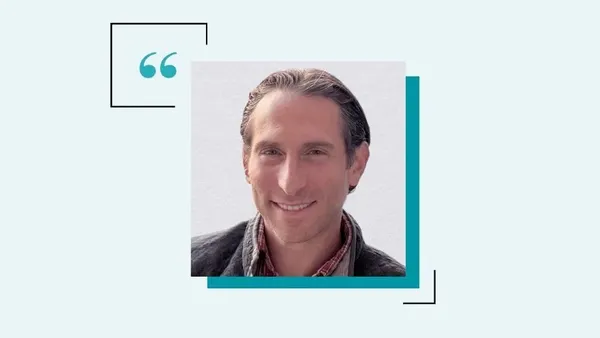
“I do think there is a world in which the partnership model can continue to thrive and flourish [but] it does require changes to how we think about things like compensation and how we are measuring what our partners are driving in terms of business outcomes for the firm, not just maintaining a large book of business.”

Neil Smith
Co-CEO, CrossCountry Consulting
"I do think this is one of the areas where we're going to see some of the most significant change in our industry as we move forward," Smith said. "We're actively working towards different models, including fixed pricing and outcome-based pricing. Both of those models represent better value for our clients because they represent shared accountability."
That shift carries particular significance for CFOs, who often oversee large consulting engagements tied to finance transformation in areas like ERP implementations and cost optimization initiatives. Those projects can require months of advisory work before organizations begin realizing measurable benefits. Outcome-based pricing changes the conversation by tying at least part of a consulting firm's fees to agreed-upon objectives, giving both parties a greater incentive to define success before work begins.
"When you have a scope well defined, and you've agreed on how you're going to measure outcomes, it represents a real win-win for both parties," Smith said. "Ultimately, what we're looking to do is have flexibility so that we can decide with our clients what's the right model based on the type of project we're being used to do."
The same forces are influencing how consulting firms think about partnerships and long-term incentives. Private equity investment, which CrossCountry has taken, has accelerated across the consulting industry in recent years. Across business advisement globally, private equity is bringing new capital to firms looking to expand capabilities while raising broader questions about compensation and ownership.
However, neither executive expects the traditional partnership model to disappear. Both believe it will continue evolving alongside the rest of the industry.
"I do think there is a world in which the partnership model can continue to thrive and flourish," Smith said. "It does require changes to how we think about things like compensation and how we are measuring what our partners are driving in terms of business outcomes for the firm, not just maintaining a large book of business."
Bjarnason expressed a similar view, saying the underlying concept of the partnership model remains strong because it aligns leaders around building enterprise value over the long term. She expects incentive structures to evolve as firms continue adapting to new client expectations, though she believes shared ownership will remain central to how consulting firms operate.
A rethink on how to recruit and develop talent
One of the most telling signs that AI was beginning to reshape consulting was when it showed up during the hiring process.
Earlier this year, McKinsey began requiring some graduate candidates to use its internal AI assistant during portions of case interviews, giving recruiters another way to evaluate how applicants interact with generative AI. The pilot reflected a broader shift taking place across consulting as firms reconsider how they identify talent and prepare future consultants for work that increasingly relies on AI-assisted analysis.
At CrossCountry, the technology has created a different challenge. Bjarnason, whose co-CEO duties include most of the internal-facing chief executive functions at the firm, said CrossCountry has not introduced AI into candidate screening. Instead, she said recruiters are finding themselves spending more time evaluating applicants as candidates increasingly rely on generative AI to write resumes and cover letters that mirror job descriptions.

"We have not introduced using AI as a medium for screening candidates," Bjarnason said. "What we have found is that candidates have started using AI, which is flooding us with language that they're basically just taking our job specs and mirroring our language into their resumes and cover letters.
The change has prompted the firm to reconsider what distinguishes successful consultants. “We're having to spend more time on recruits to get underneath all of the fluff and actually understand if they're a good candidate,” she said.
Technical expertise remains essential, Bjarnason added, but firms increasingly need professionals who understand how information moves across an organization and can connect disciplines that historically operated independently. According to her, consultants still need deep subject matter knowledge, though she said broader business understanding is becoming increasingly important as AI handles more structured analytical work.
"What we need now is more of those ancillary adjacencies," Bjarnason said. "You need to have a layer of understanding of how data flows. You need to understand how governance happens and how risk flows. It's not enough just to come in and have deep expertise in a domain. You've got to be able to pull in all of these other things."
Those changing expectations are also influencing how firms think about career development.
Many of the largest consulting firms have long operated under an up-or-out model, where employees advance within a defined period or are indirectly encouraged to leave the organization.
CrossCountry has taken a different approach — as Bjarnason said, the firm does not have this up-or-out philosophy — choosing instead to create multiple career paths for those excelling in the firm with different strengths. Specialists who want to deepen their expertise, for example, are not expected to follow the same trajectory as consultants whose careers are centered on client development or firm leadership.
"We are not an up-or-out firm," she said. "As long as we can provide a meaningful opportunity for people, then we have them continue to stay here at CrossCountry."
Bjarnason also expects future careers to look less linear than they have historically. Rather than spending decades building expertise in a single discipline, consultants may find themselves moving between specialties as client needs evolve and entirely new categories of advisory work emerge.
"There are jobs we haven't even conceived of that are going to need to be done," she said. "If you hire really smart people who are able to see that connectivity, then we're going to be able to deploy them wherever our clients need them. It just may not be the trajectory that we've seen in the past."
Changing CFO expectations and the impact on business
The changes taking place inside consulting firms are strikingly similar to how the role of the CFO has evolved over the past two decades.
When Smith began advising finance organizations more than 25 years ago, much of the work focused on financial reporting, accounting compliance, helping companies navigate complex transactions and improving finance operations. Those responsibilities remain central to the finance function, he said, though today's CFOs are increasingly expected to shape business strategy and drive value outside of the finance function. As those responsibilities have expanded, so has the role consulting firms play.

"In the past, the services we provided to CFOs reflected more of a rearview mirror focus," Smith said. "How do we make sure our accounting results and our financial reporting are right? Those things are still true today, but what we see now is much more of an index toward how we make sure we're getting the right insights and using those insights to make better decisions and help drive enterprise value creation.”
Those changing expectations also influence the type of adviser CFOs need. Smith said finance transformations increasingly require consultants who understand accounting, finance, technology, governance and organizational change. Deploying AI is only one part of the challenge, he explained. Organizations must also establish governance around the technology, prepare employees to use new tools and redesign processes that may have existed for years.
Asked what advice he would share with a room of 500 mid-market CFOs, Smith said finance leaders should begin preparing now for how AI will reshape the finance function, even if their organizations are still early in the adoption process.
"I'd speak to them about preparing for the changes that are coming and being ready to embrace that," he said. "It's not just coming for your easy processes. It's coming tip to tail. We've got to look at data, governance, process, oversight and technical capabilities, then wrap all of that with AI, automation and agentic tools. You need people who understand how to connect it all."
The same thinking extends to consultants who leave advisory firms for corporate leadership roles. Consulting has produced many successful CFOs and CEOs over the years, though some high-profile transitions have struggled. Smith believes the differentiator is an investment of time learning an organization's culture, building relationships and understanding how decisions are made before attempting to drive change.
"I think one common pitfall [for those making the switch from consulting to industry leadership] is coming in and thinking you have all the answers because you've seen it before somewhere else," Smith said. "Take the time to really invest with the team and understand not just the business, but what makes the business tick. Lean on the people inside the organization who can help you get smart and help you drive change effectively."
That emphasis on relationships also explains why CrossCountry believes culture deserves as much attention as any other factor influencing business decisions. When asked about managing the culture shift after one of several of the firm’s recent acquisitions, Bjarnason said CrossCountry leadership evaluates for a cultural fit before ever talking shop. And when the deal is complete, every new employee is paired with transition “buddies”, mentors and coaches after joining the firm.
She detailed how this comes in part of an effort she said helps preserve the collaborative culture the company has tried to build since she joined nearly 15 years ago. "Culture is not about Neil and I,” she said. “Culture is about this firm all believing in the same thing and working toward that together."