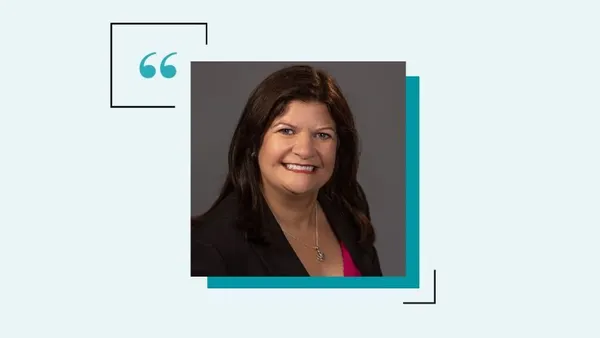


Intuit CFO Sandeep Aujla admits the company has lost market share in its consumer tax business in recent years, but he says he has a plan to win customers back.
Speaking at the Goldman Sachs Communacopia and Technology Conference in Santa Clara, California, on Thursday, Aujla said Intuit has been building a “comprehensive, end-to-end consumer platform.”
That effort has been under way since Intuit’s $8.1 billion acquisition of consumer credit tech firm Credit Karma back in 2020, he said. And it took a notable step forward two years ago, when Intuit put Credit Karma under the same leadership as TurboTax, the company’s well-known, do-it-yourself tax software.
“One of the focus areas is rebuilding that DIY funnel so we can retake share in tax,” Aujla told attendees. “We are definitely not the best we could be, having lost share in the last couple of years.”
Drawing in new customers, and not just retaining existing ones, appears to be one area of focus to remedy that. Aujla noted that Intuit for the last several years had been making investments to “go upmarket” and to capture business in the fintech space. Those investments, he said, “did exceptionally well.” But they may have come with an unintended side effect.
“When we looked at the last year, we realized we were not the best we could be in growing new-to-the-franchise customers,” he said. Going forward, Intuit aims to “meaningfully scale the platform, which comes down to scaling new-to-the-franchise customers.”
Free or lower-cost tax services could be one way to reach “price-sensitive consumers,” Aujla said. But the aim is to go beyond that. The company sees revenue potential in checking accounts through Credit Karma, for example. “Tax is a very, very deep engagement, but two days a year,” Aujla said.
Banking on business customers
Another avenue for customer growth could come through QuickBooks. Aujla pointed to QuickBooks Free and QuickBooks Lite, a lower-cost version of the company’s flagship accounting software. While such moves might not generate a lot of revenue to begin with, Aujla said there’s ample opportunity to cross-sell other offerings to customers.
The macroeconomic picture for small and midsize businesses remains stable, Aujla said. “The two metrics that are my favorite to look at are the cash reserves that these customers have, and the hours worked,” he said. Both metrics are trending up, especially for medium-sized business customers, Aujla said.
Throughout the conversation, Aujla repeatedly referenced the “big bets” that Intuit has been chasing recently. One of those is for Intuit to become “the center of money for consumers and businesses,” as laid out by Intuit Chairman and CEO Sasan Goodarzi in May.
How those bets will play out in the long term isn’t yet clear. Intuit did see an uptick in revenue in its 2026 fiscal year, which ended July 31. The company’s full-year revenue grew 14% to $21.4 billion, with both its global business solutions unit and consumer units reporting double-digit revenue increases. In that same timeframe, though, Intuit also cut its workforce by 17%, laying off about 3,000 people, according to Reuters.
While the company has been heavily investing in and exploring artificial intelligence, Goodarzi told investors that the move was “not about AI.”