The accounting profession is changing across the globe at a rapid pace, from the way young professionals enter the field to how firms are preparing for an AI-driven future.
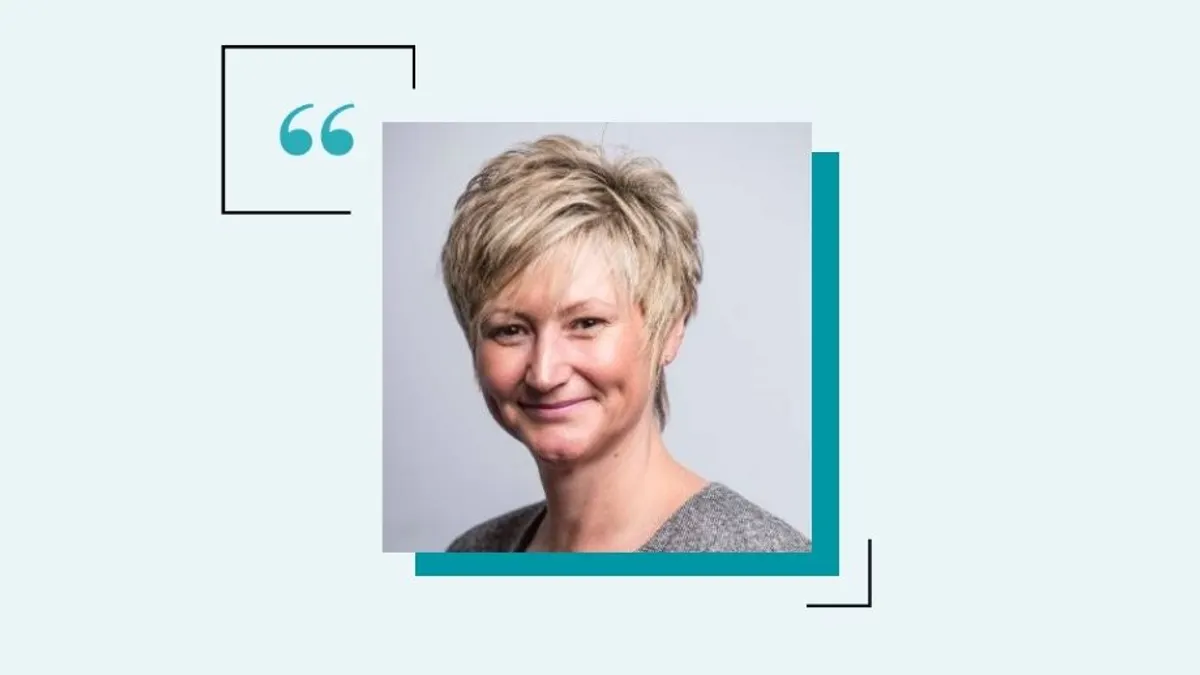
Melanie Proffitt is helping lead that conversation. Since November 2025, she has served as president of the Association of Chartered Certified Accountants, a global professional body representing accountants and finance professionals in 180 countries, including the U.K., Singapore, South Africa and the United Arab Emirates.
Before stepping into the role, Proffitt spent more than eight years as CFO of Farncombe Estate, a U.K.-based hospitality company that operates boutique hotels, restaurants and event venues in the Cotswolds. Her career also includes senior finance and commercial leadership roles in sectors like manufacturing and healthcare.
In a recent interview, Proffitt discusses why accounting still faces a talent shortage, how AI is reshaping career development, what private equity means for the profession and why she believes professional qualifications remain relevant throughout a finance leader's career.
Melanie Proffitt
President, Association of Chartered Certified Accountants
First CFO Position: 2017
Notable previous employers:
- Farncombe Estate
- Spire Healthcare Group
- Chesapeake Pharmaceutical Packaging
This interview has been edited for brevity and clarity.
ADAM ZAKI: Accounting talent shortages have been a major concern in the U.S. for several years, although there are signs the pipeline is improving. From ACCA's perspective, what are you seeing globally, and how can the profession become more attractive to the next generation of accountants?
MELANIE PROFITT: I think there is a shortage, and I think some of that comes from the fact that we've got to do a bit of myth busting around what the accounting profession is and what the job actually looks like. There's this perception that it's long hours, poor work-life balance and possibly a bit dull or not very interesting.
ACCA has done a lot of research through our Global Talent Trends report, and because we've done it year after year, we're starting to build a profile of how views are changing. One of the things that comes through consistently is the focus on work-life balance. Since the pandemic, there's been much more emphasis on flexibility, particularly from the younger generation.
We've also looked at what we call “career paths reimagined.” Traditionally, people expected their careers to progress in a straight line, but that's not what we're seeing anymore. People step off, take a career break, move sideways into a different role and then step back on. It's no longer a linear progression.
We've responded by redesigning the ACCA qualification. A new qualification launches next year, and it's built around that step-on, step-off approach. People will achieve accreditations as they progress, giving them more flexibility while making sure they're developing the business-ready skills employers need.
We're engaging with the next generation to understand what they think about the world of work, what jobs are attractive and how we should respond. I think what's really coming through is the need for flexible careers, flexible ways to study and flexible ways of working. The traditional nine-to-five, Monday-to-Friday model is changing, and businesses need to recognize that.
For decades, the Big Four accounting firms have been the traditional training ground for future CFOs. As AI automates more entry-level work and younger professionals seek different career paths, where do you see the next generation of finance leaders coming from?
Overlay technology and AI onto that because what we're seeing is that those routine tasks that perhaps were the entry-level jobs in those environments are going to be replaced by technology. I think you're going to see much more emphasis on value creation and how accountants demonstrate the value they add to organizations.
"I think these businesses are going to need to adapt. If they're stuck in the nine-to-five, Monday-to-Friday model, well, let’s just say you know what happens to dinosaurs."

-Melanie Proffitt
President, ACCA
At ACCA, we've talked about moving beyond the chief financial officer to thinking about the chief value officer. It's about being custodians of value creation. That's no longer just financial sustainability and financial wealth. It's your impact on people, your impact on the environment and your broader contribution to society. We talk about people, planet and prosperity.
The business model, and the HR model for how we bring young professionals into the workplace, is changing. Our “career paths reimagined” research looks at that traditional progression where you come in as a junior, then do this, then do this and then do that. I don't think that's what's going to happen anymore.
I think these businesses are going to need to adapt. If they're stuck in the nine-to-five, Monday-to-Friday model, well, let’s just say you know what happens to dinosaurs.
The businesses that recognize the changing ways of work and the changing ambitions of the talent coming through will be the ones that compete successfully. I think people are competing on their values now. It's about how they treat their people, how they treat their communities and how they create wealth. It's not just shareholders anymore. It's stakeholders.
Private equity investment in accounting firms has accelerated in recent years. Some argue firms need outside capital to invest in AI and new technologies, while others worry it could undermine the traditional partnership model and morale inside the firm. What's your perspective?
I don't think I have a strong opinion either way. I know people who have gone down that route with their practices and expanded, but I think it's about finding the right partner. A lot of successful business transactions come down to building partnerships where your values are aligned and you're working toward the same thing.
I don't think it's necessarily a bad thing, but I do think organizations need to go in with their eyes open and choose the right partner so they can continue to deliver what they're trying to achieve. I'm sure that's where conflict arises, when you're not aligned in your values or in what you're trying to achieve.
It's about making sure you do your due diligence on both sides, whether you're putting in the money or deciding who you want to do business with. I don't think it's a question of right or wrong. It's about cementing the relationship and the partnership
I speak with many finance leaders in the U.S. who started their careers in public accounting but eventually let their CPA licenses lapse because they no longer work in audit. What value do you think professional accounting qualifications provide once someone becomes a CFO or business leader?
It's an interesting one. For me, what does it mean to maintain my professional qualification and my membership? It means I'm bound by a code of ethics, so I'm accountable. They hold me to account. If I misbehave, there are sanctions and consequences. So, if you employed me to work in your organization as your CFO, you know I have a higher level of ethics in terms of consequences than someone who's not bound by that code of conduct.
The other thing is that, as part of maintaining my membership and having the right to use the letters after my name, I have to maintain continued professional development. I have to commit to keeping myself up to date. As a business, you know you're recruiting someone who's bound by a code of ethics and who has maintained their skills and awareness.
Continuing professional development is relevant to the role you're doing. It doesn't mean I have to go and do a certificate in digital finance if that's not where I'm sitting right now. But it does mean I have to keep myself relevant.
For me, that's the key distinction for somebody who's not maintained that membership. I'm not saying they're unethical. I wouldn't want to say that. But I am saying that, in the marketplace, maintaining your membership demonstrates continuous professional development, a continuous learning mindset, and integrity and trust. I think, in today's world, trust is really key.
You transitioned from serving as a CFO to becoming ACCA president about nine months ago. What leadership lessons have carried over, and what has surprised you most about the transition?
I've had a career where I've moved from sector to sector. I started in heavy engineering, worked for a high-performance racing company, then hospitality and healthcare. I think whenever you transition into anything, it's an opportunity to learn something new. I've always been super curious and always loved learning new things.
Your leadership skills stay the same, and the fundamental accounting principles stay the same. It's all about listening and learning, getting under the skin of the business and finding out how it works. A key leadership skill for me is listening and being curious.
I'm a people person, and quite often the people in an organization know exactly what's going on. Take an interest. Learn who the people are and how the organization works. I remember a leader once saying to me, "Eyes and ears open and mouth shut for the first few months," and I think there's an element of truth to that. You really need to go in, listen and find out what's going on.
I've been in an operating theater watching an operation. I've been back on the floor in hospitality and in the engine room building race engines. When you really get into the heart of an organization, that's when you learn and grow. You already have the skill set. What you need to do is learn from the people, then use your experience to add value. That's always been something I've been passionate about throughout my career.