

Many finance chiefs at big companies can trace their career paths back to humble beginnings at much smaller firms.
Caesar Pereira has done the opposite, having worked at food giant Nestle for over two decades before being named CFO of Community Coffee, a family-owned coffee distributor based in Baton Rouge, Louisiana. Appointed to the role in February, Pereira says he aims to blend the nimbleness of a small firm with the expertise he gleaned from years at an international conglomerate.
In an interview with CFO.com, Pereira talks through his globe-spanning career, his approach to supply chain management and why he continues to maintain his CPA license.
Caesar Pereira
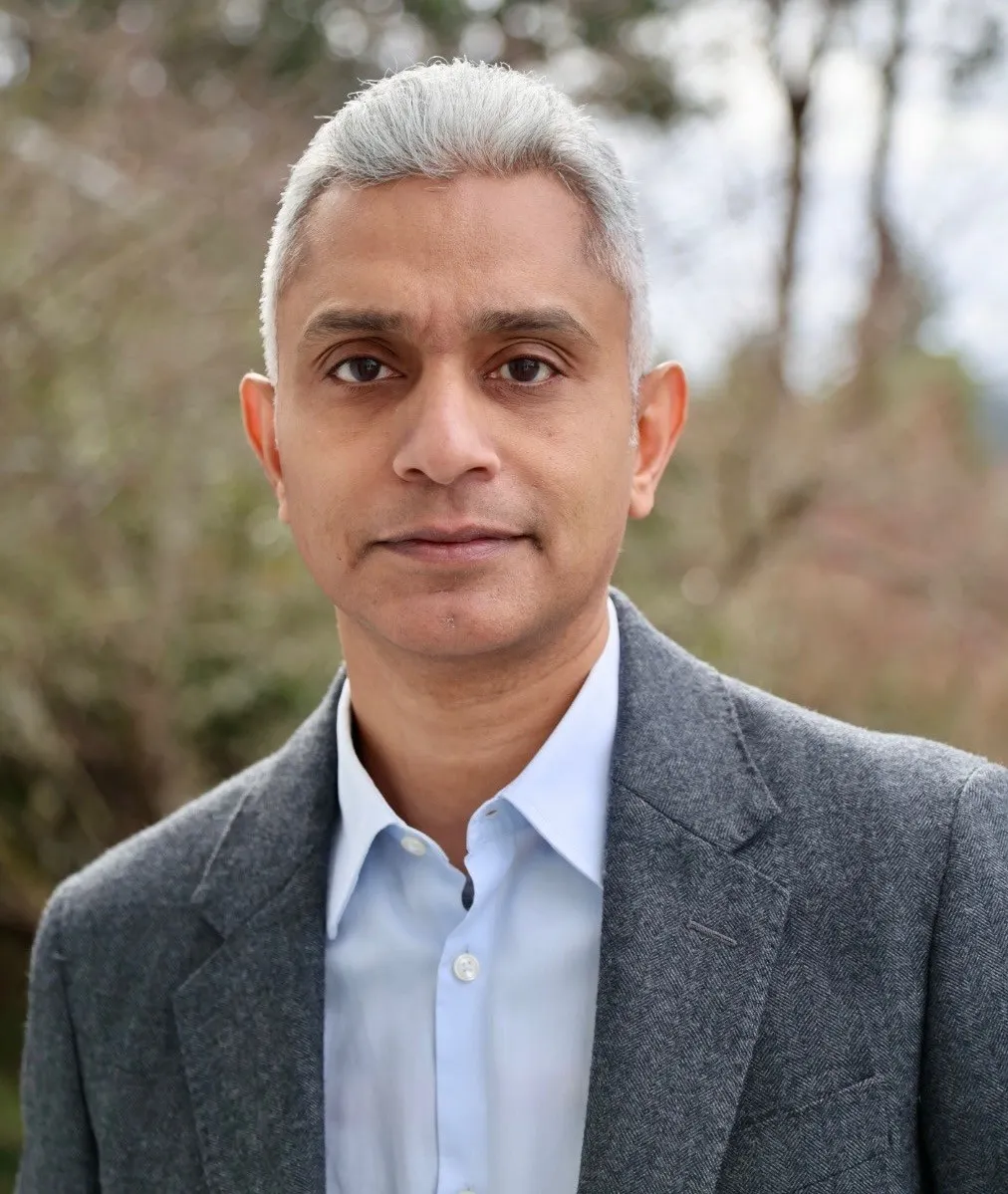
Executive VP and CFO, Community Coffee
First CFO position: 2026
Notable previous employers:
- Nestle
Editor’s note: This interview has been edited for brevity and clarity.
DAN NIEPOW: Your career has taken you from Switzerland to Los Angeles to Singapore. How’d you end up working at a Louisiana-based coffee company?
CAESAR PEREIRA: None of my roles came about by design or some big, complicated career planning agenda; I just think I’ve been blessed with having some solid mentors and solid leaders who gave me opportunities I wasn’t expecting. I had the opportunity to go to Nestle’s corporate office in Switzerland, then to go back to the U.S. Opportunities also popped up in Sydney, Australia, followed by Singapore.
In my latest role, it was less about a specific location and more about the company itself, which happened to be based in Baton Rouge. For me, what was more important was being able to carry my skills from a top corporate environment to a midsize business. Basically, the best of both worlds.
The additional kicker is that my brother also happens to live in Baton Rouge. We’ve not lived in the same town, vicinity or sometimes even the same country since we went off to college.
You’ve spent most of your career working for Nestle. How does a job at an industry giant inform your work at a much smaller company these days?
Big corporations that work across multiple countries tend to excel in some foundational stuff, like governance, consistency and standardized workflows. Sometimes, it’s almost to the point of bureaucracy.
Coming into a company the size of Community Coffee, I’ve been leveraging some of those elements to strengthen foundations without slowing down the company. It’s important to do that carefully and elegantly, because the last thing you want to do is deploy a 747 to do crop dusting. Long story short, I want to preserve all the benefits of being a small company — quicker decision-making, fewer layers of authorization, and so on — while still building solid foundations.
What are some of your priorities at Community Coffee?
Top of mind is our category development efforts. This is critical for any mature category, such as coffee, where you might squeeze out 1-3% of growth year over year from a volume and value perspective. For a coffee player in the United States to have a competitive advantage, the focus has to be on developing the overall category and then taking your fair share. The more we focus on category development, the more we’ll see margin expansion, share gain, growth and all that good stuff.
Another priority for me: In the current environment, there’s no room for any manufacturer — be it in our (consumer packaged goods) space or any other, for that matter — to pass on inefficiencies to our consumers and our retailers. If you simply pass on the costs of supply chain disruptions, commodity inflation or other macro dynamics on to consumers and retailers, eventually, you’re going to pay a price for that.
As the CFO, I’m thinking about how to create the financial and organizational flexibility within the business to be able to absorb a portion of these macro shocks. It’s not just during bad times, but also during good times, when you have the opportunity to create flexibility.
Coffee, which is often produced overseas, sits at the center of debates on global trade. How is your company thinking about managing your supply chain in the face of tariffs and other global challenges?
One company alone is not going to be able to solve these things, but I do think it’s important for companies like ours to carve out a big part of our strategy for green coffee development efforts. I don’t want to call it “corporate responsibility” because it’s too buzzwordy. The focus is on responsibly buying and paying a premium for responsibly sourced coffee and supporting local communities, environmental conservation efforts and so on.
While the green beans are sourced from outside the U.S., I’m proud of the fact that the majority of our Arabica coffee is roasted, packaged and distributed here in Louisiana, and to a small extent at other U.S.-based manufacturers. Given the size of our business, we’re not prone to the same pressures as, say, Starbucks. It allows us a little space to do the right thing.
What’s your approach to working with boards of directors as a member of the C-Suite?
Whether I’m in a board of directors meeting or our executive leadership team meetings on a monthly basis, it’s my job to help these bodies connect the dots and be more effective. There’s a lot of talk in management-consulting speak about “breaking the silos,” but I do think that’s where finance and CFOs come in.
Another thing would be simplicity. I think analysis paralysis is what prevents this dot connection. My focus is very simple. I generally aim for two to three enterprise-wide KPIs that we need to relentlessly be focused on. I want to clearly articulate them every period, even to the point of annoyance. The repetition becomes part of the DNA of an organization.
I see on LinkedIn that you have an active CPA license through December 2026. Many CFOs often choose not to renew their CPA licenses at a certain point. Why have you decided to keep yours current?
I have maintained my active license now for over 20 years because the CPA requirements force me to keep up with the developments in the profession that I would not naturally do. I’ll give you an example: I wasn’t an expert on S corporations from my past roles. I never worked at one. Maintaining my license forced me to refresh myself on the topic. Plus, continuing education around financial and retirement planning has helped me on the personal front as well.
I've come to rely on and appreciate the vigor that the recognized CPE providers have. It forces you to lock some stuff in, even at the back of your head. You never know when you need it.