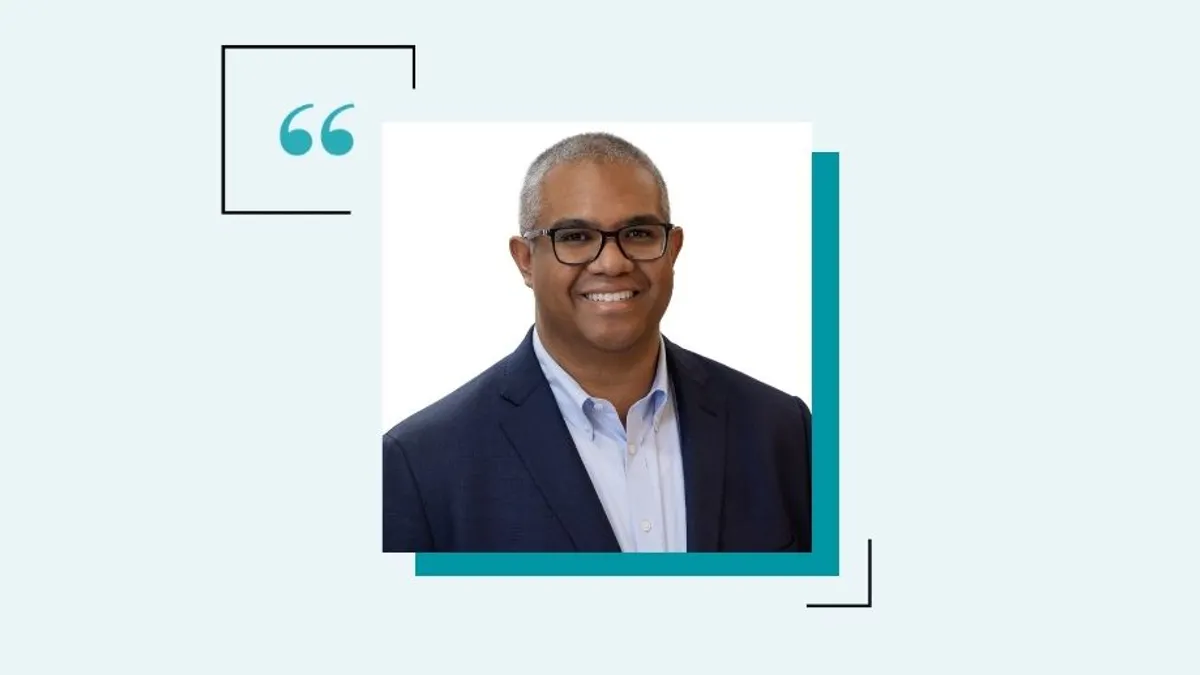
The Association of Certified Anti-Money Laundering Specialists has built its reputation on certifications used by compliance professionals worldwide. Its CFO, Yuctan Hodge II, says the organization is now expanding beyond training as it builds new intelligence capabilities for the broader anti-financial crime community.
Hodge, who joined ACAMS a little over two years ago, stepped into the role during a period of significant transition. The organization had recently been carved out by private equity firm Wendel, creating a structure that combined the history of a two-decade-old business with the operational challenges of new ownership.
In a conversation with CFO.com, he discussed how awareness of emerging risks such as deepfakes is shaping finance leadership, why automation should free up time for analysis and what he looks for when hiring the next generation of finance professionals on his team.
Yuctan Hodge II
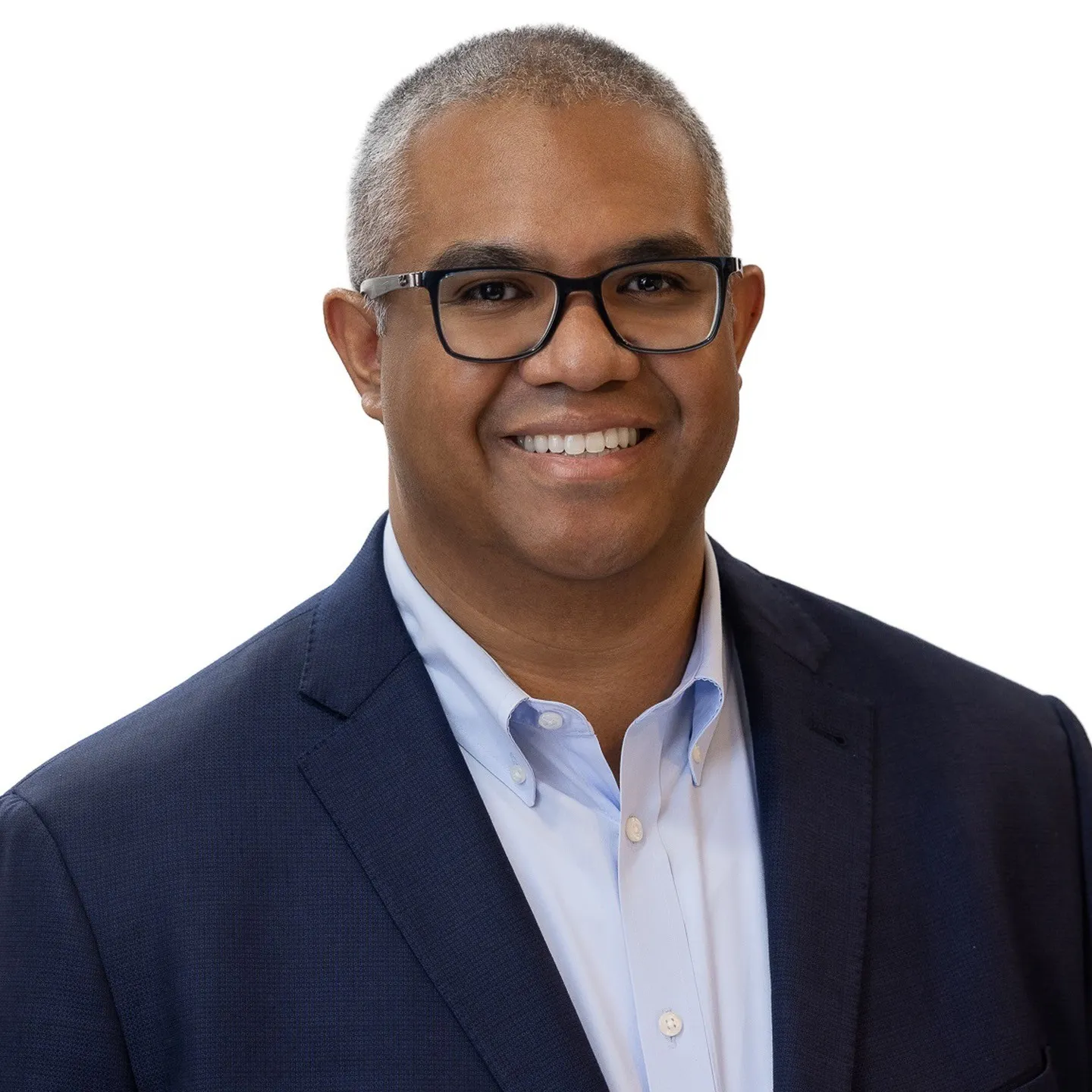
CFO, Association of Certified Anti-Money Laundering Specialists
First CFO position: 2022
Notable previous employers:
- Evans Consulting
- IDEMIA
- General Dynamics
This interview has been edited for brevity and clarity.
ADAM ZAKI: How would you describe ACAMS and the direction you’ve taken the CFO role since joining?
YUCTAN HODGE II: We are a unique organization. Historically, our roots are in certifications and training, but we’re evolving into more of an intelligence company. At our core, we serve the anti-financial crime community.
Originally, the focus was primarily on anti-money laundering, but we’ve expanded more broadly into the global anti-financial crime space. Our goal is to support professionals working in that community by helping them understand what’s happening in the space, what risks to look out for and what they should be thinking about as threats evolve.
Education and certification remain a key part of that. ACAMS offers certifications that many professionals consider the leading credentials in the anti-financial crime and anti-money laundering fields. For people working in that space, having that certification demonstrates that they understand the regulatory environment, the risks and the broader landscape they’re operating in.
When I joined the organization, it was also an interesting moment in its history. ACAMS has been around for about 20 years, but in 2022, it became part of a carve-out by private equity firm Wendel. That created a situation where, despite having a long operating history, the organization suddenly had more of a startup dynamic. It was no longer part of a much larger structure and had to stand up many capabilities on its own.
By the time I joined, the initial startup phase had already taken place. My role was to step back, look at how the organization was operating and focus on building more financial discipline and modernization. That included improving reporting, strengthening systems and refining some of the processes that support the finance function day to day.
You’ve worked across government contracting, consulting and identity technology before joining ACAMS. How have those experiences shaped the way you approach the CFO role today?
Across all of those organizations, the common thread was that they were very mission-focused. Whether it was supporting the warfighter, working with allied nations or helping the U.S. government deliver on its objectives, the organizations I worked with had a clear sense of mission.
That’s something I’ve always found important, and it’s one of the reasons ACAMS appealed to me. In many ways, it has that same type of mission focus. We’re helping the global anti-financial crime community better understand the risks they’re facing and equipping them with the tools and knowledge they need to do their jobs.
Coming to ACAMS was also a transition in terms of the types of organizations I had worked in before. Much of my earlier career was in larger, publicly traded companies in the government contracting space. Moving into a private equity-backed company in the middle market is a different environment.
At the same time, many of the challenges are actually quite similar. My head of tax likes to joke that we’re a $100 million company with billion-dollar problems. What she means is that we operate globally, we have close to 300 employees around the world and we serve customers across multiple regions. Even though we’re a midsized organization, we still deal with many of the same global issues that much larger companies face.
One of the things I’ve enjoyed about the role is being able to bring experience from larger organizations into a smaller and more nimble environment. It allows us to apply financial discipline and strategic thinking in a way that can move faster and adapt more quickly.
Your organization sits at the center of the financial crime prevention ecosystem. Are there any major trends you’re seeing in how organizations are approaching risks like fraud, AI-enabled scams or deepfakes?
One of the biggest things organizations need to focus on is awareness. The threats are evolving quickly, and in many cases, the first step is making sure people understand what’s actually happening in the space.
Within my own finance organization, every member of the team takes one of the certification courses we offer called AML General Awareness. It’s about a 90-minute program, but it gives people a foundational understanding of what anti-money laundering and anti-financial crime look like today.
I do that for two reasons. First, it gives the team a baseline understanding of the risks that exist in the broader financial crime landscape. Second, it gives them the experience of going through our platform the same way a customer would.
That type of awareness is important because financial crime risks today go far beyond what people traditionally think about. In the past, someone might have assumed this type of risk mainly affected accounts payable or accounts receivable teams. In reality, anyone inside an organization can become a target.
The deepfake example you mentioned is a good illustration. Criminals are becoming more sophisticated, and tools like AI are helping them scale these kinds of attacks. You’re seeing situations where someone receives a request that appears to come from a CEO or another executive and is asked to send funds or gift cards somewhere.
For CFOs, the key takeaway is that everyone needs a basic understanding of what these risks look like today. The more awareness people have about the types of threats that exist, the better positioned an organization is to recognize and stop them.
Artificial intelligence and automation are becoming a bigger part of finance operations. Have there been any tools or technologies that your team has implemented where the impact was immediate?
One of the biggest areas we’ve focused on internally is automation. As the organization has grown, we’ve been investing in tools that help streamline some of our core finance processes.
Automation is really about time. Anything we can do to speed up the process has multiple benefits. It allows us to close the books faster, deliver insights to the organization more quickly and ultimately gives our team more time to focus on analysis.
If we invest in automation within the ERP environment or the FP&A function, the goal isn’t just speed. It’s freeing up time so people can focus on the analytical work that drives better decisions.
I often joke with our FP&A team that I need them to have more time for the “A.” It’s easy to get caught up in closing the books, building reports and putting together presentations. But the real value comes from explaining what the numbers mean and what actions the business should take.
If automation helps us shave time off those mechanical processes, that’s a huge win. The deadlines don’t change, but people gain more time to focus on interpretation and insight.
How do you want the finance function to play a larger role across the organization this year?
I think about our FP&A analysts as micro CFOs for their parts of the business. Each analyst supports a portion of the organization and partners closely with the leaders of those departments.
We’ve structured it so that our analysts each support roughly half the company. The goal is to create a real partnership with the teams they support, rather than simply sending reports across the organization.
I want our analysts participating in the regular meetings of the departments they support so they can stay close to what’s happening operationally. When finance is embedded like that, it helps prevent surprises. If a cost is coming through or an invoice is about to arrive, it shouldn’t be the first time finance is hearing about it.
That’s one of the advantages of being a smaller organization. We’re able to build those partnerships more closely than you might be able to in a much larger company.
You’ve worked in industries where compliance and risk management are major considerations. What traits have you seen among CFOs who are successful in those environments?
One of the biggest things is understanding that risk today is multidirectional. Finance leaders obviously think about financial and regulatory risk, but there are also operational risks, cybersecurity risks and other areas that can affect the business.
Because of that, CFOs in these environments have to be comfortable working cross-functionally. You need to understand where your responsibilities begin and end, but also where partnership with other leaders becomes critical.
For example, I work closely with our legal team on regulatory matters and partner with our chief operating officer on operational and cybersecurity risks. You can’t stay narrowly focused on finance alone. Ultimately, part of my role is helping ensure the company has the right risk appetite and the right investments in place to support growth while maintaining strong controls and compliance.