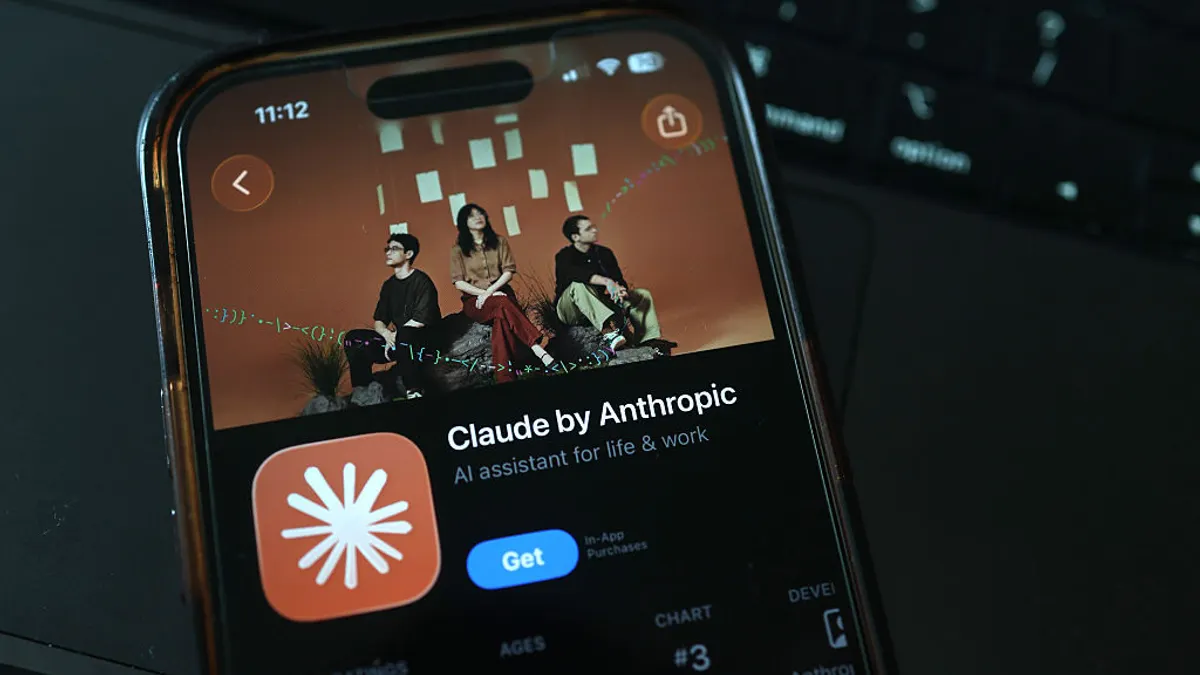
Claude is quickly becoming one of the most discussed artificial intelligence platforms inside corporate finance, showing up in everything from month-end close and forecasting to underwriting, private equity diligence, new ERP offerings and audit preparation.
Over the past several weeks, some of the largest accounting firms and financial institutions in the world have expanded their use of Anthropic’s AI platform, tying Claude more directly into tax, reporting and workflows. Anthropic launched its financial services agents on May 5, rolling out tools for reconciliations, valuation reviews, earnings analysis and statement audits alongside integrations across Microsoft Excel, PowerPoint, Word and Outlook.
The announcements continued throughout May. PwC said it would train and certify 30,000 U.S. professionals on Claude while expanding deployments tied to Office of the CFO workflows. KPMG followed days later with plans to integrate Claude into its Digital Gateway platform for tax and private equity clients.
Competition across the finance AI market is also heating up. On May 6, OpenAI and PwC announced a separate initiative focused on building AI agents for forecasting, reporting, treasury, tax and accounting workflows. OpenAI, whose userbase outnumbers Anthropic’s considerably, said its own finance organization was serving as “customer zero” for the initiative, while PwC described the effort as part of a broader push toward more “decision-centric operations” inside finance teams.
Claude pushes into finance and accounting operations
The accounting firms’ announcements focus heavily on finance execution and workflow integration.
PwC’s additional May 14 announcement described “agentic operating models” designed to support finance, dealmaking and enterprise functions. The firm pointed specifically to journal entries, variance analysis and annual planning as areas where Claude was already being used internally before broader client deployment.
KPMG’s rollout centered on tax and private equity workflows. According to the International Accounting Bulletin, the firm said Claude would be integrated into Digital Gateway to allow clients to build agentic workflows directly inside KPMG’s AI-enabled environment.
The announcements also show how quickly finance AI adoption is moving deeper into operational work. PwC said Claude was already running in production across client engagements and internal AI incubation programs tied to finance and dealmaking. KPMG emphasized cybersecurity, AI assurance and governance controls as part of its deployment strategy.
Wall Street adoption is expanding alongside the accounting firm rollouts. Fortune reported May 5 that Anthropic was positioning Claude as an “operating layer for Wall Street,” citing deployments at JPMorganChase, Goldman Sachs, Citi, AIG and Visa.
During Anthropic’s financial services briefing in New York on May 5, Goldman Sachs CIO Marco Argenti described AI as changing how firms “operate” and “think,” while JPMorganChase CEO Jamie Dimon discussed personally testing Claude Code for market and research analysis.
A recent LinkedIn post amplified by Secret CFO, a widely followed anonymous finance industry commentary account, also highlighted growing debate around how much of Anthropic’s financial services rollout directly applies to the broader corporate finance function.
Nate Saperia, founder of Saperia Consulting and a former managing director at Accordion, argued that many of Anthropic’s new finance agents were designed more specifically for institutional finance workflows tied to investment banking, private equity, hedge funds and equity research teams.
Saperia pointed to integrations with FactSet, PitchBook, Morningstar, Moody’s, Capital IQ and other enterprise data providers as evidence that much of the release was built around institutional financial data ecosystems already common across Wall Street and private markets firms.
“The agents are the recipe. The data connectors are the pantry,” Saperia wrote in a LinkedIn post. “Without the pantry, you're making a lot of the same dishes Claude could already make.”
Saperia added that the release still carried overlap with corporate finance workflows, particularly around reconciliations, month-end close activities and modeling work, while arguing the broader rollout signaled Anthropic was also targeting the market power long held by financial data providers.
“Teams that have been using Claude for months, that have figured out prompting, that are genuinely getting value out of it individually, still have not worked out how to use it together.”

-Anna Tiomina
Founder, Blend2Balance
The growing use of Claude in finance is also shaping forecasting and FP&A workflows. A recent “How to Forecast with Claude” guide published by Fuelfinance described finance teams moving from quarterly forecast refreshes toward weekly forecast updates supported by AI-assisted workflows. The guide outlined use cases including 13-week cash flow forecasting, runway analysis, scenario planning, revenue modeling and headcount forecasting.
The document repeatedly emphasized reconciliation, validation and auditability. “Every refresh is auditable,” the guide stated while encouraging finance teams to build validation checks directly into forecasting workflows. The guide also warned CFOs that “99% correct is still wrong in finance” and outlined sign-off procedures tied to assumptions, formulas and reconciliation checks before forecasts reach executives or boards.
Standardizing finance’s AI workflows
As adoption spreads, finance organizations are increasingly discussing how Claude fits into broader operational workflows across teams.
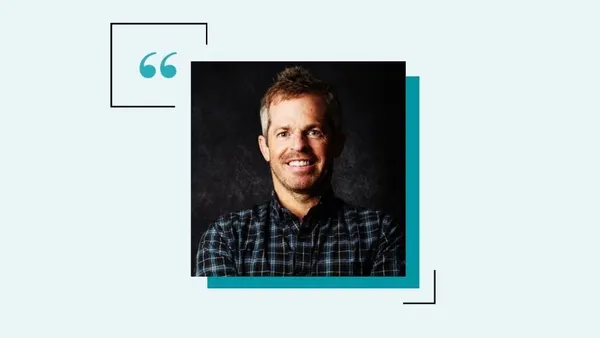
Anna Tiomina, founder of Blend2Balance, an AI-focused integration firm for finance teams, wrote last week in her newsletter that many finance organizations have already figured out how to use Claude personally but are still determining how to operationalize it collaboratively across departments.
“The more I work with finance teams on Claude, the more I see the same gap,” Tiomina wrote on May 19. “Teams that have been using Claude for months, that have figured out prompting, that are genuinely getting value out of it individually, still have not worked out how to use it together.”
Tiomina described organizations building shared Claude projects for month-end close, audit preparation and reporting commentary while creating reusable “skills” for repetitive finance processes. “A skill is a reusable workflow,” she wrote.
The Fuelfinance forecasting guide reflects similar ideas to Tiomina’s in structured AI workflows. The document recommends that finance teams create standardized “context files” outlining company rules, KPIs, reporting standards and reconciliation requirements before building AI-assisted forecasts. It also encourages teams to maintain version histories rather than overwrite prior forecasts, allowing organizations to compare projected performance against actual results over time.
Scenario planning is also becoming more operationally tied to AI systems. The guide warns CFOs against creating overly narrow forecast scenarios, arguing that “real scenarios mean meaningfully different assumptions.” The document encourages finance teams to connect forecasts directly to hiring plans, fundraising timing and operational cost decisions.
Tiomina said the shift requires finance leaders to establish ownership structures, standards and workflows around AI-generated outputs. “This is not a technology deployment,” she wrote. “It is a workflow change.”
That framing aligns with comments from JPMorganChase CIO Lori Beer during Anthropic’s financial services briefing earlier this month. Fortune reported Beer said the challenge was not necessarily the capability of the technology itself, but organizations’ ability to absorb it operationally.
Cybersecurity and growing pains
The growing institutional use of Claude is also drawing attention from regulators and cybersecurity officials. On May 18, The Guardian reported that Anthropic would brief the Financial Stability Board, chaired by Bank of England Governor Andrew Bailey, on the implications of its advanced Mythos cybersecurity model.
Anthropic has not publicly released the model, citing concerns around its ability to identify previously unknown vulnerabilities in IT systems. Access has instead been limited to select technology companies and banks, including Apple and JPMorgan.
The U.K.’s AI Security Institute said the latest version of Mythos represented a “notable capability jump” and had successfully completed a previously unsolved cybersecurity benchmark in several test attempts. The International Monetary Fund also warned this month that “fast-moving” AI developments were contributing to growing financial stability concerns, according to The Guardian’s reporting.
Some of the same governance themes appeared in Fuelfinance’s forecasting document, as the guidance repeatedly stresses that finance teams should verify assumptions, reconcile outputs and manually review executive summaries before forecasts are distributed internally.
The guide also warns that Claude will not independently identify certain finance-specific risks, including revenue recognition issues, customer concentration exposure, seasonality and foreign currency complications, unless those considerations are intentionally built into workflows.
Anthropic and its enterprise partners have repeatedly emphasized governance and oversight throughout their recent announcements. KPMG referenced AI assurance and cybersecurity controls in its rollout strategy. PwC highlighted compliance readiness and enterprise-scale governance as part of its Claude deployment efforts.
Some finance leaders are also publicly raising concerns around enterprise implementation, pricing and customer support from Anthropic. Karim Sadik-Khan, CFO of beverage maker Spindrift, recently posted multiple LinkedIn updates criticizing Anthropic’s Claude Enterprise billing and support experience after his organization migrated plans.
One post, which has since been deleted, described Anthropic as “the least transparent and least customer centric of the AI companies” while criticizing what Sadik-Khan called opaque enterprise pricing and limited flexibility after moving from Teams to Enterprise. “This is a trust issue as much as a pricing issue,” he wrote, adding that switching plans back “was not straightforward” and that “you can't contact a human.”
In subsequent posts that remain public, Sadik-Khan said Anthropic’s team later reached out directly and had been “very helpful,” adding that his company still “love[s]” Claude and Anthropic.