The following is a guest post from Derek Kearns, CPA, partner and lead of the SEC, financial reporting and SPAC practice; Kevin McLaughlin, CPA, partner and the artificial intelligence practice leader; and Rich Sowalsky, CISA, partner and the risk advisory practice leader at Centri Business Consulting. Opinions are the authors’ own.
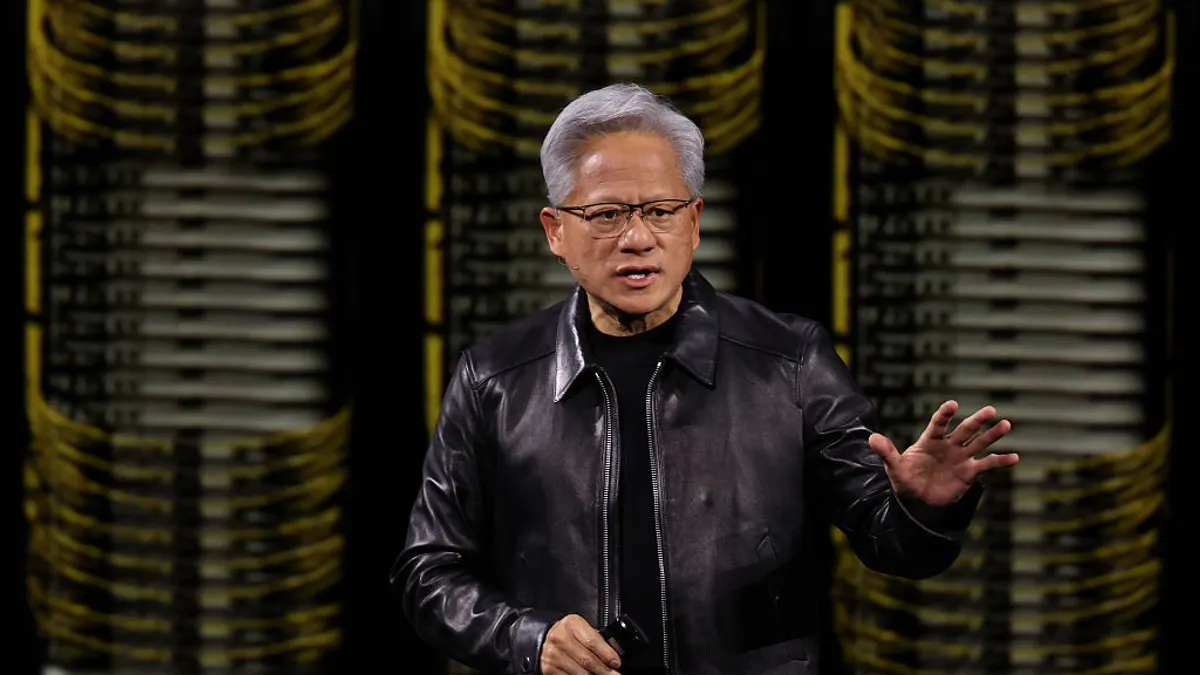
When Nvidia CEO Jensen Huang resigned last week, the board named Colette Kress, the company’s CFO since 2013, as interim CEO. She will continue to fulfill a dual role while the board searches for a permanent successor. The board also recently named Harvey C. Jones as its first-ever chair, and Nvidia is scheduled to report quarterly results today.
Nvidia operates on a scale that makes it unique in many ways. But the issues its board and leadership are working through right now are not unique to massive corporations and are very familiar to anyone who advises growth-stage companies.
A CEO can leave suddenly for any number of reasons, including a health emergency, a death, a resignation or a decision by the board. Whatever the reason, the same questions follow immediately:
- Who leads?
- Who signs the financial statements?
- Who controls the money?
- How will investors and lenders respond?
The companies that have answered these key questions well in advance are the ones that navigate sudden transitions smoothly, without catastrophic results to the top and bottom lines.
Financial reporting obligations continue
U.S. public companies are required to file a Form 8-K with the Securities and Exchange Commission within four business days of the principal executive officer resigning or being terminated, and to disclose the appointment of a successor. The company’s quarterly and annual reports still require certifications from the principal executive officer and the principal financial officer, who affirm, among other things, that the statements fairly present the company’s financial condition and results, along with statements about the company’s disclosure controls. When one person holds both roles, as Colette Kress now does at Nvidia, that person certifies in both capacities and needs a sound basis for doing so.
In practice, that basis comes from the company’s internal reporting process, which is designed to ensure that senior leadership has the right information in time to decide what must be disclosed. At many companies, that process includes managers signing off on their own areas of responsibility, formal reviews and supporting documentation. When the process is well documented, a new signer has something solid to guide their decisions. When it’s not, the new signer has to rebuild a lot of institutional knowledge quickly, often against a tight deadline.
Private companies face similar challenges. Auditing standards require auditors to obtain written representations from management as part of every audit, generally from the CEO and CFO. Many credit agreements require periodic compliance certificates signed by an officer, and many investor agreements require regular financial reporting.
We recommend documenting the financial close and disclosure process so that it does not depend on any one person, and deciding in advance who would sign each certification, representation letter and compliance certificate if the CEO or CFO were unavailable.
What investors and buyers look for
Investors and acquirers pay close attention to how much a company depends on a single leader. In diligence, they often ask whether there’s a written succession plan, including an emergency plan that names an interim leader, whether the board includes independent directors who can act quickly and whether someone other than the CEO leads the board as chair or lead independent director. They also look for a leadership team with enough depth to keep the business running.
These questions are particularly important at founder-led companies, where the founder’s vision is often central to the narrative and the investment case.
Companies should also be aware of how a sudden change at the top impacts all of their own agreements. Credit agreements and investment documents sometimes include provisions tied to the departure of specific executives, so a leadership change can trigger notice requirements or other obligations under the terms of those agreements.
Authority, access and operational continuity
When authority and access are concentrated in one executive, a sudden departure can create substantial operational risk as well. Leadership teams need to know who can approve wire transfers and other payments, who holds administrator credentials for financial systems and cloud accounts and who manages the company’s most important customer, vendor and banking relationships.
Common controls for this risk include a documented delegation of authority, at least two people able to approve critical transactions and a current inventory of who has access to which systems.
Leadership transitions can also increase fraud risk. Business email compromise schemes, for example, often involve criminals impersonating senior executives to request fraudulent payments, and the FBI has reported that fraudulent requests have coincided with the business travel dates of the executives being impersonated. A leadership transition can create similar uncertainty about who has authority, so finance and treasury teams should be reminded of payment verification procedures whenever there’s a leadership change, sudden or otherwise.
Preparing in advance
Now is a good time for every leadership team to work through this short list of key questions, while there’s time to act on the answers:
- Who would lead the company if the CEO were unavailable tomorrow, and does the board agree?
- Who would sign the financial statements, certifications and representation letters if the CEO or CFO couldn’t?
- Is the financial close and disclosure process documented well enough to work if any single leader is removed from the equation?
- Who controls bank accounts, payment approvals and system access, and is that authority shared?
- Do the company’s investment or credit agreements include provisions tied to specific executives?
- Does the board have the independence and structure to act quickly?
- How recently has the plan been tested?
Nvidia was able to turn to a CFO who has been with the company since 2013, providing some real indication of continuity and stability in the near term. Many growing companies would have a tougher time filling the top role on short notice, which is why succession and continuity planning are critical to any company’s readiness for a capital raise, IPO or sale, alongside financial reporting and internal controls.