The Glo Companies didn't set out to build a children's toy business.
Founded in 2015, the Starkville, Mississippi-based company launched with Glo Cubes, light-activated plastic ice cubes designed for bars and restaurants. The business grew steadily and remained profitable from the beginning, allowing co-founder and CEO Hagan Walker and his fellow leadership team to reinvest in the company rather than rely on outside capital.
Then an unexpected customer changed the company's trajectory. A mother reached out to tell the founders that the Glo Cubes had allowed her autistic son to enjoy a bath for the first time. What began as a fun novelty product for the hospitality industry suddenly revealed a much larger opportunity.
The company took this customer’s experience with their product and shifted its entire business focus. They eventually launched Glo Pals in 2018, a line of toys designed to be engaging and accessible for children with sensory sensitivities. Now, the Glo Pals product line accounts for 90% of the company’s sales.
Today, the company remains profitable after bootstrapping much of its early growth in the sensory toy products business. Now, the company has 28 employees designing, building and shipping toys to more than 60 countries.
The brand is continuing to move well beyond its original product and into different variations of sensory toys alongside major long-standing partnerships with children’s media iconoclasts like Sesame Street. Amidst the growth, the company closed a Series A funding round on July 29, which includes a $3.5 million investment at a valuation of $40 million, according to details shared by The Glo Companies with CFO.com.
Despite the company’s valuation doubling since the small fundraising round it did in 2022, Walker said this new influx of capital isn’t going to change anything about the fabric of the company. "We never wanted to build a business around raising money," he said. "We always wanted to build a real business."
But, as the business has matured, so have the demands placed on its finance function.
Walker spent years overseeing much of the company's finances himself, relying on spreadsheets, a quarterly meeting with a CPA and, most times, logging into the company's bank account each morning to gauge how much cash was available. That approach worked while the business was smaller. It became more difficult as the company dealt with the growing pains of supply chain issues, access to capital, intellectual property development and more.
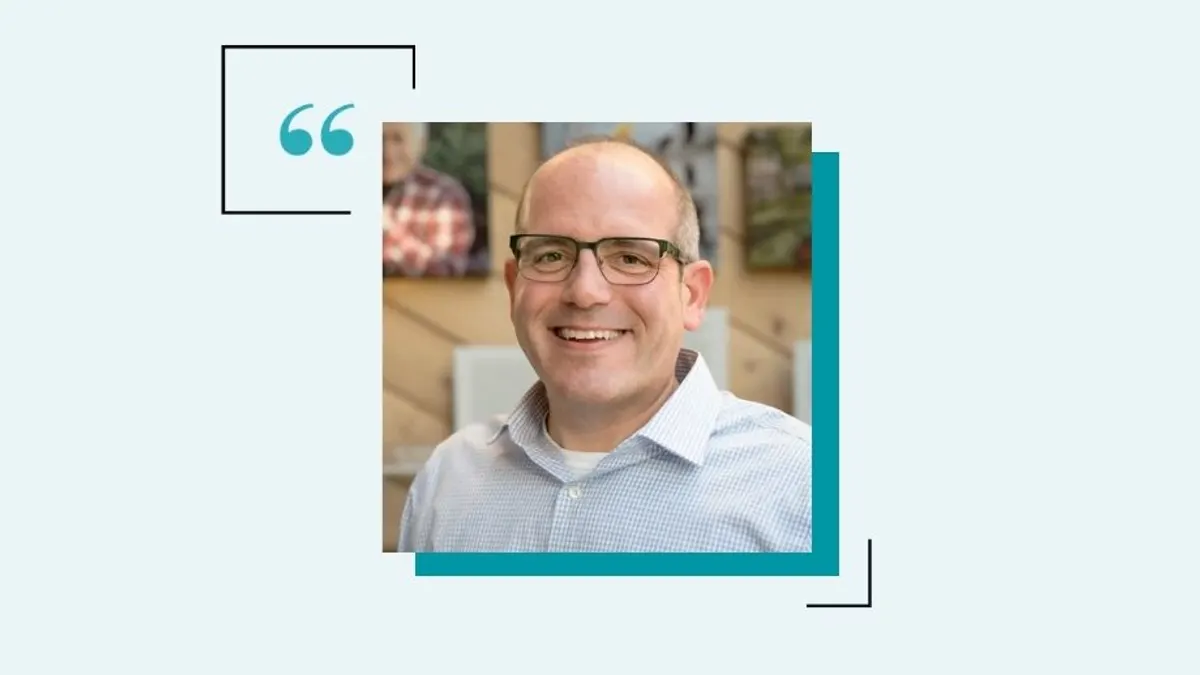
Last year, after a long search, the company brought on Jon Ver Steeg as a fractional CFO to help professionalize the finance function. Ver Steeg, whose background spans public companies, private equity-backed businesses and high-growth firms, said his priority for The Glo Companies was introducing a new forecasting model that gave leadership greater visibility into the business. Now, both Walker and Ver Steeg say the company is nearing another milestone: the point where a full-time CFO will eventually be needed.
When gut instinct stopped being enough
Walker, an electrical engineer by trade who started his career at Tesla designing door struts on the Model X Falcon, never planned to build a finance function.
As many founders can attest to, the finance function landed in his lap after he decided to leave his full-time job at Tesla after three months to pursue this opportunity in entrepreneurship. In the early years, that meant maintaining spreadsheets and doing FP&A on the fly. His only form of formal guidance, he said, was those quarterly meetings with a CPA.
"I would log into our checking account every morning," Walker said. "That was my gauge of how much money we had to spend. It was a little bit of gut feel."
The approach worked while The Glo Companies was smaller because, as he said, the business was profitable and the product lineup was limited. Walker described the company's growth as a series of "stair steps," with profits from one stage funding the next.

That began to change as the company expanded beyond its original Glo Cubes product, entered more retailers and prepared for its first institutional fundraising round.
"We were running the company off spreadsheets," Walker said. "Then we had a bookkeeper. Then we realized we needed somebody who could help us think further ahead."
Rather than hiring a full-time finance chief, Walker said the company looked for someone who could provide strategic guidance while fitting the company's stage of growth.
"We probably weren't ready for a full-time CFO then," he said. "But we knew we needed somebody with that experience." Ver Steeg, who came on board in early 2025, said that transition is common among growing businesses.
"If a founder ever finds that they're ill-prepared for a customer meeting or for a product update because they had to do a finance-related task, that's the time where the founder needs to investigate getting a fractional CFO," he said.
Ver Steeg's priority was extending the company's visibility into its cash position. "One of the things I like to say is ‘surprises are for birthdays’," he said. "[My initial goal was to] focus on cash flow. Let's shine the headlights for the company a bit farther than next week or next payroll."
He began by building a rolling 13-week cash forecast using the company's existing financial information. The model gave leadership a clearer understanding of where the business was headed and changed the discussions taking place around the board table.
"The board started asking really, really good questions," Ver Steeg said. "What if constraints on working capital were removed? What if there was no risk for a stockout on our most popular SKU? What does a 12-month plan look like from a low, medium, high perspective?"
Those conversations helped leadership determine how much capital the business would need to continue growing without working capital limiting its plans.
"We got to a number," Ver Steeg said. "Ultimately that's where the board and Hagan decided to go out and raise a round of equity."
Walker said the company eventually converted from a Mississippi LLC to a Delaware C corporation as part of preparing for its recent Series A financing, a step required by the lead investor that also simplified the company's governance structure.
"It was a lot of work, but it cleaned everything up,’ Walker said. “We went from units to shares, and it made the business much easier to understand from an investor standpoint."
Walker said the company had spent years funding its own growth, making the financing process different from many venture-backed startups. "We've always tried to stay profitable," he said. "That gave us options. We weren't raising money because we had to. We were raising money because we wanted to remove some of the constraints on how fast we could grow."
Building a finance function for growth
Walker said it’s critical to him that the company's finance function evolves alongside the business.
Over the past year, the company has moved into a new 50,000-square-foot headquarters, completed that Series A financing and acquired another sensory toy brand. Walker said those milestones have highlighted the need for additional finance leadership.

"We kind of have this gap of maybe a controller or bringing [Ver Steeg] on more full-time," Walker said. "There certainly is a need for some of that. We just... have a lot going on."
Ver Steeg said deciding when a company needs a full-time CFO rarely comes down to a single metric.
"It's bigger than that," he said. "It's not exactly black and white. I think it's a combination of complexity and velocity, and that means different things for different companies and different industries."
He said a fractional CFO can help keep a growing business on course, but there comes a point when the role must expand.
"A fractional CFO is great at sort of keeping the train on the track," Ver Steeg said. "But it would certainly be time to expand the CFO role if the CEO and the board were to say, 'Hey, we're not traveling by train anymore. There's a bigger market opportunity.'"
Ver Steeg believes The Glo Companies is approaching that stage.

"It's a fantastic team. There's a fantastic market opportunity," he said. "There are a host of untapped partners, content partners and strategic partners. There are plenty of opportunities to go to different things. Maybe the company's not ready to do all of them yet. But it’s ready to do a few of them."
If the company continues on its current trajectory, Ver Steeg said the need for a full-time CFO is likely inevitable.
"If the company's successful going down that path, they will need a full-time CFO," he said. "Understanding the levers and understanding competitive pressures... all that's very complex and leads to it needing to be a full-time CFO."
Walker said the company is already looking for those qualities in its future finance leader.
"I just want honesty and transparency," he said. "Here are the levers that we think we can pull, and here would be the outcome for each of them."
From products to platform
Walker and Ver Steeg said The Glo Companies' future extends beyond manufacturing toys and into the content space.
The company recently launched an interactive book series built around its Glo Pals characters and is continuing to invest in intellectual property that can expand into new formats. Walker said the long-term vision is to create brands that can live across multiple products, creating a deeper connection with children while opening new avenues for growth.

"So we launched our book series, and the idea there is to do more character development of the Glo Pals," Walker said. "Later this year we'll also have some books coming out with Sesame Street characters in them."
He said protecting the company's intellectual property has become increasingly important as that strategy takes shape.
"I think at some point there probably will be an animated series of the Glo Pals," Walker said. "That's when all this IP moat that we're trying to create will be most important."
Ver Steeg said that evolution also changes the role finance plays inside the business.
"Hagen and the team have developed this really ingenious and patented technology," he said. "Like many companies today, many companies are using their product platform to become a content provider."
He said finance leaders must be able to understand where that transformation creates value and where management should continue investing.
"I think Glo could become — using its light-up library, using its patented light-up cubes and sensory toys — a content platform," Ver Steeg said. "I think content drives demand."
As the company expands beyond physical products, Ver Steeg said the finance function will need to evolve alongside it. "As the company evolves, it becomes more of a content platform," he said. "Getting content onto the platform, the books, the sensory toys, etc."