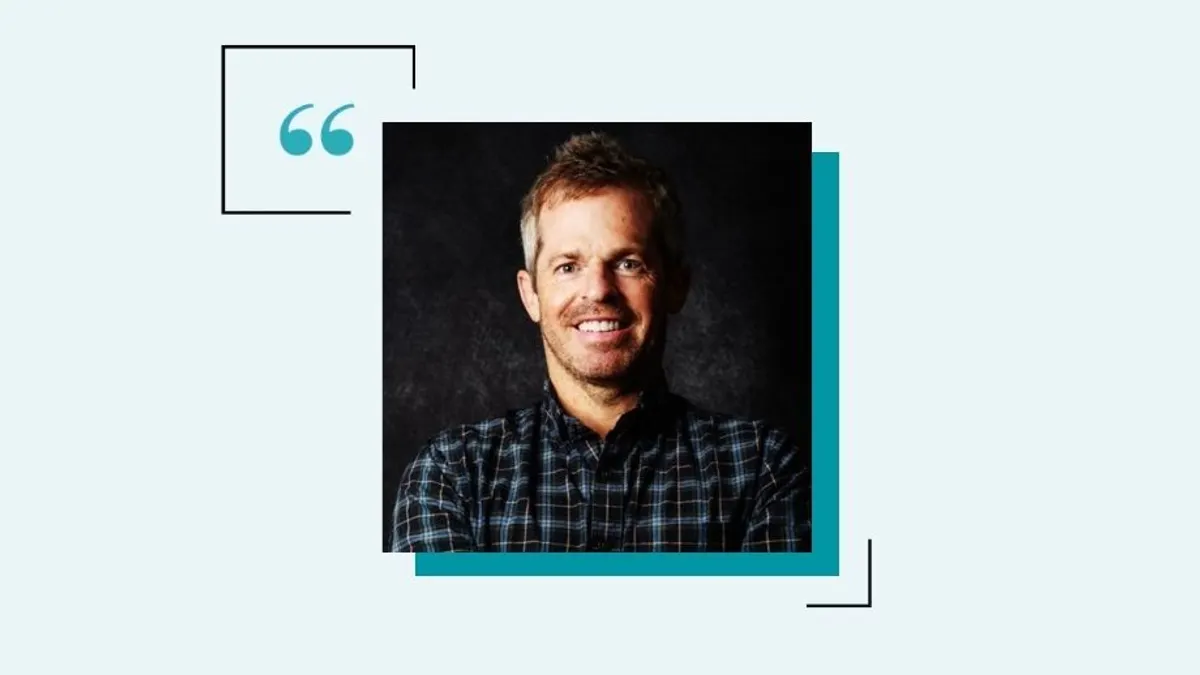


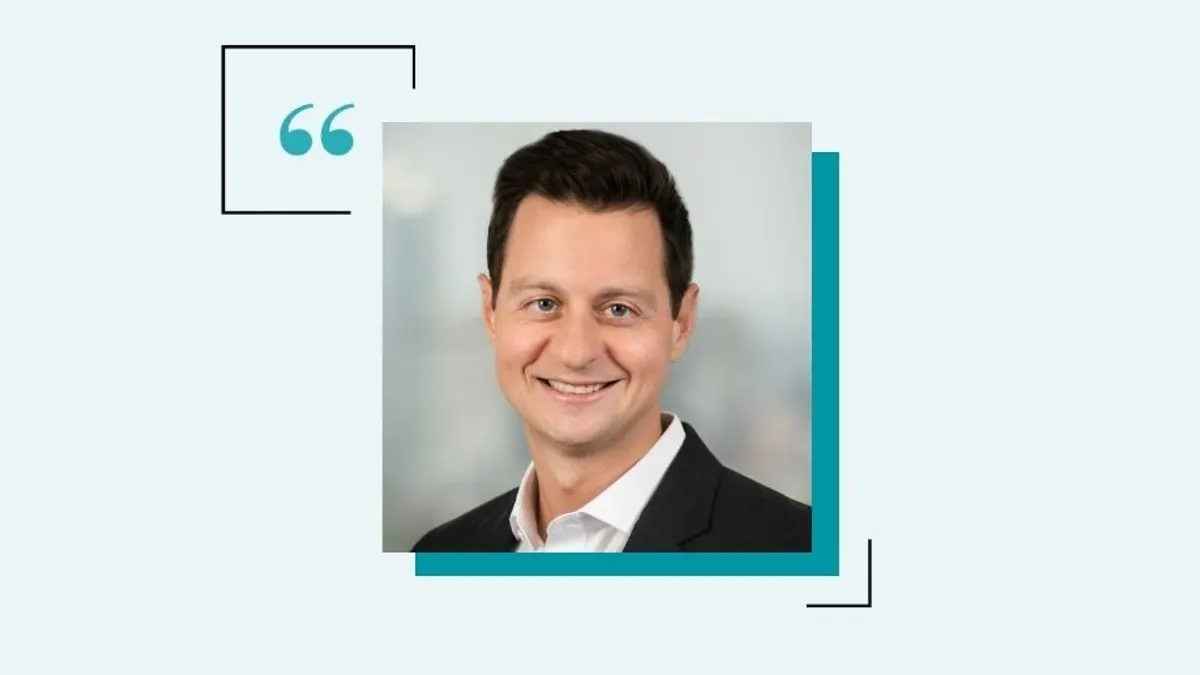
Matt Kosovksy’s path to a permanent CFO seat came after nearly a decade in leadership at employee-owned private equity firm Berkshire Partners.
In January, he officially stepped into the top financial job at IT managed services and cybersecurity provider Thrive, a business that his former employer invested in. Kosovsky, who got his start as an accountant at Deloitte, sees Thrive as a leader in “what is today a very fragmented marketplace” for IT services.
Based in Massachusetts, the company counts about 1,500 total employees total and has annual revenue of around $400 million, according to Kosovsky.
In an interview with CFO.com, Kosovsky talks through growing competition in private equity today, his approach to cybersecurity in an increasingly complicated tech world and his advice for young accounting and finance professionals.
Matt Kosovsky

CFO, Thrive
First CFO position: 2026
Notable previous employers:
- Berkshire Partners
- Deloitte
Editor’s note: This interview has been edited for brevity and clarity.
DAN NIEPOW: You came to Thrive in January after nearly a decade with Berkshire Partners. Can you talk through the dynamics of working at a private equity company that’s owned by employees?
MATT KOSOVSKY: Culturally, Berkshire Partners is a little bit different from many private equity firms in the market. They have a very team-oriented approach in everything they do, whether on the deal side or on internal operations. They’re not as top-down as some of the other private equity firms in the market that I’ve seen and dealt with. Decision-making is also allocated across the business more than other private equity firms that I've seen.
I’d also say Berkshire has long-standing relationships with individual portfolio companies and management teams. Those relationships matter a lot to the ethos of the culture and the brand, and that’s been a net benefit for the company over time.
What’s your biggest learning about the state of private equity today from your time at Berkshire Partners?
It’s a hard business to be in today. Through observations and through my prior work at Deloitte, I’ve seen competition in the industry continue to escalate. Whether it’s competition for new investment dollars or for management teams and top talent, all of that has only continued to escalate as more and more firms have entered the marketplace. Naturally, that creates compression in return. The differentiators can’t just be financial engineering; it’s critical in today’s market, you have to bring things to the investment outside of that.
Your role at Thrive is your first permanent CFO position. How did you know you were ready to take it on?
I was fortunate during my time at Berkshire to have several embedded deployments at portfolio companies, as well as a few interim CFO roles. So, I’d had the chance to spend time sitting in the seat on an interim basis. I got to see what really high-performing finance functions look like. I’ve also lived through a lot of challenging times with portfolio companies.
I think I’ve seen a wider range of circumstances, relative to other CFOs in the market who may have had more siloed views.
In the news release announcing your appointment, you were quoted as saying that demand continues to increase for “integrated cloud, cybersecurity, and AI services.” How do you think about balancing cybersecurity in the era of artificial intelligence?
I'll be the first to admit that I am certainly not the expert here, but I will say we've got a whole team of very talented folks who are focusing all of their time on cyber. I have high confidence that the resources that we're putting against making sure that we're staying ahead of the risks relative to the market will continue to serve us well.
And if you think about the universe of vendors and the universe of support functions out there, we are quite large in terms of the maturity of our function, how integrated our services are, from cloud to managed services to cybersecurity. I’d say we have an ability to not just speak intelligently but to help guide our customers through what is a challenging and turbulent time.
Thrive appears to be on a bit of an acquisition spree, having completed five last year and 27 since its founding. What are some factors you take into account when considering future acquisition targets?
It continues to be a very active market. Acquisitions will continue to be part of our value creation plan and thesis, but there’s not a single geography, industry vertical, product or service line that we’re focusing on specifically. We have our ideal customer profile, so we look for potential acquisitions that are going to fit well and be complementary to what we already have. That could be filling in geographies, for example. These are some of the lenses we use when evaluating acquisitions.
What advice might you give to a young person who’s considering a career in finance or accounting today?
I would just encourage people to continue to be flexible and continue to try new experiences and take on new risks. It certainly has not been a straight line that I would draw from my entry-level role, which was at Deloitte. As I stepped into different service lines there and throughout my time at Berkshire, I wasn’t expecting a direct path to where I am now.
I think continuing to adapt to your surroundings, continuing to find opportunities to learn, to stretch yourself, to gain and build new experiences is what's going to pay off over the long term.