

Inmar Intelligence looks quite a bit different than it did when Rich Schmidt signed on as a financial analyst back in 2000. The North Carolina-based company, founded by the son of an R.J. Reynolds Tobacco executive back in 1980, got its start in coupon reimbursement for retailers, and has since expanded into medication disposal.
Even since Schmidt became CFO in 2014, he says the nearly 50-year-old company has seen some big changes.
“Inmar is, by pretty much any measure you want to pick, about four times the size of what we were previously,” he says. “For a company that’s been around for that many years to be able to say that is pretty exciting, and it’s one of the things that’s kept me engaged.”
In an interview with CFO.com, Schmidt talked through all the reasons he’s stuck around with Inmar over the years, and why he sometimes sees lateral moves as essential in a career path.
Rich Schmidt
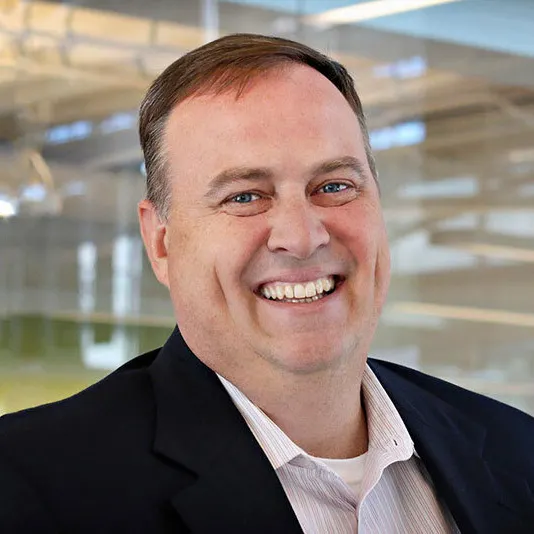
CFO, Inmar Intelligence
First CFO position: 2014
Notable previous employers:
- McGladrey & Pullen
- Forsyth County Park Authority
Editor’s note: This interview has been edited for brevity and clarity.
DAN NIEPOW: You’ve been with Inmar since 2000. What’s kept you there so long?
RICHARD SCHMIDT: It's a few things. The first thing is it's really important to me that I work with people that I feel challenged by. And I mean that in a positive way, where they’re challenging me to grow with them and not against them.
Second, it’s my continued respect and admiration for the culture here at Inmar, both in terms of how people are committed to our customers and to each other. One of the things that struck me early on in my career came after a tornado hit some neighborhoods not far from our office. A few employees were impacted, but dozens of people still showed up to help a small group of employees whose homes had been messed up. I had only been with the company a few weeks, and I thought, ‘Wow, this is really something.’
What I came to find out was like that wasn't an exceptional thing; that was just normal for the way that folks at this company operated. They would rally around not only their coworkers, but around clients. They wouldn’t think twice about it. They would rally around situations with clients. They would rally around each other dealing with situations with clients, and they wouldn't think twice about it.
On an episode of the CFO Thought Leadership podcast, you talked about being open to “growing laterally and not just vertically” in a company. Can you share a bit more about why it sometimes might make sense to focus on lateral moves in a business?
The goal for everybody as a professional is to increase value. How do you deliver value in your job every day? If you accept that the world is changing at a pace that we’ve never seen before, you know that standing still is not an option. So, when you take roles that expand the depth of your experience and your knowledge, that enhances your diversity. It allows you to create incremental paths for value creation.
The folks that I see moving the needle in the organization generally are pretty diverse, have strong curiosity and have a strong penchant for wanting to solve problems. They’re very adaptable.
Inmar operates two seemingly disparate lines of business: a “martech” business, which includes coupon reimbursements, and a healthcare business. What’s your approach to managing finances across two distinct business lines?
It's easy to think about them as being disparate, but we see some similar themes on both sides. We’re handling a two-sided marketplace in both instances. The general approach we try to take is that you’ve got to mind your P’s and Q’s at the individual transaction levels. We’re trying to make sure we’ve got the right ratio of value delivery to value capture.
Secondly, we're looking at ways to drive efficiency inside each of our business units. That could be things we can do globally as opposed to doing them in a business unit, for example. We want to drive efficiencies to improve overall economics, not only at a business unit level but at a consolidated level.
You’ve been working at Inmar before the widespread debut of ChatGPT and other large language models. How would you say the advent of such tech has affected your business?
We’re fortunate we started this conversation on second or third base as a company. That's largely because the datasets that we have dealt with for so many years required us to develop a lot of sophisticated algorithms to do that matching and that recommendation type of work. So, we naturally have, for years, had those machine learning algorithms built into our tools. That put us in a good place.
We're challenging our team to think about how to use the tools to take those things that are less value-adding and automate them, so that they can spend more time on the things that are uniquely human.
The leaders of some of the frontier AI labs have been doomsaying off and on over the years, and they’ve become a bit louder more recently. Has any of that impacted your use of or approach to this technology?
I don't know that there's a right answer. What I would say is that for myself and for most of the leadership here at Inmar, we’re pretty strong believers that there’s an opportunity to leverage AI to enhance the results we deliver for our clients, and to allow our associates to do more impactful. We view it as table stakes at this point. And as AI becomes more prevalent, human skills around judgment, critical thinking, empathy, creativity, active listening and trust become more valuable.
It’s certainly scary times. But if you roll the clock back 125 years, you can imagine what it must have felt like to see airplanes in the sky. My guess is it felt pretty similar to the way we feel now.
Humans have adopted and adapted for many millennia. My core belief is that we're going to continue to do that, and that there's some inflection point happening right now that is a little scary. It's incumbent upon those of us in leadership roles in business to remain calm and keep people focused on the things they can control, and on ways they can continue to evolve, adapt and adjust to this new world.