The eastern end of Long Island, New York, has a long and fascinating relationship with scientific research.
Nikola Tesla built his Wardenclyffe laboratory in Shoreham more than a century ago. Farther east, Plum Island is home to a federal research center focused on infectious animal diseases, while Camp Hero in Montauk was commissioned for research and defense during World War II and later became a Cold War radar site.
Decades later, theories like The Montauk Project about secret government experiments around this area of Long Island have become influences in pop culture, including the inspiration for the television show "Stranger Things", which was originally developed under the title “Montauk”.
Today, about 7 miles from Tesla’s former laboratory and 55 miles west of Montauk, Brookhaven National Laboratory in Upton is home to some of the world’s most advanced particle physics research in the world. Its Relativistic Heavy Ion Collider, the first machine in the world capable of colliding ions as heavy as gold, completed its 26-year run in 2026.
Before RHIC began operating, the prospect of smashing particles together at such high energies even prompted public fears that the collider could create a black hole, concerns Brookhaven convened experts to study and ultimately reject.
Today, in its place, Brookhaven is working on a $3 billion Electron-Ion Collider that will use much of the existing infrastructure to help scientists better understand the building blocks of visible matter.
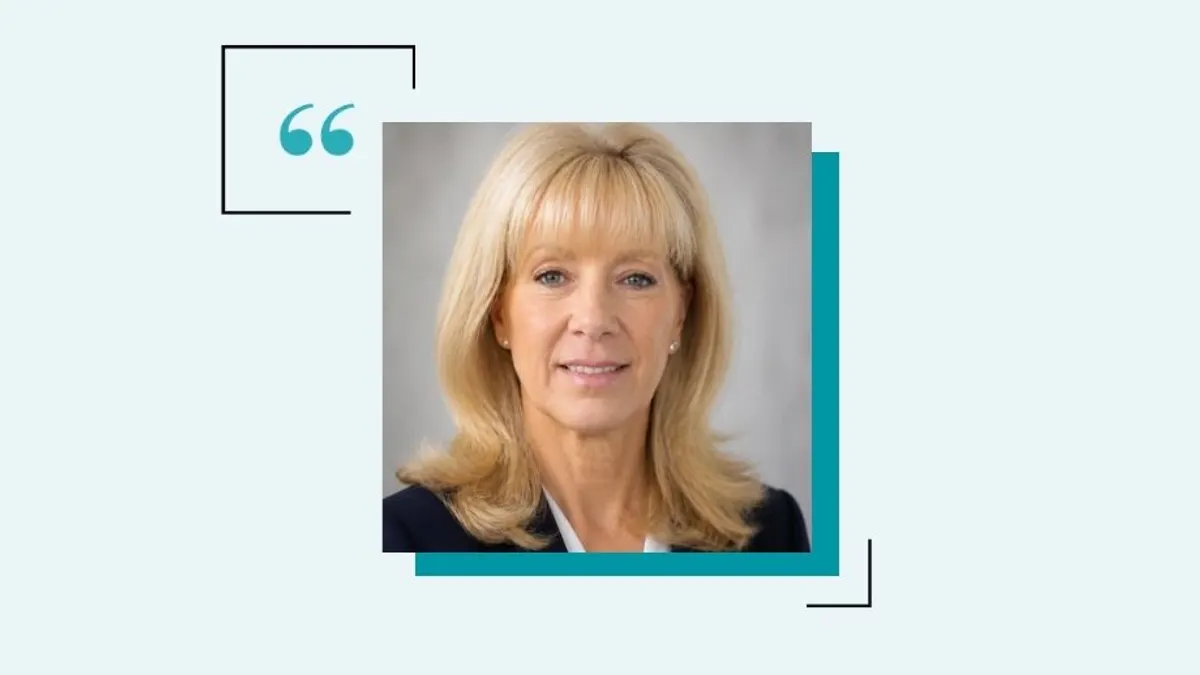
Helping support projects of that scale requires CFO Dr. Susan McKeon to understand enough of the science to ask the right questions while keeping a close eye on taxpayer dollars. McKeon, who has spent 36 years at Brookhaven, spoke with CFO.com about what it takes to finance scientific research at that scale.
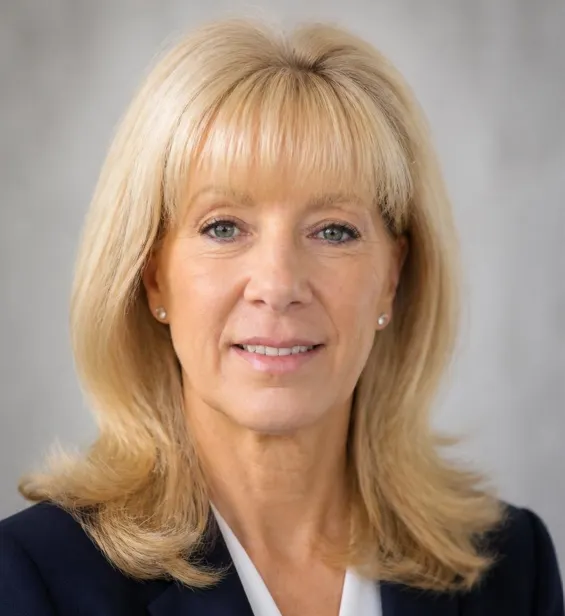
Dr. Susan McKeon
CFO and Associate Lab Director, Brookhaven National Laboratory
First CFO Position: 2021
Notable previous employers:
- The Frick Collection
ADAM ZAKI: You’ve spent 36 years here. When did you realize finance leadership was the path you wanted to take, and what has kept you around for so long?
SUSAN McKEON: I’ve stuck around so long, and I’m not unique at Brookhaven with the long tenure, because the people who work here are so connected to the mission of the laboratory.
They’re not doing it for the money, the fame and glory. Maybe some of the scientists are, but people in the support roles — HR, finance, safety and facilities — we’re here because we’re connected to the mission.
We laugh and say you’re still a newbie for your first 10 years at Brookhaven. That’s kind of the environment that I’ve grown up in here.
Brookhaven wasn’t my first job. Out of high school, I got a full scholarship to the School of Visual Arts to be an artist. I didn’t like it at all, so I left and went to get my undergraduate degree in business. I had to take an art class, took art history, fell in love with it and ended up with dual degrees in business and art history.
My first job after graduating was at The Frick Collection, working for the head curator. But you make no money doing that. You have to be independently wealthy to be an art historian. I realized I could pivot into accounting, work as an assistant accountant at the Frick and double my salary.
At the time, I was living on the East End of Long Island and commuting two and a half hours to the Frick. My husband worked at Brookhaven, and my father had worked at the lab. My husband told me there was a position for an assistant accountant and suggested I apply. That’s what got my foot in the door.
One of the things that allowed me to expand here was that I was always looking for something new. I embraced education, getting my MBA and certifications relevant to what I was doing at the lab. I studied public management to understand what it meant to be working for the government.
I’m not a federal employee. We’re contractors at Brookhaven. The facility is run by the Department of Energy, but we’re all contractors to the Department of Energy. When projects became a bigger part of my work, I got a certification in project management and eventually sat for the Project Management Professional exam.
I was always raising my hand and saying, “Yeah, I have the capacity to do that,” and taking on more work. That allowed me to develop a breadth of experience across Brookhaven. Every couple of years, I took on more responsibility in areas that were very different from what I had done before.
Eventually, I moved into what was then the largest science program at the lab, nuclear and particle physics, and worked on the formulation of what is now our Electron-Ion Collider project. My role was entirely on the finance side, supporting the proposal that ultimately brought the project here and then standing up the business office supporting that $3 billion project.
That allowed me to move into the business operations officer role because I knew both the support functions and the science functions. That eventually led to the interim CFO role, which quickly became the CFO role.
If you had told me when I was getting my undergraduate degree that I would ever be sitting in the CFO seat at the entire laboratory, I would have said, “You are an insane person. There is no way that would ever happen.” But when I look at each step, it’s a logical progression.
CFOs talk a lot about the importance of learning the business. How much of the science do you need to understand to manage finance here?
Scientists love, as most everybody does, to talk about what they’re doing. If you’re interested, you don’t have to read books because I would be lost in a book on quantum physics. You can sit with our principal investigators and the scientific leads. They love to talk about their work.
The key from a financial standpoint is balancing that scientific knowledge with the awareness that we at Brookhaven are financial stewards of taxpayer money. The national laboratories are working on groundbreaking science, and it’s really cool. But there’s also the question of what is viable for the taxpayer dollars and whether we’re getting the right amount of money for it.
I will never be a nuclear physicist or a biologist, but each time I went into a program, I needed to know enough about it to be able to probe and ask questions to make sure we had sound financial estimates for what we were doing.
The government is very regulated in how they do things. My job is to understand how to work within that environment to get the most delivery on our mission as possible, and I can’t do that without understanding at a basic level what’s being done here.
Brookhaven may be a little more difficult in that regard because we’re a multidisciplinary laboratory. Some labs are all nuclear physics. Some are all energy. We do a lot of everything. So, my people working in each of those programs need to understand what’s needed in that particular program.
In addition to CFO, you’re associate laboratory director for Business Services. What does that side of your role entail?
The associate laboratory director is responsible for the operational aspects of business across the entire laboratory. The functions that report to me in that regard include the operational aspects of money coming into the laboratory, the generation of financial statements and the business processes across the laboratory in terms of our ERP system and the business rules that get put in place.
It also includes how we interact with the different program offices across the laboratory to make sure we’re supporting them. Procurement reports into the ALD position, so that includes the compliance rules we have in that regard.
From the CFO perspective, that’s more of the higher-level reporting to the Department of Energy and making sure that our prime contract is working correctly. We operate under a single prime contract with the Department of Energy. I’m also responsible for making sure our financial statements are appropriate and have the fiduciary responsibility that comes with the CFO role.
I also sit on the board as CFO at the management corporation level and sign off on everything financially that the laboratory is doing. So, in our minds, there’s a very clear distinction between the two roles. The ALD role is the operational aspect of how the business function works across the entire laboratory, while the CFO role covers the financial aspects of it.
I’d imagine you view ROI differently than a private-sector company. How does that change the way you evaluate technology investments?
We don’t care about ROI in the traditional sense. We may not track it in that traditional sense for the [new collider], but there certainly will be returns in terms of the scientific knowledge gained and the advanced technologies that need to be created to make that machine a reality.
This is different than most CFOs. We’re more concerned about delivery on our scientific mission. The scientific discovery itself is what we’re looking for, and we can’t quite equate the return on the investment because sometimes there are years and years involved. We don’t measure stuff in quarters.
The Electron-Ion Collider is a 10-year, $3 billion construction project that will probably have no ROI in the end. We know that it will work, but we don’t know what discoveries will even come out of it when it’s done. It’s fundamental science that we’re working on, so those kinds of things are very different.
For my analysts, it’s really about tracking against budget. We use Power BI right now as a way of taking a whole bunch of disparate data sources and putting that information into a dashboard that our principal investigators can look at and get better insight into their programs. Then the financial analysts and the PIs can work together to see where they need to adjust their planning.
AI is helping us an awful lot as well. At Brookhaven, there’s AI for science, which is how science is using AI, and there’s the science of AI, which is developing AI to be used. Then, on the operations side, it’s how we use AI to streamline and become more efficient. I would say we’re not in our infancy, but we’re toddlers in terms of that.
We’re using chatbots in some ways to help streamline how we write statements of work for purchases or services. We also use AI to understand and compare the vast number of directives, operational guidance and executive orders that come through and tell us how our operations need to change from a federal perspective.
When you get 50- to 150-page documents, being able to very quickly compare where the changes are and summarize them in a matter of minutes has really been a game changer for us.
As these tools take on more of the technical work in finance, what skills are you looking for when hiring early-career employees today?
In the past, we relied very heavily on technical skills. Those technical skills were the differentiator. Right now, technical skills are becoming a given, and the ability to think and analyze is becoming more important at a lower level of the organization.
The differentiator now is people who can take those technical skills and do the analysis better and think more strategically. That’s being pushed down to a much earlier-career employee.
I fear that because of these tools, the technical skills I’m saying are now a starting point may become less valued, and they shouldn’t be. We all know how AI hallucinates. You need to be able to probe it, and part of the analysis is understanding what is really behind the outcome.
I’ve seen instances where people are relying on the data that AI spits out, and when questioned, they don’t know what really went into making that number. That’s a problem.
That’s something I’m being really careful about as we start hiring people. We’re looking for those new skills in addition to the base level of technical knowledge.
You just started teaching at SUNY Old Westbury. What made you want to get into the classroom?
Something really important is creating a pipeline of young talent and helping develop that talent. How I got the job at SUNY Old Westbury is that, as ALD for Business Services, I connect with schools in the local Long Island area.
I take select members of my team, and we go on a roadshow to schools to talk about what Business Services can offer. So many students in business school think that if they’re an accounting major, the only thing they can do is become a CPA. There are many other opportunities for accounting majors, economics majors or other business majors.
Of course, I’m trying to create a pipeline into Brookhaven of these talented young people. We talk about our internship programs and professional development programs, and I have former interns who are on my team now come and talk to the students. That’s how I developed the connection with SUNY Old Westbury.
The class I teach is organizational behavior, which is one of my passions. My doctorate is in change management and leadership, and I think it’s important that students understand how they can formulate their own careers, what they should expect from an organization and how they can interact with other employees as they enter the workforce.
My team and I have gotten some fabulous interns who turned into term employees and then full-time employees who are my rising stars right now. I’m really looking to establish that connection with students and give back. Some key people provided opportunities for me, and I think I have a lot to provide to people early in their careers to help shape them and have the most successful careers they can.