


Guy Zeltser never sought to work in the insurance industry. But the chance to modernize an industry that has been “pretty sleepy” appealed to him, he says.
“I don’t like to come to places that are trying to do more of the same,” Zeltser says. “I like to dream big.”
Zeltser, who earned his MBA at Northwestern University in 2017, first joined Hippo Insurance as director of strategic finance in late 2020. He stepped into the CFO seat at the homeowner’s insurance company in March of 2025.
Hippo had about 540 employees as of 2025’s end and reported net income of $57.7 million that year, up from a net loss of $40.5 million in the prior year. Zeltser is bullish on the company’s prospects going forward, despite some lingering uncertainties in the insurance market as a whole.
In an interview, he talks about his approach to the insurance business in a rapidly changing world, how he thinks about inflation and the lessons learned from his time at a major consultancy.
Guy Zeltser
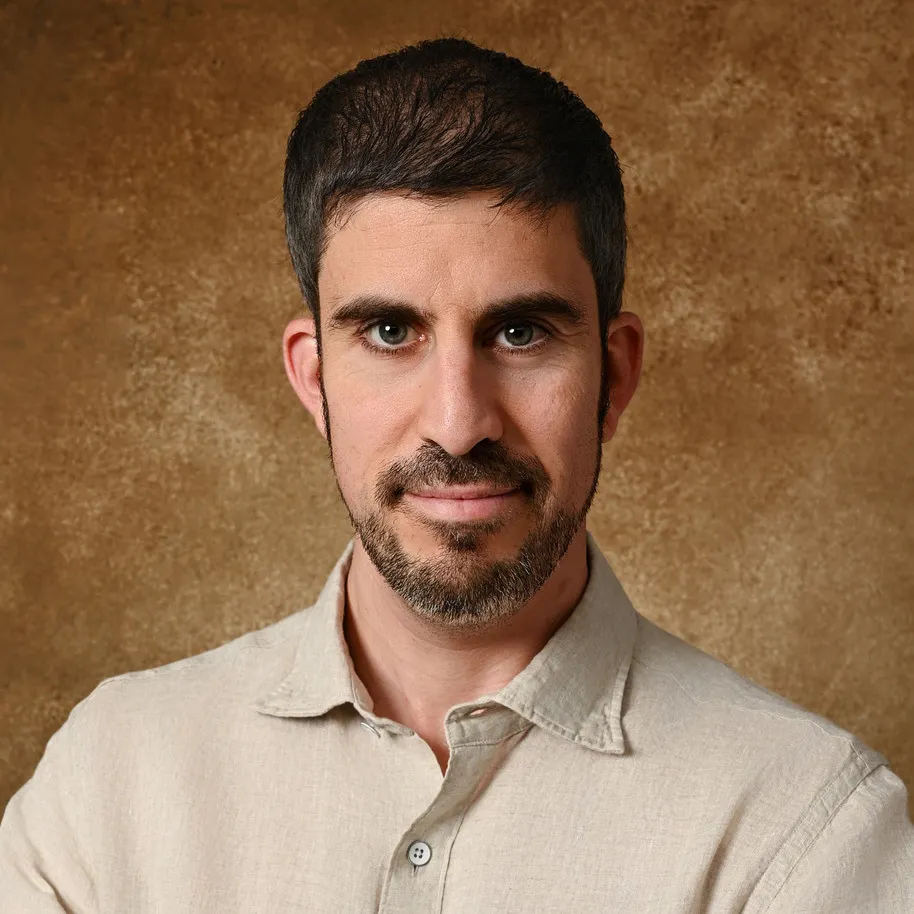
CFO, Hippo Insurance
First CFO position: 2025
Notable previous employers:
- McKinsey & Co.
- Lumenis
Editor’s note: This interview has been edited for brevity and clarity.
DAN NIEPOW: You were serving as director of strategic finance when Hippo Insurance went public via SPAC in 2021. What were some of the lessons learned from that experience?
GUY ZELTSER: I learned that you raise money when you can, and you don't always raise money when you want. That’s something I took with me. That SPAC is what has enabled us to be here today, having a company that just printed its best quarter ever. The SPAC is why we have enough capital to support our plans. Not every company that did a SPAC succeeded, of course.
The second thing I also learned is that in insurance there are no shortcuts. If you want to grow, you need to always grow profitably, and you need to have underwriting discipline all the time. We’ve built a lot of resiliency, and I’ve learned how important that is, even when things are going well. You just have to continue to execute.
With increasing threats of wildfires out west and elsewhere, some observers have suggested we’re moving to an “uninsurable” world. Consider the exodus of some insurers from California, for instance. What’s your take as finance chief of a homeowner’s insurance company?
There are pockets of the country that are becoming very difficult to insure, or at least you need to do it differently. So, I think about this in multiple ways. First, the insurance market is big. Outside of homeowner’s insurance, there’s auto and commercial insurance, which could be more than a $1 trillion market. We’re deep in an ocean; there are plenty of opportunities to go after that aren’t susceptible to either wildfires or hurricanes.
Second, I do think there are ways to do things differently that can actually make properties insurable. I'll give you an example: Up until around 10 years ago, Florida was a state that was considered uninsurable for various reasons. The state then changed the building codes, requiring houses to better sustain hurricanes. We’ve actually seen effects of that at Hippo because we work with some of those builders in Florida. We’ve experienced a few regains there, and we’re seeing similar things in California. We're seeing houses being built with fire-resistant roofs, for example.
Also, in high-risk areas, there are things like aerial imagery and other technologies to quantify risk. We do see some companies focusing on that: insuring areas that nobody else wants to touch, and I do think there is a play to that.
What kinds of macro things are keeping you up at night? What trends are you watching closely over the rest of the year?
The first thing that is keeping me up is inflation, but inflation specific to homeowner’s insurance. So, my peers and I are watching geopolitical tension in the Middle East, oil prices, Fed rate decisions and other things to understand how they might eventually affect our industry. We’re especially looking at interest rates so we can fine-tune our portfolio accordingly.
And another thing on my mind: We are talking a lot in the last few quarters about diversifying our business away from homeowner’s insurance just so we have other things that are not exposed to weather events. One of the areas we’re thinking about is casualty.
We know that many finance teams are struggling to put a clear ROI on AI tools. What’s your approach to measuring the value of artificial intelligence at your company?
Let me start by saying that AI is now touching everything that we do at Hippo, whether it's claims handling, customer support or underwriting. To answer your question on how we're measuring it, there are concrete ways to measure it in all of those areas that I mentioned.
I’ll give you an example: claims. There is a very simple way to measure claims productivity, and usually the way that it's measured is by how many claims a claims adjuster can process per month. This team has really changed the way they do things, and we can see they’re now about 30% more productive.
You previously worked at McKinsey for three years. How does that experience inform your work as a CFO today?
I am much better at my job because of these three years at McKinsey. When you're at McKinsey, you are working with other companies to solve some of their most complex problems. You get to see what people are actually working on. You understand that everything you are doing on the finance side has implications elsewhere. That’s helped me get a better perspective.