


With the exception of a two-month pandemic-induced recession in early 2020, the U.S. economy has remained remarkably resilient for nearly two decades.
The nation hasn’t seen a prolonged, multi-year recession since the Great Recession in the late aughts, per analysis by the National Bureau of Economic Research. What’s prevented a full-fledged economic downturn? It might have something to do with baby boomers, according to Jeffrey Korzenik, chief economist at Fifth Third Bank.
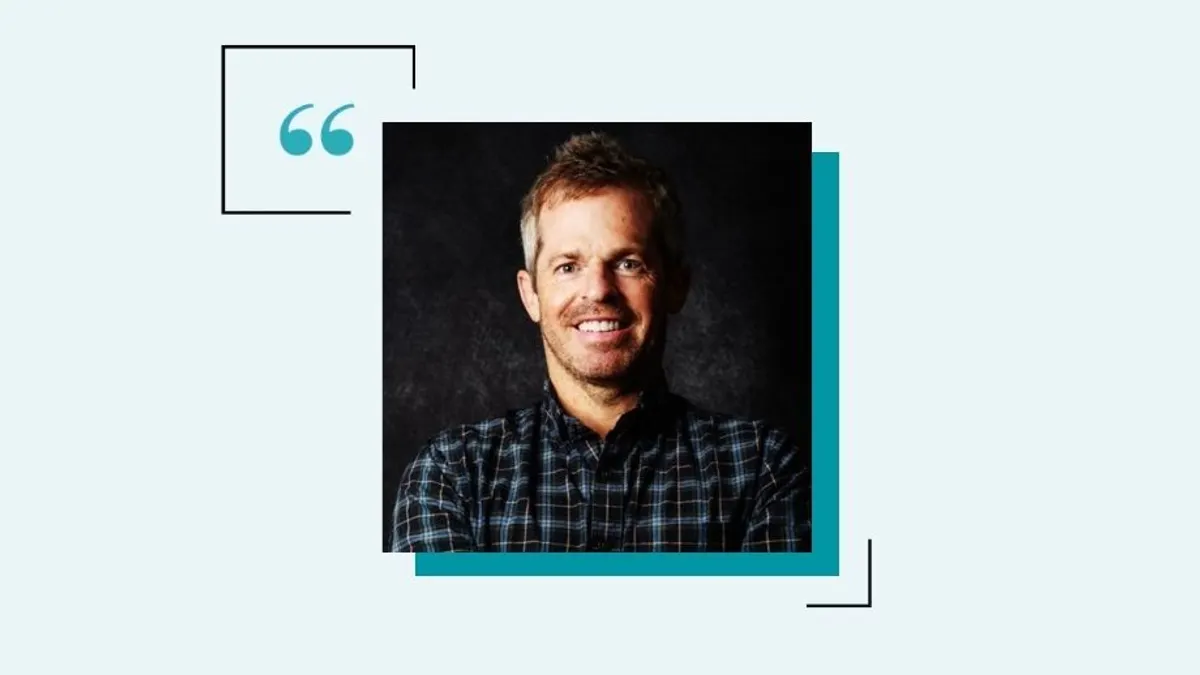
Speaking at the Illinois CPA Society’s 2026 summit in the Chicagoland area on Thursday, Korzenik pointed out that boomers make up just about 19% of the U.S. population but hold more than 50% of the country’s wealth. That means boomers likely play an outsized role in America’s consumer-driven economy, with estimates that household consumption drives about 70% of the United States’ GDP.
“We think that the baby boomers are really a critical component to understanding the consumer,” Korzenik told attendees at the Donald E. Stephens Convention Center in Rosemont, Illinois.
Since boomers are largely retired, though, “economists have forgotten about them because they’re not as big of a component of the workforce anymore,” Korzenik continued. “But they’re a really big component of consumption.”
Unlike younger generations, many baby boomers aren’t subject to the same whims of the market. As Korzenik put it: “We have an important component of consumers who can’t be laid off, or aren’t subject to the economic cycle.”
Baby boomers, which comprised about 64.1 million people as of June, have a collective net worth of about $89.8 trillion. That compares to millennials and younger generations who make up about 196.6 million people but have a net worth of $19.1 trillion, according to data Korzenik presented.

Korzenik also pointed to what economists term the “wealth effect,” or the idea that people with more money, unsurprisingly, are willing to spend more.
“All of this bodes really well for continued resiliency in the U.S. economy,” he said. “It’s going to be harder than ever to drive a recession. That’s obviously good news. It’s not impossible… but we have to recognize how powerful it is to have a core group of consumers that are very wealthy and are largely immune to the economic cycle.”
Korzenik said it’s “extraordinary” that the U.S. economy has remained resilient despite facing “incidents that would have caused a recession in a different environment.”
That all may be good news for boomers and the economy as a whole, but perhaps not everyone. And the fact that baby boomers hold such a large share of wealth is not entirely surprising at a time of great inequality. Consider, too, that the wealthiest 1% of the U.S. population held nearly a third of aggregate wealth as of 2025’s fourth quarter, per Federal Reserve data.
For his part, Korzenik maintained that inequality is ultimately a “greater societal issue than an economic issue.”
“As long as all boats are rising,” he said, “I don’t know that inequality is so bad from an economic perspective. I would prefer, as a citizen, to live in a society where there was less segmentation among wealth.”
Turning points and tech questions
The risk of a recession, of course, is not zero. The U.S. economy is clearly in transition, with Korzenik arguing the nation has passed what’s termed the “Lewis turning point,” once described by Saint Lucian economist Sir William Arthur Lewis. This transition occurs when a nation’s agricultural workforce shifts to manufacturing or other non-farm jobs, ultimately leading to an increase in wages and other big economic changes.
“Developing economies sooner or later run out of these supplies of cheap and low-skilled labor, and they have what is a profound shift in the structure of their economy,” Korzenik said. “We think this is very relevant to the American business community today.”
The term is typically applied to developing nations, but Korzenik argued it has happened in the U.S., likely in late 2024, when the U.S. began restrictions on previously lax immigration policies. It started under the Biden administration ahead of the 2024 elections and was ramped up under the Trump administration, he said. China is said to have crossed the turning point in the 2000s.
What comes after the Lewis turning point is less clear. “Not every economy learns to thrive after the turning point,” Korzenik said. In his view, the path forward is to “automate and educate.” Given the unprecedented spending on artificial intelligence tools and infrastructure, it’s clear the first half of that path is underway.
Whether those investments will pay off, though, is still unclear. It’s even less clear what will happen amid widespread pushback against data centers across the U.S. and across party lines.
Plus, the ultimate productivity and economic gains of AI tools are also yet to be determined. Korzenik pointed out prior technological innovations have, at times, actually hindered productivity as displaced workers moved to lower-paid, lower-productivity jobs.
“New technologies don’t always deliver great productivity,” he said. “They do for segments and for individuals and for individual companies, but they’re so disruptive they destroy the productivity of other groups.”