Over the past decade, the legal cannabis industry in the United States has moved steadily from an experimental market into a very structured and capital-intensive sector.
As more states legalize cannabis and operators scale their businesses, the financial challenges facing the industry increasingly resemble those of other regulated sectors, even as federal prohibition continues to create unusual tax and banking constraints.
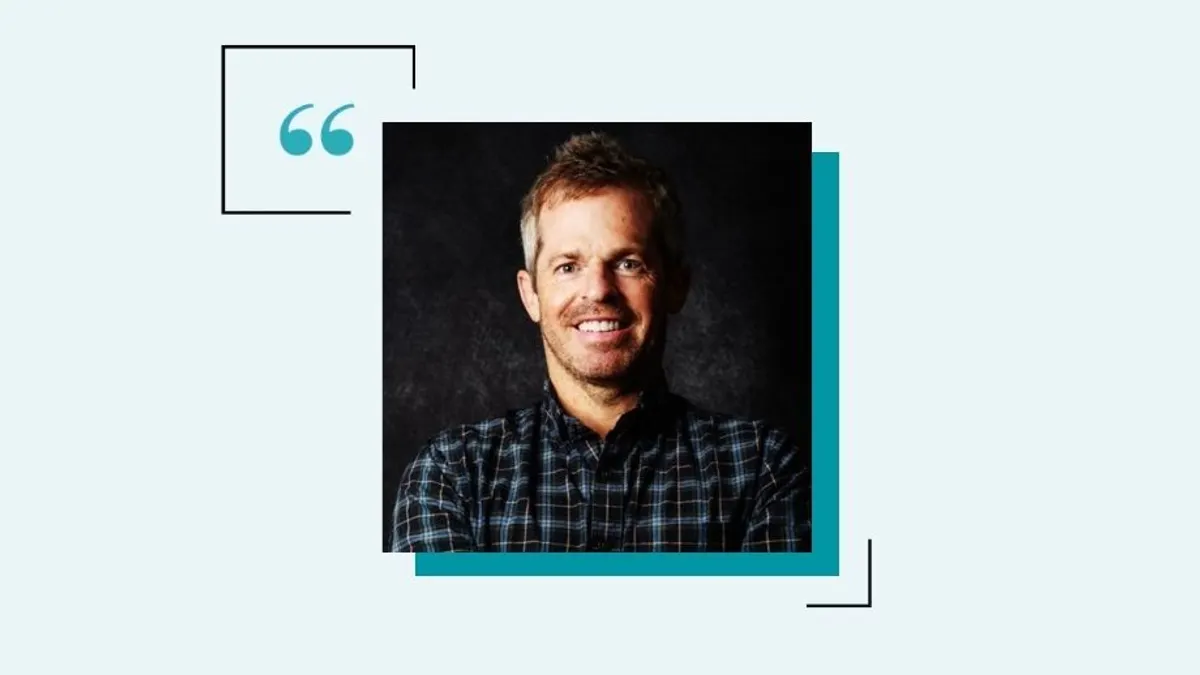
For Andrew Hunzicker, founder of the Dope CFO program, and Raymond Guns, a fractional CFO for cannabis businesses who also serves as chief revenue officer of the Dope CFO Certified Advisor franchise network, those shifts are changing both the industry itself and the finance professionals working inside it.
The Dope CFO program originally launched in 2017 as a training platform for accountants and finance professionals seeking to understand cannabis tax rules, regulatory frameworks and operational realities. Over time, however, it has expanded into a broader ecosystem that includes education, networking and a franchise model connecting fractional CFOs with cannabis businesses that need financial leadership.
As the cannabis industry becomes more sophisticated, Hunzicker and Guns say the role of finance inside cannabis companies is becoming increasingly central, particularly as operators navigate tighter capital markets, evolving state regulations, continued pressure from federal tax law and more.
A growing industry with unique financial constraints
Despite ongoing regulatory challenges, cannabis and its need for quality finance and accounting practices has continued to grow. Legal sales across the United States now reach tens of billions of dollars annually, with new state markets opening regularly and existing markets expanding.

Yet, Hunzicker said the financial structure of the industry remains unusual because of federal law, particularly Section 280E of the U.S. tax code. That rule prevents companies involved in federally illegal substances from deducting ordinary business expenses, forcing cannabis businesses to pay significantly higher effective tax rates than most other companies.
“The profitability of any cannabis company in the U.S. is severely constrained under the 280E tax rule,” Hunzicker said. “You have this extra 20% to 25% tax burden that the rest of America doesn’t pay, no matter what industry you’re in.”
Even with those limitations, cannabis companies have continued to expand. Revenues across the sector have increased steadily as legalization spreads and consumer demand grows.
“If you look at the earnings reports for some of the bigger players, revenues are growing and profits are growing a little bit,” Hunzicker said. “Not hugely, but there is improvement.”
Margins remain thin for many operators, particularly retail dispensaries. Hunzicker said some cannabis businesses currently operate with profit margins similar to those of grocery stores, often in the range of 3% to 5%.
Still, the economics of the industry could change dramatically if federal tax treatment shifts. Hunzicker said removing 280E would transform the profitability profile of many cannabis operators.
“A typical retail cannabis store can do anywhere from $2 million to $20 million per location,” he said. “If those stores suddenly become 25% to 30% profitable, now you could have a single store dropping $2 million or $3 million to the bottom line.”
At the same time, the industry continues to expand geographically. State-level legalization continues to drive growth regardless of federal policy. Guns said new markets are emerging regularly as states adopt medical or adult-use cannabis programs.
“States are moving regardless of what the federal government does,” Guns said. “New York went through it recently, Minnesota is going through it right now, and there are still large states that haven’t legalized yet.”
As new markets open, cannabis operators are building cultivation facilities, manufacturing operations and retail stores that increasingly resemble businesses in other established industries. Those developments are creating greater demand for experienced financial leadership inside cannabis companies.
Capital discipline reshaping cannabis finance
As the industry has matured, access to capital has become one of the most significant challenges facing cannabis operators.
Guns explained how the early years of legalization saw large amounts of investment flow into cannabis companies as investors sought to capitalize on legalization trends. During that period, some operators were able to raise significant funding even with limited financial infrastructure.

From roughly 2018 through the early 2020s, he said, capital was easier to obtain. “Capital was flowing pretty freely in those years,” Guns said. “Companies were raising money for projects and expansion plans much more easily.”
As the industry matured, however, investors began demanding stronger financial controls, clearer growth strategies and more disciplined capital deployment. Some early investors also pulled back after the industry failed to meet the aggressive expectations that initially surrounded legalization.
Guns said that shift has forced cannabis companies to strengthen their financial reporting and governance practices in order to attract investment. “The only cannabis companies getting capital now need to pass a real due diligence process,” he said. “Your financial statements actually need to be GAAP-compliant. They need to be able to pass an audit.”
Those expectations have increased the importance of CFO-level expertise inside cannabis companies. Finance leaders must now understand how to structure deals, communicate with investors and manage cash flow in an industry where capital can be limited.
One potential catalyst for change is the federal government’s ongoing discussion around rescheduling cannabis under federal law. If cannabis were moved from Schedule I to Schedule III under the Controlled Substances Act, many businesses could potentially escape the tax burdens imposed by Section 280E. It would also open up access to capital that is currently unavailable to cannabis companies, easing a working capital burden held by many growers and retailers alike.
Still, some industry observers and legal experts have raised concerns that federal rescheduling could invite new competition from large pharmaceutical companies. Critics have argued that companies such as Pfizer could attempt to dominate the cannabis market through litigation or intellectual property claims if cannabis were moved from Schedule I.
Both Hunzicker and Guns dismissed that scenario as unlikely.
“That’s such a fun theory, but it’s ridiculous,” Hunzicker said. “Think about any consumable product, food, beverages or alcohol. People want choice. They don’t want just one solution.” He said the cannabis market will likely evolve more like alcohol, where large national brands coexist alongside smaller producers and craft products.
“There will never be a time when someone can’t create a new cannabis product that people like,” Hunzicker said.
Guns also said fears of pharmaceutical companies sweeping in and eliminating existing cannabis operators misunderstand how the industry works. “I’m a realist,” Guns said. “Anything can happen. But logically it just doesn’t make sense.” Pharmaceutical companies may continue to research cannabinoid-based medicines, he said, but that would not displace the broader consumer cannabis market.
“Even if they had rights to a molecule, cannabis isn’t just one molecule,” Guns said. “It’s hundreds of compounds in a plant that people smoke, vape or consume in food or beverages.”
How Dope CFO is adapting to a changing industry
The changing financial landscape of the cannabis industry has also shaped the evolution of the Dope CFO program itself.
"Our model is that the CFO becomes the co-pilot of the company. The CEO is the pilot, and the CFO helps build value wherever possible."

-Andrew Hunzicker
CEO and founder, Dope CFO
Originally launched as an education platform in 2017, Dope CFO aimed to help accountants and finance professionals understand the specialized knowledge required to work in cannabis. That includes tax considerations such as 280E, regulatory compliance issues and operational challenges unique to cannabis businesses.
Over time, the program has expanded beyond training into a broader ecosystem that includes both education and financial services.
Guns said the organization now operates across two related business models. The original Dope CFO program, where Hunzicker serves as CEO, focuses on training accountants and finance professionals who want to specialize in cannabis. A second arm of the business, the Dope CFO Certified Advisor franchise network, where Guns serves as CRO, connects trained finance professionals with cannabis companies seeking fractional CFO services.
“Dope CFO started as an online education business for CPAs and CFOs to learn how to serve the cannabis industry,” Guns said. “The franchise is where we actually serve cannabis companies.”
The model reflects the growing demand for experienced financial leadership inside cannabis businesses. Many operators are still relatively young companies that may not yet require or be able to afford a full-time CFO. Fractional CFO services allow those businesses to access experienced financial leadership on a flexible basis.
Guns said the franchise network currently includes more than a dozen advisers providing CFO services to cannabis operators across multiple states. “We bring in more fractional CFOs, and then we bring in more cannabis companies to serve,” he said. “That’s how we grow.”
Hunzicker said the program’s focus remains on developing finance leaders who can contribute beyond traditional accounting tasks. “Our model is that the CFO becomes the co-pilot of the company,” Hunzicker said. “The CEO is the pilot, and the CFO helps build value wherever possible.”
A new career path for younger accountants
The growth of cannabis finance has also created new career opportunities for accountants and finance professionals who want to move beyond traditional corporate roles.
"At the CPA firm, nobody was happy except for the partners. And even at the big company, people had good lives outside of work, but they weren’t getting a lot of joy from what they did every day."
Raymond Guns
Chief revenue officer, Dope CFO Certified Advisors
Hunzicker said participants in the Dope CFO program come from a wide range of backgrounds, including public accounting, corporate finance and executive leadership positions. Some use the program to launch independent advisory practices, while others join larger cannabis-focused finance firms.
Success can take many forms, he said. Some participants work with a single client on a part-time basis, while others build multi-client advisory businesses.
“People get to tailor their own version of success,” Hunzicker said.
Guns said the program increasingly resonates with finance professionals in their 30s and 40s who have accumulated technical experience but are looking for something more entrepreneurial than traditional accounting career paths. Earlier in his career, Guns worked in public accounting at CliftonLarsonAllen before moving into corporate finance roles at industrial manufacturer Johnson Controls.
“I worked at a CPA firm, and then I went and worked for a Fortune 100 company,” Guns said. “At the CPA firm, nobody was happy except for the partners. And even at the big company, people had good lives outside of work, but they weren’t getting a lot of joy from what they did every day.”
That experience, he said, is part of why the program resonates with mid-career accountants who want to take their technical skills in a different direction.
“There are a lot of people sitting at Big Four firms or large corporations who don’t love their jobs,” Guns said. “They’ve built the skills, but they haven’t taken the leap yet.” He candidly shared that the biggest obstacle for new candidates in the Dope CFO program isn’t the accounting parts of the role, but the entrepreneurial demands required to run an advisory firm.
“They’re always excited,” Guns said of accountants he speaks with about the program. “They’re always like, ‘Alright, let me just try to do this. Once I get one client, I’ll put in my two weeks' notice.’”
In reality, he said, building a fractional CFO practice often takes longer than many accountants expect, particularly for professionals who have spent most of their careers inside large organizations. “You can do that,” Guns said of quitting quickly after landing a client. “But it’s going to take a while.”
"I’m a CFO, but just barely. I don’t even have white hair yet."
-Raymond Guns
Chief revenue officer, Dope CFO Certified Advisors
Hunzicker said the cannabis industry may ultimately benefit from finance professionals stepping into leadership roles earlier in their careers rather than waiting decades to become CFOs.
“You can look at another industry like craft beer,” Hunzicker said. “Yes, there are big companies that need big-name CFOs, but there are also thousands of smaller companies that still need financial leadership.”
Guns believes that this dynamic creates room for a new generation of finance professionals willing to build businesses alongside cannabis founders. “I’m a CFO, but just barely,” Guns said. “I don’t even have white hair yet.”